

Why AI Needs More Than Models: Inside CLOE’s Human Perception Architecture
New details reveal how Iyuno’s CLOE combines sensory inputs, cognitive integration, and persistent memory to create a cohesive understanding of content.
BURBANK, Calif., Sept. 2, 2026 /PRNewswire/ — Following the introduction of CLOE’s multi-agent architecture, Iyuno today shared new details on the human-inspired system that enables the platform to build a persistent, reusable understanding of content.
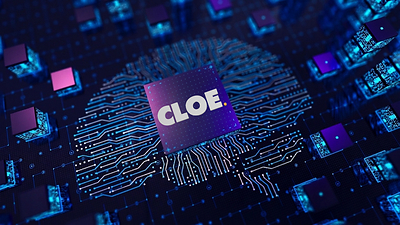
Rather than processing content as isolated inputs, CLOE was designed to mirror how people naturally experience stories—combining what they see, hear, and read before connecting those signals through memory, reasoning, and context into a cohesive understanding.
“People don’t understand a story through dialogue alone or visuals alone,” said David Lee, CEO of Iyuno. “We naturally combine multiple sensory inputs, connect them with memory and reasoning, and build understanding over time. CLOE was designed to follow that same process.”
At the foundation of the platform is CLOE’s Human Sensory System, where specialized AI agents independently process visual, auditory, and language inputs—including appearance, action, dialogue, tone, music, and subtext.
Those signals are then brought together through Cognitive Integration, where additional agents perform multimodal fusion, reasoning, contextual analysis, and memory formation. Rather than treating each scene as a separate task, CLOE continuously connects relationships, emotional intent, narrative progression, and character continuity into a persistent Context Memory.
The result is a cohesive understanding that extends beyond literal interpretation—capturing the context, relationships, and creative intent that drive storytelling.
“Understanding isn’t created by a single model,” Lee said. “It emerges when multiple perspectives are brought together into a shared contextual memory. That’s what allows AI to move beyond processing content to truly understanding it.”
This persistent Context Memory becomes a reusable foundation for future workflows, enabling AI capabilities to operate from the same consistent understanding rather than reconstructing context each time.
Future announcements will explore how this shared contextual foundation powers CLOE Skills across localization, accessibility, creative production, and other content workflows.
About Iyuno
Iyuno (www.iyuno.com) is a global media localization company delivering dubbing, subtitling, and content services for the world’s leading studios, broadcasters, and streaming platforms. With a presence in 45 offices across 29 countries, Iyuno combines creative expertise with innovative technology to help content reach audiences everywhere. The company is also the creator of CLOE, a contextual intelligence platform that transforms content into structured understanding, enabling AI-powered workflows across localization, accessibility, marketing, and emerging content experiences.

 View original content to download multimedia:https://www.prnewswire.com/news-releases/why-ai-needs-more-than-models-inside-cloes-human-perception-architecture-302866923.html
SOURCE Iyuno


More from Cision PR Newswire
See all
Legacy Healthcare Welcomes U.S. Congressional Legislation Proposing 12-Year Market Exclusivity for US FDA Newly Approved Botanical Drugs

Triskell Software Positioned for the First Time in the 2026 Gartner® Magic Quadrant™ for Adaptive Project Management and Reporting

RAMINVEST HOLDING DIFC Unveils an Integrated Ecosystem for Commodity Trade with Africa

Qapture Investments Establishes Investment Manager and Acquires Hermetik Trading’s DeFi Strategies; Appoints Brendan MacNeil as Head of DeFi
Recommended for you
More stories Future of AI
Cysic CEO Says Paying for an AI Model Doesn’t Prove Your Host Ran It
 AI & Technology
From self-driving excavators to AI leasing agents, proptech’s AI moment has arrived
 AI & Technology
AI literacy shouldn’t begin in the workplace. It should begin in primary school.
 Data
The Data Centre Is Becoming a Product
 AI & Technology
Too often, AI narrows rather than widens access. Here’s how the tech industry can fix it
 AI & Technology