



Global demand for paint protection film has moved past the point where analysts still describe it as an emerging category. Grand View Research valued the worldwide PPF market at USD 291.5 million in 2021, projecting growth to USD 497.4 million by 2030 at a CAGR of 5.9%. North America accounts for roughly 38% of global consumption, and the segment has crossed a threshold that automotive economists watch closely. As a result, PPF has evolved from an optional extra for enthusiasts to a standard part of the post-sale preparation for premium models.
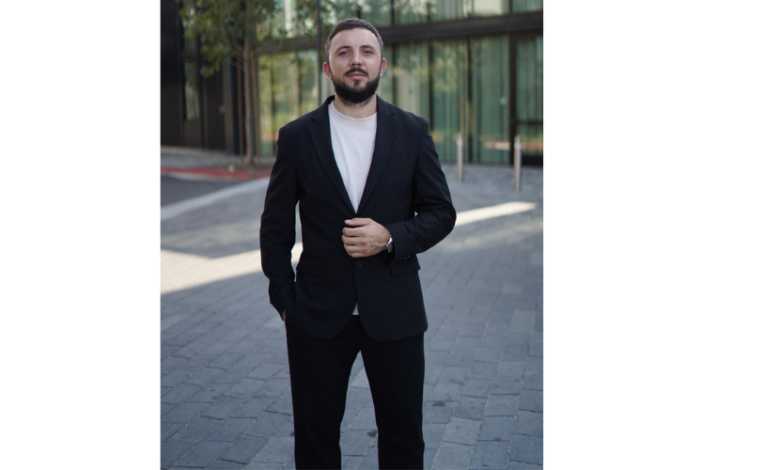
The industry conversation has shifted accordingly. Five years ago, installers were largely evaluated on speed and price. Today the debate centers on installation quality, adhesive chemistry, and long-term performance under real-world conditions. Vitalii Mykhno, an automotive styling specialist with hands-on experience in both European and North American markets, has watched this transition unfold across two very different customer bases, first at Auto Bronya Detailing Studio in Lviv, Ukraine, and later in the Los Angeles market.
Ukraine as a Leading Indicator
The Ukrainian market between 2020 and 2022 offers a compressed timeline of how quickly PPF migrates from a specialty service into a mainstream offering. Auto Bronya Detailing Studio started the period with clients requesting protection primarily for headlights or front bumpers. Within two years, full-body wraps had become the dominant format, and the share of complex installations in the studio’s monthly workflow grew several times over.
“We used to see two or three cars a week coming in for headlight or bumper coverage only,” Vitalii recalls. “By the time I finished my second stint at the studio, we were handling two or three full-body installations per month. For the local market, that reflected real trust in the product and in the installer.”
During his time at Auto Bronya, Vitalii completed more than 65 individual customization projects with a combined value exceeding $135,000, working on premium and luxury vehicles that included BMW, Mercedes-Benz, Porsche, and Audi models. Roughly one in five involved full PPF coverage. Average pricing for whole-vehicle protection in Lviv during 2020-2022 settled between $2,500 and $3,000, calibrated to vehicle size. The bulk of the client base consisted of Volkswagen Group vehicles (Audi, Volkswagen, and Porsche models) which installers across the industry consider among the most technically demanding cars to work with because of sharp body lines, restricted access to certain panels, and complex disassembly requirements.
The Three-Component Quality Equation
Studios on both continents fall into two categories. One group operates on systematic protocols with measurable checkpoints. The other works by intuition. The difference becomes visible after twelve to eighteen months of use, once poorly installed film starts lifting at the edges or yellowing under UV exposure. According to Vitalii, consistent long-term results depend on three components of equal weight: surface preparation, material quality, and installation technique.
Surface preparation is where inexperienced installers lose the most time. The procedure involves a three-stage cleaning process, degreasing of the entire surface, and separate preparation of each body panel immediately before film application. Paint condition assessment forms part of the workflow. Pre-owned vehicles often carry repainted panels that require gentler handling during both preparation and tensioning. Thorough prep takes longer than a standard wash, but it eliminates the two most common failure modes: contamination trapped under the film, and adhesion problems that surface days or weeks later.
Material properties form the second component. Two parameters define PPF quality: the adhesive base and the top coat characteristics. Adhesive bases from different manufacturers use distinct chemical compositions, producing different reactions to slip solution and to PPF tack solution — the fixing liquid applied during installation to activate the adhesive. The top coat governs long-term durability under weather exposure, optical clarity retention under tension (avoiding the visible stretch marks that indicate a compromised film), and hydrophobic performance.
Installer technique is the third and decisive factor. Premium materials and meticulous preparation produce disappointing results in the hands of a technician who has not internalized how a specific film responds to tension, where the material holds its stretch, and where it will inevitably relax and release. Primer usage sits within this third category — a tool that separates trained installers from those still finding their footing.
Primer: a Targeted Application Tool
Vitalii notes that the PPF primer remains one of the most misused products in the industry. The solution strengthens adhesive bonding to the substrate at problem zones — edges, corners, mirror caps, bumper contours, and sharp body creases. It helps prevent edge lift in high-tension areas, evaporates quickly to leave an activated bonding layer, and accelerates initial film grip during installation.
The complication comes from over-application. Primer belongs on problem zones, not entire panels. Excessive use makes eventual film removal significantly harder and leaves adhesive residue on the paint surface. Standard target zones include hood edges, bumper corners, mirror caps, spoilers, and sharp body creases. For premium films such as XPEL, proper installation technique alone is often sufficient — primer serves as a spot solution rather than a systemic requirement.
Europe and North America: Two Different Market Architectures
According to Vitalii Mykhno, a comparison of PPF’s European and North American markets reveals differences that go beyond pricing. Identical materials cost more in Europe due to logistics and import duties. Relative to disposable income, full-body PPF remains a considered purchase for owners of premium vehicles. The consequence shows up in installer economics — a smaller addressable audience combined with sustained pressure on quality, since studios compete on precision rather than volume.
The North American market operates on inverted dynamics. Regional market data shows that the number of new studios has been outpacing the growth in trained installers, especially in California, Florida, and Texas. PPF has become close to a default option on new premium vehicles in these states. Volume growth has come with a drop in average installation quality.
The technical gap between the two markets shows up in specific working habits. European studios typically approach a full-body PPF project through full disassembly of trim, mirrors, door handles, and bumper hardware before film application, producing cleaner edges and eliminating the visible seams that mark cut-around installations. A significant portion of U.S. shops skip that step to save labor hours, which explains the visual differences that become apparent to trained observers within the first months of use. Vitalii’s own workflow — carried from Auto Bronya to the Los Angeles market — preserves the full-disassembly protocol as a baseline standard, applied to every full-body project regardless of complexity.
“In Europe, the quality bar sits high by default,” Vitalii notes. “The customer will not return otherwise. The U.S. market allows mediocre studios to survive on volume. Operators thinking long-term understand one metric — the customer who comes back with a second vehicle. That leads to one working principle: maximum precision at reasonable pricing.”
That principle carries into how his current operation is positioned within the U.S. industry framework. VILNO, the Los Angeles studio Vitalii founded after his move to the American market, operates as an XPEL Authorized Dealer — a status that requires demonstrated installation capability and a verified technical baseline before the manufacturer will approve direct supply. Manufacturer authorization functions as one of the few industry-level validation mechanisms currently available in a segment where formal certification remains limited.
Where the Industry Moves Next
The North American PPF segment has entered a maturity phase. After three years of explosive expansion, demand growth is stabilizing, and competitive pressure is shifting from headline pricing toward installation quality and long-term service commitments. Technologically, the industry is moving toward self-healing top coats, colored and matte PPF variants that are displacing vinyl in styling applications, and hybrid solutions with ceramic top layers.
The workforce question is becoming central to the sector’s next phase. Formal educational programs for PPF installers barely exist in the U.S. market — most technicians learn on the job, which translates directly into the wide quality dispersion seen across metropolitan markets. Film manufacturers have started rolling out certification programs (XPEL, 3M, and LLumar all run their own), but coverage remains limited and inconsistent across regions. Standardized installer training will shape the industry’s next phase. The choice sits between two possible futures for PPF work: a fragmented craft dependent on individual talent, or a structured profession with clear qualification benchmarks.
For now, the sector runs on the accumulated experience of practitioners who have moved from simple installations through premium-segment work. That accumulated experience determines which studio a customer trusts with the next vehicle.