For decades, semiconductor design has been an elite sport played exclusively by tech titans with deep pockets. Designing a modern custom accelerator typically requires hundreds of engineers, hundreds of millions of dollars, and years of agonizing verification. Palo Alto-based Architect Labs wants to blow up that calculus entirely.
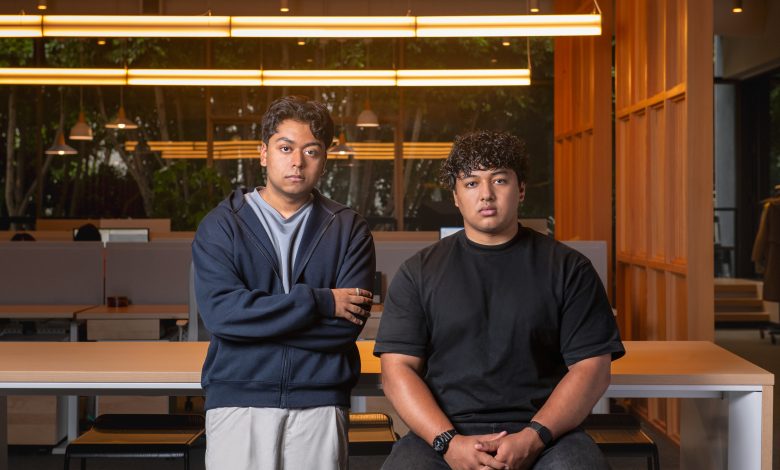
The company today unveiled Redwood, an AI accelerator generated and verified end-to-end by an autonomous AI system in under two weeks. Guided by a high-level specification written by just two human architects, the platform co-designed the hardware, firmware, custom compute kernels, and verification environments simultaneously. Redwood isn’t just a paper design, it is currently deployed on AMD FPGA silicon, executing real-time inference on multi-billion parameter models like Qwen and Llama.
Flipping the silicon design workflow
Historically, hardware teams lock in chip architectures years in advance, forcing software engineers to squeeze fast-evolving AI models into fixed silicon. Architect Labs flips this dynamic by co-optimizing the entire stack at once. RTL code, UVM environments, and drivers were generated autonomously, allowing software cycles to be baked directly into the silicon’s datapath.
If an engineer alters the core specification, Architect Labs’ system can regenerate, re-verify, and redeploy modified hardware in under 48 hours.
Measuring up against NVIDIA
Targeted at physical AI applications like robotics, edge devices, and drones, Redwood’s benchmark projections target the dominant incumbent in edge computing:
- Higher Throughput: Projected onto Samsung 8nm (the same node as NVIDIA’s Jetson Orin Nano), Redwood yields 1.75x the throughput.
- Lower Power: It draws 1.9x less power, translating to a 3.4x improvement in performance-per-watt over the Jetson baseline.
- Zero Hardware Bugs: The first RTL drop achieved over 95% code and functional coverage, running live on hardware without initial bug fixes.
The shift toward ‘designless’ semiconductor design
Architect Labs co-founder and CEO Ebrahim Hussain compares this milestone to TSMC’s rise in the late 1980s, which unlocked the fabless semiconductor boom by decoupling chip design from foundry ownership.
“We are pioneering the designless semiconductor industry,” Hussain said. “Software companies with intensive workloads can get co-designed custom silicon without having to build a large design team, stake a decade on an architectural bet, or leave performance and power on the table.”
By closing the feedback loop, where AI models optimize the very hardware built to run them, Architect Labs is proving that custom silicon may soon move at the speed of software updates.
Read the full technical paper here: https://architectlabs.com/blog/redwood