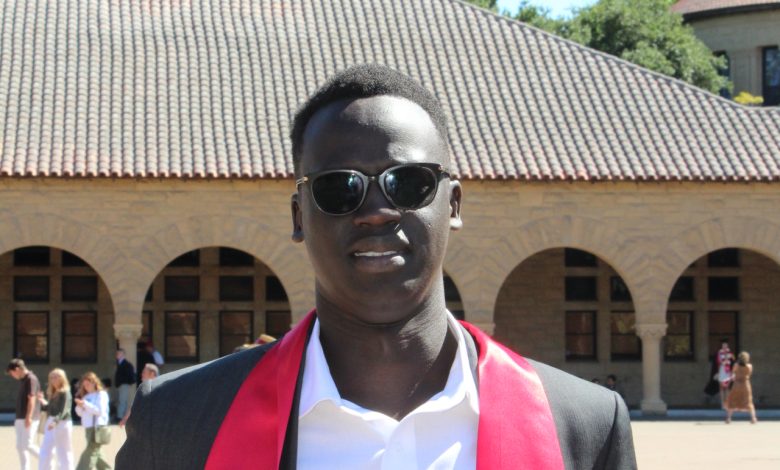
Atem Aguer sees a limitation in the way most artificial intelligence products are designed today. One person opens an application, gives instructions to one AI assistant, and receives a response. That model has produced increasingly capable tools, but Aguer believes it does not reflect how much important work actually gets done. Teams share information, divide responsibilities, revise one another’s work, and make decisions together. His work at Bfloat is focused on what he calls multiplayer AI: creating shared environments where people and AI agents can collaborate rather than operate as isolated pairs.
“Most AI products still assume there is one person and one assistant,” Aguer said. “Real work is usually more complicated. You have several people involved, different responsibilities, and information that everyone needs to understand.” The technical challenge, in his view, is designing AI systems that can participate in that environment without creating confusion about context, permissions, or competing changes.
Moving Beyond the One-Person Copilot
Aguer came to the multiplayer problem after seeing AI agents from several sides. At Stanford, where he earned bachelor’s and master’s degrees in computer science, he researched early language-model systems. Later, as a Founding Engineer at Codegen, he helped build commercial coding agents and worked on improving their capabilities and reliability. He founded Bfloat in 2024, raised pre-seed funding, and has built AI products used by thousands of people. His current work there asks a different question: what happens when intelligent agents need to work with groups rather than individual users?
Aguer was working on agent systems before coding agents became a major focus across the AI industry. In December 2022, he publicly predicted that an AI programmer would emerge within one to three years and described a language model operating through a terminal, running commands, modifying files, and debugging code. In early 2023, he built Shoggoth, an experimental agent based on that idea.
“Better models help, but they do not solve everything,” Aguer said. “You still have to build the system around them so they can keep working when the task gets longer or something goes wrong.” His current view is that progress will depend heavily on the surrounding tools and context that help agents carry out sustained work.
What Changes When AI Becomes Multiplayer
A shared AI environment creates problems that a conventional assistant does not have to solve. Several users may need access to the same information while having different permissions. Human collaborators can make conflicting changes. Multiple agents may also be working on related parts of the same task, which means the environment needs a way to coordinate their actions instead of simply producing separate outputs.
“You cannot just put five agents next to five people and call that collaboration,” Aguer said. “They need shared context, some understanding of who can do what, and a way to deal with changes that collide.” His work at Bfloat is focused on those foundations rather than treating collaboration as an extra feature layered onto a single-user assistant.
Software development offers a practical place to study those problems because the work is already collaborative. Engineers share code, review changes, divide tasks, and depend on decisions made elsewhere in the system. An AI agent that works well for one engineer in isolation may still struggle when several people and agents are changing the same project at once. Aguer’s multiplayer approach is aimed at making AI useful inside those shared conditions rather than outside them.
The emphasis is less on replacing the people involved than on improving what the group can accomplish. Aguer is interested in tools that allow individuals and small teams to take on more ambitious technical work without requiring the same level of specialized access or resources.
“AI should make a team more capable without making human judgment irrelevant,” Aguer said. “The people still need to decide what they are trying to achieve and whether the result actually makes sense.”
Building for Shared Judgment
That emphasis on judgment is connected to Aguer’s broader view of technology. He wants AI to lower barriers that can make ambitious software difficult to build, including specialized skills, capital, and institutional access. His goal is to expand what individuals and small teams are able to create while keeping people responsible for the choices that shape the final result.
The idea has personal roots. Aguer’s family fled conflict in South Sudan, and he grew up in Uganda. As a child, he took apart household devices, tried to repair them, and built things from whatever materials were available. He later taught himself programming, created mobile apps, and won programming competitions in high school before studying computer science at Stanford.
“I learned early that technology is something people make,” Aguer said. “Once you understand that, you stop treating the tools around you as fixed. You start asking what you could build differently.” That instinct has remained consistent even as the technology he works with has changed.
Aguer has also learned that identifying a technical shift early does not guarantee that the market or users are ready for it. He now sees adaptation as part of conviction: remain committed to the deeper problem while changing the path when evidence demands it. That lesson informs how he approaches multiplayer AI: stay committed to the underlying problem while testing assumptions and changing the path when users or technology demand it.
Multiplayer AI is the problem Aguer is pursuing now. He believes intelligent software will become more useful when it can operate inside the shared environments where teams already exchange information and make decisions together. For Aguer, the next stage of AI is about whether intelligent agents can become useful participants in work that belongs to a group, not merely tools each person uses alone.