Procurement has undergone a dramatic transformation over the past decade. Once viewed primarily as a cost-control function, modern procurement teams are now expected to drive business resilience, mitigate risk, improve supplier performance, and contribute directly to profitability.
This shift is particularly evident in industries such as packaging and contract manufacturing, where supply chain disruptions, raw material volatility, geopolitical uncertainty, and changing customer demands can significantly impact business performance.
As supply chains become increasingly complex, traditional supplier scorecards and manual evaluations are proving insufficient. Procurement leaders need data-driven approaches that help them identifyrisks earlier, prioritize supplier relationships more effectively, and make better sourcing decisions.
One practical solution is the development of an AI-powered supplier risk scoring engine. By combining supplier performance metrics, operational data, and predictive analytics, procurement teams can move from reactive decision-making to proactive risk management.
Why Supplier Risk Management Matters More Than Ever
Every procurement professional has experienced situations where a supplier appeared reliable until a disruption exposed hidden weaknesses.
A supplier with excellent pricing may struggle with delivery reliability. A long-standing manufacturing partner may experience financial difficulties. A geographically concentrated supplier network may become vulnerable during political or economic instability.
These risks often remain invisible until they begin affecting operations.
For organizations involved in packaging and contract manufacturing, supplier disruptions can result in:
- Production delays
- Missed customer commitments
- Increased logistics costs
- Quality failures
- Margin erosion
- Lost revenue opportunities
The challenge is not simply identifying problems after they occur. The real objective is detecting warning signs before they become operational issues.
This is where supplier risk scoring becomes valuable.
The Evolution of Supplier Scorecards
Traditional supplier scorecards typically focus on a handful of metrics:
- Cost
- Quality
- Delivery performance
- Service responsiveness
While these indicators remain important, they often provide a historical view rather than a forward-looking assessment.
Modern procurement organizations increasingly incorporate additional dimensions such as:
- Financial health
- Geographic exposure
- Supply chain concentration
- Sustainability performance
- Regulatory compliance
- Capacity utilization
- Crisis response capability
Combining these variables allows organizations to develop a more comprehensive understanding of supplier risk.
Rather than evaluating suppliers solely on past performance, procurement leaders can assess the likelihood of future disruption.
Designing a Supplier Risk Framework
A supplier risk scoring engine begins with selecting the right variables.
A typical framework may include five major categories:
Operational Performance
This category measures day-to-day execution.
Examples include:
- On-time delivery percentage
- Lead-time consistency
- Order fulfillment accuracy
- Production reliability
Quality Performance
Quality metrics help identify suppliers that may create operational challenges.
Examples include:
- Defect rates
- Customer complaints
- Corrective action frequency
- Audit findings
Financial Stability
Financial distress can rapidly create supply chain disruptions.
Relevant indicators include:
- Credit ratings
- Revenue trends
- Profitability metrics
- Debt levels
Strategic Dependency
Overreliance on a single supplier can introduce significant risk.
Factors include:
- Percentage of spend allocation
- Availability of alternative suppliers
- Switching costs
- Technical specialization
External Risk Factors
External influences can affect supplier performance regardless of operational excellence.
Examples include:
- Geopolitical risk
- Regulatory changes
- Natural disaster exposure
- Commodity market volatility
Once these factors are identified, organizations can assign weightings based on business priorities.
Moving From Descriptive Analytics to Predictive Analytics
Weighted scoring models provide valuable visibility, but they remain descriptive in nature.
The next step involves predicting supplier disruptions before they occur.
Machine learning models can analyze historical supplier data to identify patterns associated with future risk events.
Examples of predictive indicators include:
- Gradual decline in delivery performance
- Increasing lead-time variability
- Rising defect rates
- Financial deterioration
- Reduced responsiveness
Rather than waiting for a disruption, procurement teams can receive early warning signals.
Practical Applications in Packaging and Contract Manufacturing
Supplier risk scoring can deliver value across multiple procurement activities.
Contract Negotiations
Procurement leaders often negotiate service levels, pricing structures, and risk-sharing agreements.
Risk scores provide objective data that supports stronger negotiation positions.
Supplier Segmentation
Not all suppliers require the same level of oversight.
Risk scoring helps organizations determine:
- Strategic suppliers
- Preferred suppliers
- Development candidates
- High-risk suppliers
This allows procurement teams to allocate resources more effectively.
Crisis Management
When disruptions occur, rapid decision-making becomes critical.
A supplier risk engine helps identify:
- Which suppliers require immediate intervention
- Potential alternative sources
- Areas of highest operational exposure
This reduces response times and improves resilience.
Executive Reporting
Senior leadership increasingly expects procurement teams to provide measurable business insights.
Risk dashboards transform supplier performance data into actionable intelligence that executives can easily understand.
Implementation Challenges
Although supplier risk scoring offers significant benefits, implementation is not without challenges.
The first challenge is data quality.
Supplier information often resides across multiple systems including ERP platforms, procurement software, spreadsheets, quality databases, and financial reporting tools.
Consolidating these sources requires careful planning.
Another challenge is stakeholder adoption.
Procurement professionals possess valuable commercial experience that cannot be replaced by algorithms. Analytical models should augment human judgment rather than attempt to replace it.
Successful organizations typically follow three principles:
First, maintain transparency in scoring methodologies.
Second, involve stakeholders during model development.
Third, continuously refine the framework as business conditions evolve.
Trust is essential for long-term adoption.
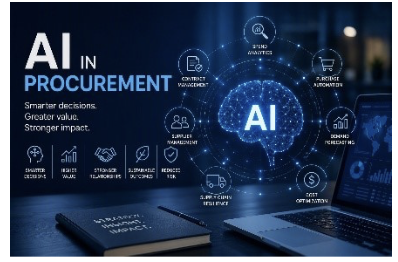
The Future of AI in Procurement
Artificial intelligence is rapidly transforming procurement functions across industries.
Future procurement systems will likely monitor suppliers continuously and automatically detect emerging risks using real-time data streams.
Organizations may soon leverage AI to:
- Predict supply disruptions
- Recommend alternative suppliers
- Simulate sourcing scenarios
- Identify negotiation opportunities
- Optimize supplier portfolios
As these capabilities mature, procurement professionals will spend less time gathering information and more time making strategic decisions.
The combination of procurement expertise and advanced analytics will become a significant competitive advantage.
Final Thoughts
The most successful procurement organizations no longer evaluate suppliers solely on cost. They recognize that resilience, reliability, financial stability, and risk management are equally important contributors to long-term value.
An AI-powered supplier risk scoring engine provides a structured framework for identifying vulnerabilities before they affect operations.
For professionals in packaging and contract manufacturing, this approach supports stronger supplier relationships, more informed sourcing decisions, improved crisis preparedness, and better business outcomes.
The future of procurement belongs to organizations that can combine human expertise with data-driven intelligence. Those that embrace predictive supplier risk management today will be better positioned to navigate tomorrow’s uncertainties