Artificial intelligence has become one of those terms that’s impossible to avoid.
Most conversations focus on chatbots, image generators, or productivity tools. Those applications are impressive, but I don’t think they’re the most important development taking place.
What interests me more is how AI is quietly becoming part of the systems we rely on for safety.
Hospitals are using it to support clinical decisions. Cars use it to help drivers avoid collisions. Smart homes use it to recognize unusual activity. Factories monitor equipment before failures occur.
These systems don’t exist to entertain us or save a few minutes at work.
They’re designed to help people make better decisions when the stakes are much higher.
Healthcare Shows What’s Required When Accuracy Matters
Healthcare is probably the clearest example of why artificial intelligence needs to be developed differently when people’s wellbeing is involved.
Modern software can assist clinicians by analyzing medical images, reviewing patient information, identifying unusual patterns, and helping prioritize cases that require immediate attention.
That doesn’t mean AI replaces healthcare professionals.
Instead, it gives them another source of information to consider alongside their own experience and clinical judgment.
Because of that responsibility, medical AI is developed under much stricter expectations than most consumer software.
Testing, validation, documentation, and long-term maintenance become just as important as the algorithms themselves.
If you’d like to understand how AI fits into regulated healthcare software, this SaMD guide provides an excellent overview of the standards and development practices behind these systems.
Vehicles Are Becoming Active Safety Partners
The average modern vehicle contains far more computing power than most people realize.
Artificial intelligence is already helping drivers every day.
Lane-keeping assistance, pedestrian detection, adaptive cruise control, emergency braking, and driver monitoring all rely on systems capable of interpreting information from cameras, radar, and other sensors.
These technologies don’t eliminate accidents.
They reduce the likelihood of human error by reacting more quickly to situations that develop in fractions of a second.
From an engineering perspective, automotive AI shares many similarities with healthcare software.
Both process large amounts of sensor data. Both support human decision-making.
And both must behave consistently under changing conditions.
Home Security Has Become Much Smarter
Traditional security systems followed relatively simple rules.
A motion detector was triggered. An alarm sounded. Someone investigated later.
Today’s systems are much more capable.
Modern AI alarm systems can recognize familiar faces, distinguish between people and animals, identify package deliveries, and reduce false alarms caused by ordinary household activity.
That improves both convenience and security.
Instead of overwhelming homeowners with notifications, AI helps prioritize events that genuinely deserve attention.
It’s a subtle improvement, but one that makes security technology significantly more practical in everyday life.
Industrial Safety Is Becoming Predictive
Factories have embraced automation for decades, but artificial intelligence is adding another layer of intelligence.
Rather than simply monitoring whether equipment is operating, AI can analyze vibration, temperature, electrical loads, and other sensor data to identify early signs of wear.
Maintenance teams receive warnings before equipment fails.
That helps prevent costly downtime, but it also improves workplace safety by reducing the likelihood of unexpected mechanical failures.
This shift from reactive maintenance to predictive maintenance is one of the most practical uses of AI today.
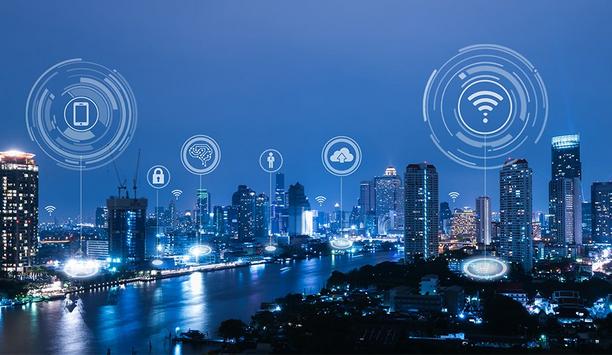
Smart Cities Are Following the Same Direction
The same principles are beginning to appear across public infrastructure.
Traffic management systems adjust to changing traffic patterns.
Utilities monitor electrical networks more efficiently.
Public transportation systems analyze operating conditions in real time.
Infrastructure is gradually becoming more responsive because AI helps identify patterns that would be difficult for humans to recognize continuously.
People may never realize these systems are operating in the background.
That’s often the goal. The technology becomes useful precisely because it works quietly.
Reliability Comes Before Intelligence
When people evaluate AI, they often ask how accurate the model is.
I think another question deserves equal attention.
Can it be trusted to behave consistently?
Safety technology doesn’t need occasional brilliance. It needs dependable performance.
That’s why organizations building AI for healthcare, transportation, security, and industrial environments spend enormous amounts of time validating systems before they’re deployed.
Training an AI model is only one step.
Understanding how it behaves in real-world conditions is where much of the real engineering work begins.
Humans Remain Part of the Process
Despite all the advances we’ve seen, I don’t believe AI is replacing professionals.
Doctors still diagnose patients. Engineers still evaluate infrastructure. Drivers remain responsible for their vehicles. Security professionals still investigate incidents.
Artificial intelligence works best when it helps people process information more efficiently instead of attempting to replace their judgment.
That balance is likely to remain important as AI becomes increasingly integrated into everyday technology.
The Future Will Feel Less Like AI
One prediction I feel reasonably confident making is that we’ll stop talking about AI as though it’s something separate.
It will simply become another feature inside products we already use.
Hospitals will continue adopting more intelligent clinical software. Vehicles will gradually become better at assisting drivers. Home security systems will become more accurate.
Factories will identify equipment problems earlier.
Most people won’t think about artificial intelligence while using these technologies.
They’ll simply expect them to work.
In many ways, that’s a sign the technology has matured.
Wrapping Up
Artificial intelligence is no longer limited to answering questions or generating content.
It’s becoming part of the systems that help protect people, support professionals, and improve decision-making across industries.
Healthcare, automotive technology, smart homes, manufacturing, and public infrastructure all demonstrate the same broader trend.
AI delivers the greatest value when it’s reliable, carefully tested, and designed to support human expertise rather than replace it.
As these technologies continue evolving, success won’t be measured by how impressive the algorithms appear.
It will be measured by how consistently they help people make safer, better-informed decisions in the real world.