As of 2026, 83% of advertising executives say their companies have deployed AI within the creative process, up from 60% in 2024. Meanwhile, 71% of major US advertisers reportedly ran at least one generative AI campaign during the previous 12 months.
At the same time, layoffs across media and advertising have reached alarming levels. AI is not solely responsible for those losses, but it would be disingenuous to pretend it is not a factor.
There is a delicate line to tread. Around 69% of consumers say they feel manipulated when brands use AI in advertising without disclosing it. The problem is that AI is becoming increasingly difficult to spot, and is already embedded across the industry, from strategic planning and conceptual writing to image generation, production and post-production.
So let’s address the elephant in the room. AI is not a replacement for human creativity. It is a tool that is forcing creativity to evolve.
[Text Wrapping Break]When photography arrived, it did not kill painting. It freed painting from the responsibility of simply reproducing reality, helping to drive impressionism, abstraction and modern art. In much the same way, AI is pushing brands, artists and creative teams to reconsider where their real value lies. That value is no longer found in execution alone. It lies in taste, intention, judgement, world-building and emotional impact.
AI has already entered the advertising workflow, sometimes quietly and often with considerable success. Its influence will only increase.
1. AI at the strategic stage
Advertising agencies are using AI for pattern analysis, audience clustering and predictive modelling. These tools can help teams explore how an idea might resonate across different demographics before an expensive campaign is approved. For business leaders, this can provide valuable reassurance. For creatives, it can reveal behaviours, tensions and cultural signals that might otherwise have been missed.
But AI-generated analysis is only as reliable as the information behind it. Some models have been trained on data scraped indiscriminately from unreliable or questionable sources. Their outputs can appear convincing while being inaccurate, biased or simply wrong. They still require scrutiny, verification and, most importantly, human judgement.
2. AI is also re-shaping pre-production
Creatives can now move beyond static Photoshop mock-ups and produce sophisticated pre-visualisations of how an idea might look, move and feel. These can help align agencies, clients, directors and production partners far earlier in the process.
That alignment can save time, strengthen the presentation of an idea and prevent expensive misunderstandings later. Many would argue that this is where AI is currently delivering its clearest value: not by replacing the final work, but by making the ambition of that work easier to see and understand.
3. AI in post-production
Here, AI tools have already become part of the furniture. They are being used to extend environments, clean up images, correct unwanted imperfections and add digital elements to live-action footage. They can help create characters, alter compositions or produce shots that would previously have required significant time, money and specialist resources.
This shift is inevitably affecting traditional post-production businesses. Some established workflows and the companies built around them are being challenged by tools that can complete certain tasks faster and with fewer people.
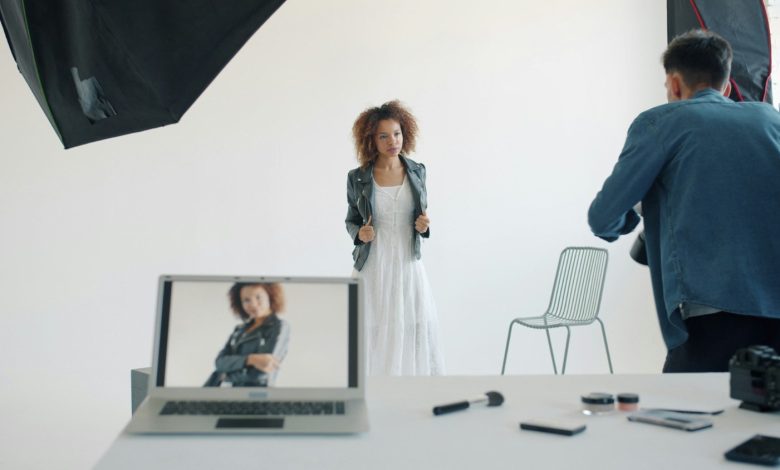
One of AI’s most practical applications arises when campaign requirements change after a shoot has wrapped. A client may suddenly need an additional shot, a different product variation, a new market adaptation or an updated piece of branding. Previously, that could have meant compromising the work or organising a costly reshoot.
Now, a carefully planned bank of high-quality campaign imagery can be used as the foundation for additional assets and compositions. New material can be created while remaining visually aligned with the original production.
This does not remove the need for photographers, directors, designers, artists or post-production specialists. It changes the nature of their contribution. Their value increasingly lies in defining the visual system, controlling its consistency and deciding which outputs are good enough to represent the brand.
AI is not simply about saving money. Used well, it can create more flexibility, greater consistency, faster adaptation and a broader range of assets. It allows brands to stretch ideas further, respond more quickly and “in the right hands”, build richer visual worlds without abandoning craft.
The important phrase here is in the right hands.
AI can generate endless variations, but abundance is not the same as creativity. It can imitate styles, but it cannot decide which cultural references are meaningful. It can produce a technically polished image, but it cannot reliably understand whether that image is emotionally resonant, strategically relevant or right for a particular brand.
That still requires people.Our priority should remain the same: finding the right solution for the project and delivering it with quality, control and brand safety. Sometimes that solution will involve AI. Sometimes it will not. The real question is no longer whether we should use AI. That decision has already been made by the market, the technology and the workflows forming around us. The question is how we use it.
Do we use AI simply to make more work, more cheaply? Or do we use it to raise our ambition, expand our thinking and make work that would otherwise have been impossible?
Advertising has never been noisier. Every brand is publishing, posting, reacting and shouting as loudly as it can. Producing more content will not, by itself, make anyone listen. Our challenge is to use AI not merely to increase output, but to increase the quality, originality and impact of that output.
AI can give us more possibilities. Creativity is still what allows us to choose the ones that matter.