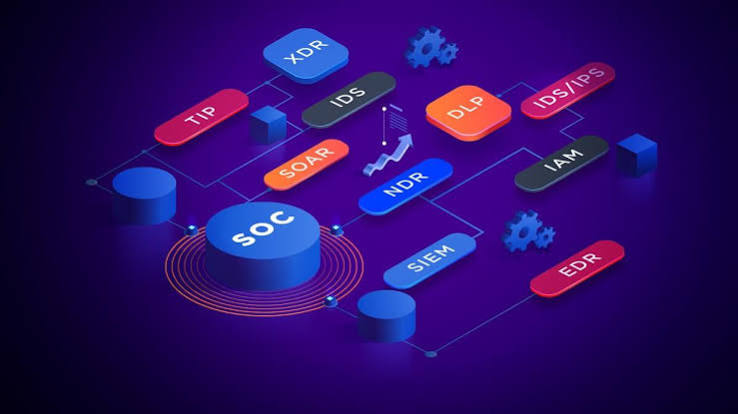
For a long time, cybersecurity teams have been asked to achieve more with less. They are expected to defend complex environments, investigate huge volumes of alerts and respond to evolving threats, all while coping with skills shortages and resource constraints.
Security operations centres (SOCs) are continuously adapting, but the challenge of scale has persisted.
The rise of artificial intelligence is changing the equation. Much of the industry discussion around AI focuses on its potential to improve efficiency, automate tasks and enhance productivity. But a more fundamental shift is happening.
As AI becomes embedded in both cyberattacks and cybersecurity tools, security operations themselves are entering a new phase – the AI-native era.
For channel partners and managed service providers, understanding this shift is critical to continuing to effectively support their customers.
Complexity outpaces traditional security operations
IT environments today bear little resemblance to those a decade ago. Organisations operate across cloud platforms, SaaS applications, remote endpoints, identities and hybrid infrastructures. And every new technology introduces additional telemetry, more security controls and more data that needs analysing.
As IT environments expand, security teams must coordinate information from multiple sources while identifying the alerts that require investigation and response. The real problem that Rai solves is operational scale.
MSPs are not only struggling because environments are complex; they are struggling because workloads, customer environments, and threat activity are growing faster than security teams can scale.
Traditional security operations rely heavily on human-led processes. Analysts investigate alerts, correlate evidence, determine context and coordinate responses. While these processes remain essential, they do not scale easily as the complexity of environments increases.
This means there is a growing gap between what organisations need security teams to manage and what those teams can realistically process.
AI changes the threat landscape
Attackers are also adopting AI to improve the speed and scale of their operations. We have already seen how generative AI can help with phishing, social engineering and content creation.
However, the next phase is likely to involve increasingly autonomous and agentic capabilities that perform more complex tasks with reduced human intervention.
As attackers gain access to tools that can automate decision-making, coordinate activities and adapt to changing conditions, the pressure on defenders will only increase.
With security teams already struggling with scale, it may become increasingly difficult to keep pace if they continue to rely solely on traditional operating models.
The case for AI-native security operations
The conversation needs to move beyond simple automation towards AI-native security operations.
An AI-native approach is not just about automating predefined workflows. It is about enabling security operations to continuously investigate, correlate, prioritize, and coordinate activity at a scale and speed that human teams alone can no longer sustain.
By analysing data, identifying relevant context and surfacing meaningful insights, AI enables organisations to scale security operations more effectively across increasingly large and complex environments.
Importantly, human expertise remains essential in AI-native security operations. Security professionals are needed to provide oversight, judgement and accountability. However, AI-native systems can absorb operational workloads that are becoming increasingly difficult to sustain through manual processes alone.
The objective is not to remove people from security operations, but to enable security operations to scale more effectively as environments expand and threats evolve.
What this means for the channel
MSPs and channel partners are responsible for monitoring and securing increasingly diverse environments while managing growing volumes of data and security events.
As their customers look to strengthen their security operations, channel partners will need to evaluate how AI-native operational systems can help address the growing challenges of scale, operational workload, and increasingly AI-driven threats.
Rai represents a broader opportunity: an AI-native operational system that enables MSPs to scale security operations by carrying operational workload alongside human teams
This means the discussion is not simply about adding more security tools. It is about building security operations that can continuously scale, adapt, and respond as customer environments expand, and threat activity accelerates.
The AI-native security operations narrative is fundamentally about scale. The revised language shifts the emphasis from improving efficiency to building security operations that can continuously scale, adapt, and respond as environments grow and threats accelerate.
The cybersecurity industry has experienced several major operational shifts over the past two decades, from perimeter security to cloud security and from prevention-focused strategies to detection and response. The move towards AI-native security operations is the next stage in that evolution.
As AI becomes deeply embedded in both attack techniques and defensive capabilities, organisations will need security operations models capable of continuously adapting, coordinating, and operating at machine speed.
The question is not whether AI will influence cybersecurity operations; it already is. The challenge is ensuring that security operations evolve quickly enough to meet the demands of AI.