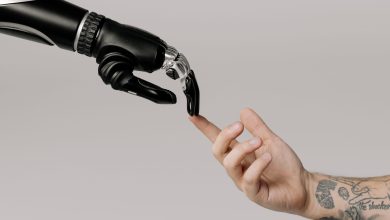
AI’s impact on filmmaking is accelerating at a pace few in the industry can ignore. At Tribeca, Dreams of Violets became the first fully AI-generated feature to screen in a major festival’s official programme, signaling a shift from experiment to legitimacy. Martin Scorsese is using AI tools to streamline elements of pre-production, while Gareth Edwards has described generative technology as “genius” for filmmakers. Steven Soderbergh and Darren Aronofsky are also integrating AI into their creative workflows. Even as Guillermo del Toro insists he would “rather die” than embrace it, the direction of travel is clear: Hollywood is no longer debating whether AI belongs, but how to contend with its arrival.
While the biggest names in Hollywood are wrestling with AI, the real shift is happening far from the studio lots. Creators using AI can now make films that look like they cost millions. A 90-second sci-fi scene, conventionally costing between $120,000 and $220,000, can be produced for around $500 in five days using a six-tool AI workflow, a 99.5% cost reduction. Feature-length films no longer demand six-figure budgets, large crews, or studio approval.
What is driving this shift is a new wave of AI creatives reshaping the industry. Gossip Goblin released 600+ episodes in two years with 3 million+ followers using off-the-shelf AI tools. Ash Koosha’s docudrama Dreams of Violets recreates Iran’s anti-government protests from January 2026, events that couldn’t be filmed when the country shut down communications during the crackdown. Koosha generated the film from his London flat using AI video models fed with news journalism, photos, and eyewitness accounts. Its breakthrough lies in being the first fully AI-generated feature to screen at a major festival, proving AI can tell stories impossible to capture any other way.
These AI creatives work on their laptops, building serialized, character-driven narratives and platform-native content that traditional Hollywood isn’t structured to produce. They have their own audiences on Instagram and YouTube. No studio. No gatekeepers.
Yet the industry’s embrace of AI is far from unanimous. SAG-AFTRA has pushed for the No Fakes Act, a bipartisan bill that would make it illegal to create AI replicas of someone’s likeness or voice without permission. The union’s 2026 contract with studios also set firm limits on synthetic performers, putting human talent ahead of algorithms. The Art Directors Guild has publicly criticized Martin Scorsese’s AI partnership, accusing him of turning his back on the artists who helped build cinema.
The backlash is not limited to Hollywood. In China, AI-generated actors and synthetic performances have sparked public criticism, even as the country’s film and streaming sectors adopt generative AI more broadly. India is seeing a similar tension, with filmmakers using AI at scale while critics question what gets lost when machines start doing the work of actors and crews.
Then there is the case of Val Kilmer. The late actor was digitally recreated using generative AI in As Deep as the Grave, a historical drama made with the cooperation of his family and estate. The project used archival material along with visual and audio synthesis, but it still drew backlash and reopened questions around consent, ethics, and posthumous performances.
While Hollywood and the big studios in China and India are still debating AI, a separate industry has already taken shape. AI video creators have forged their own genre, operating outside the traditional system and building audiences that rival mainstream entertainment. This is not Hollywood 2.0. It is something new, with its own creative rules, its own distribution channels, and a massive engaged audience that has already chosen to watch. These creators are not trying to replicate studio films. They are building serialized, character-driven narratives and platform-native content that reach millions directly on Instagram, YouTube, and other platforms, a distinct ecosystem with its own momentum.
AI is already reshaping filmmaking. From festival screens to home laptops, the tools are here, the audiences are watching, and the cost barriers have collapsed. The industry now faces a choice: resist and risk being left behind, or adapt and find a way to work alongside a technology that is rewriting the rules of storytelling. What is emerging is not a replacement for Hollywood, but something parallel, faster, cheaper, and unbound by gatekeepers. Whether that future is welcomed or rejected will depend less on what AI can do and more on whether the industry and its audiences can trust what they are seeing.