Introduction
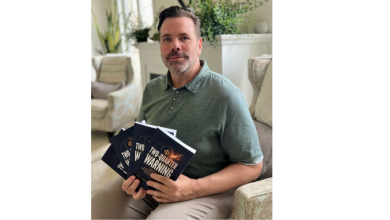
Today, we speak with Singh Sanatya – an experienced Application Development Technical Lead, enterprise technology leader, researcher, IEEE author, and reviewer who works at the intersection of AI, cloud architecture, digital transformation, and business modernization.
Question 1: Your career spans software engineering, architecture, AI, and business transformation. What has shaped your professional journey?
I’ve always been fascinated by the idea that technology should create measurable business outcomes, not simply deliver technical capabilities. My journey began as a software engineer solving complex business problems, but over time I became increasingly interested in understanding how systems, people, processes, and data interact across an enterprise.
That curiosity naturally led me into architecture, cloud transformation, AI, and digital modernization initiatives. Today, I focus on designing scalable platforms, guiding enterprise technology strategy, and helping organizations embrace emerging technologies responsibly.
What differentiates modern technology leaders is the ability to speak both the language of business and the language of engineering. Successful transformation isn’t about implementing technology—it’s about creating sustainable organizational capability.
Alongside industry work, I have authored IEEE publications, participated in scholarly research, and reviewed more than 100 research papers across leading journals and conferences. I also serve as a reviewer for Springer Nature publications. These academic contributions have helped me remain connected to emerging research while applying practical solutions in real-world enterprise environments.
Question 2: Agentic AI is becoming one of the most discussed topics in technology. What excites you most about its future?
The most exciting aspect of Agentic AI is its evolution from passive assistance to autonomous execution.
For many years, AI primarily generated insights. Agentic AI introduces the ability to reason, plan, orchestrate actions, and collaborate with other agents to accomplish business objectives. This fundamentally changes how organizations operate.
Industry research supports this shift. Gartner has projected that agentic AI will become a mainstream capability across enterprises and that organizations must prepare for governance, transparency, and trust mechanisms as autonomous AI systems become increasingly embedded in business operations.
However, I believe the future isn’t about replacing humans.
The future is about Human + AI + Governance.
Organizations that succeed will establish clear frameworks around:
- AI accountability
- Decision explainability
- API governance
- Data protection
- Risk management
- Human oversight
Agentic AI has enormous potential, but trust will determine adoption.
Question 3: What are the biggest challenges organizations face when scaling AI?
The biggest challenge is not technology—it’s organizational readiness.
Many companies successfully run pilots but struggle to move beyond experimentation. Deloitte’s State of Generative AI research found that organizations are increasingly focused on demonstrating measurable value while strengthening governance, risk management, and compliance practices.
In my experience, organizations frequently encounter four barriers:
- Poor data quality
- Lack of governance frameworks
- Fragmented AI initiatives
- Insufficient AI literacy
To scale successfully, leaders must focus on business outcomes rather than technology hype. I often encourage organizations to treat AI adoption similarly to cloud transformation initiatives. Establish governance first, define success metrics early, and build reusable enterprise capabilities rather than isolated experiments.
The companies creating sustainable AI value today are those that combine innovation with disciplined governance.
Question 4: You are active in both industry and academia. How has research influenced your leadership philosophy?
Research has fundamentally shaped how I approach problem-solving.
Academic work teaches you to question assumptions, validate evidence, and understand multiple perspectives before reaching conclusions. Those principles are equally valuable when making enterprise technology decisions.
Through IEEE publications, peer reviews, and Springer Nature review activities, I’ve had the opportunity to evaluate research from experts around the world. This has provided exposure to emerging trends years before they become mainstream industry practices.
One lesson that constantly emerges from research is that breakthrough technology succeeds only when it solves meaningful human problems.
Whether I’m evaluating AI governance frameworks, cloud resilience strategies, or enterprise architecture models, I try to balance innovation with practicality.
Technology leadership should be evidence-driven, outcome-oriented, and grounded in continuous learning.
Question 5: What role does architecture play in creating resilient and trustworthy AI systems?
Architecture is the foundation of trust.
Organizations often focus on AI models, but the real challenge lies in designing the ecosystem around those models. Governance, security, identity management, observability, APIs, compliance controls, and disaster recovery capabilities all contribute to trustworthy AI.
As enterprises deploy thousands of AI agents, architecture becomes even more important. Industry analysts have warned about “agent sprawl”—where organizations create large numbers of autonomous systems without adequate oversight and governance. [tech.co]
A modern AI architecture should include:
- Responsible AI principles
- Governance controls
- Human approval workflows
- Auditability
- Security-by-design
- Disaster recovery planning
- Continuous monitoring
I often describe architecture as the bridge between innovation and reliability. Without architecture, innovation cannot scale safely.
Question 6: What advice would you give technology professionals who aspire to become recognized leaders and innovators in AI?
First, develop depth before seeking visibility.
Become exceptionally good at solving difficult problems. Expertise creates credibility.
Second, cultivate a mindset of continuous learning. AI, cloud computing, cybersecurity, and enterprise platforms are evolving rapidly. The most successful professionals remain curious long after they become experts.
Third, contribute beyond your day job.
Publish research. Review papers. Speak at conferences. Mentor others. Share knowledge openly.
Thought leadership is not about self-promotion; it’s about creating value for the broader community.
Finally, focus on impact.
What matters isn’t how many technologies you’ve used. What matters is whether you’ve improved outcomes for organizations, advanced knowledge within your field, and contributed meaningfully to the profession.
My own journey—from enterprise technology leadership to IEEE research publications and Springer Nature review activities—has reinforced a simple belief:
The most influential professionals are those who combine technical excellence, continuous learning, and service to their community.
Closing Statement
“As we enter the era of Agentic AI, the conversation should not simply be about what AI can do. It should also be about how we govern it, trust it, and ensure it creates meaningful value for society. The future belongs to organizations and leaders who can balance innovation with responsibility.”