For years, the conversation around digital transformation in construction has focused on visibility, productivity and better decision-making. AI has transformed that discussion, promising to help contractors forecast risk, automate repetitive work and make smarter choices. But in specialty contracting, the biggest obstacle to meaningful AI adoption is not a lack of ambition. It is a lack of connected data.
Dodge Construction Network reports that 87% of contractors expect AI to meaningfully impact the industry, yet only 19% have adapted their workflows to use it. The reason is structural. The 2025 Construction Hiring and Business Outlook from the Associated General Contractors of America and Sage found that 32% of contractors rank field-to-office communication among their top IT challenges, with 28% citing integration between internal software systems.
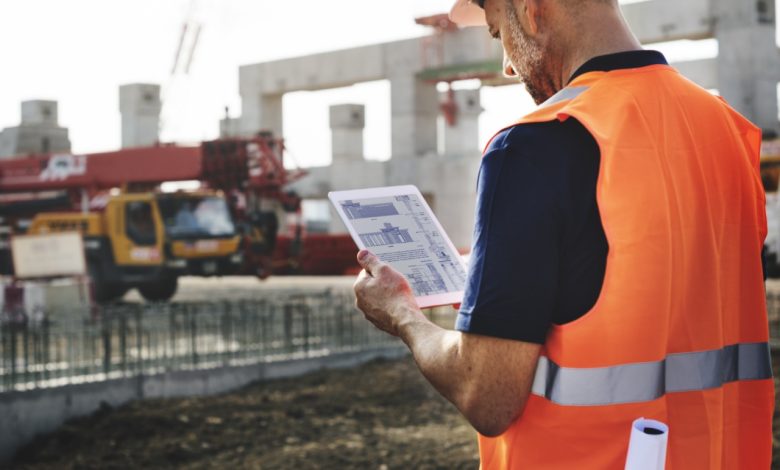
This problem is especially pronounced for MEP and HVAC contractors, where the business is won or lost in the handoff between the field and the back office. Payroll, compliance, forecastingand job costing all depend on what happens in the field. Yet in many organizations, field workflows such as time logging, material tracking and job invoicing still sit in separate systems, with teams manually re-entering data just to keep operations moving.
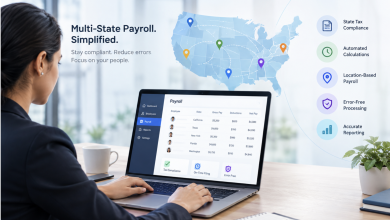
The result is a business that runs on delay. A foreman may know a job is drifting off budget on Tuesday, but finance may not see the impact until the end of the week, or even worse, month-end. Payroll teams spend valuable time reconciling field time, union rules and prevailing wage requirements. Project managers switch between disconnected tools to understand margin, labor utilization and committed costs. By the time executives get a full financial picture, the opportunity to intervene may already be gone.
That is why the next phase of construction technology should not be measured by how many standalone AI features a vendor can announce. It should be measured by whether a contractor finally has one operational system where data moves automatically and decisions can be made in the moment.
This is the significance of purpose-built ERP for specialty contractors. When field time, payroll, compliance, project financials, service dispatch and cash forecasting update from the same operational activity, AI becomes far more than a chatbot layered on top of fragmented systems. It becomes a practical tool for asking better questions of live business data. A controller can identify cost pressure before month-end. A project manager can see whether labor is tracking to plan. A dispatcher can understand service performance without administrative clean-up.
The value of AI is only as strong as the integrity and immediacy of the data beneath it. Too often, specialty contractors face two imperfect choices. They stitch together point solutions for field operations, payroll, service and accounting, or they adopt broad enterprise platforms that were never designed for construction-specific workflows and require heavy customization to deliver any value. Both routes create friction. Both add cost. And both make it harder to build a reliable, real-time view of the business.
The opportunity now is to rethink ERP not as a back-office system but as the operational foundation of the contracting business. That requires capabilities built for how specialty contractors actually work:
- Real-time job costing instead of delayed reconciliation, so leaders can intervene while there is still time to act.
- Compliance as a standard process, covering union payroll, prevailing wage and certified payroll, rather than bolted-on afterthoughts.
- Unified service and project work, since many specialty contractors do both and need full-relationship customer profitability.
- AI that is useful to the people doing the work, delivering insights in the field rather than leaving them unused in the office.
The industry may be approaching an inflection point. McKinsey research suggests AI and advanced analytics can reduce construction project costs by up to 15%, but only when the data supports it. The most important AI stories in construction over the next several years may not come from experimental tools or chatbot assistants. They may come from systems that quietly solve the industry’s oldest operational problem: getting accurate information from the field into financial and management workflows without delay, duplication or manual intervention.
If that happens, the benefits are substantial. Month-end close compresses from a prolonged coordination exercise into a faster, automated process. Compliance shifts from reactive to embedded. Project leaders manage live performance instead of historical reports. Finance teams spend less time collecting data and more time interpreting it. Executives make decisions based on what is happening now, not what happened weeks ago.
In that environment, AI has a much clearer role. It can surface patterns, flag overruns, answer natural-language questions, support forecasting and reduce the administrative burden on teams already under pressure. But the lesson for the market is simple: AI alone will not fix operational inefficiencies. Connected operations will.
Construction does not need more noise around innovation. It needs systems that reflect the industry’s complexity and deliver intelligence at the speed contractors actually work. For U.S. specialty contractors, especially those navigating growth, labor pressure, compliance complexity and tighter margins, the future belongs to platforms that connect the field to finance in real time.
That is not just a software update. It is a new operating model for the specialty contracting business.