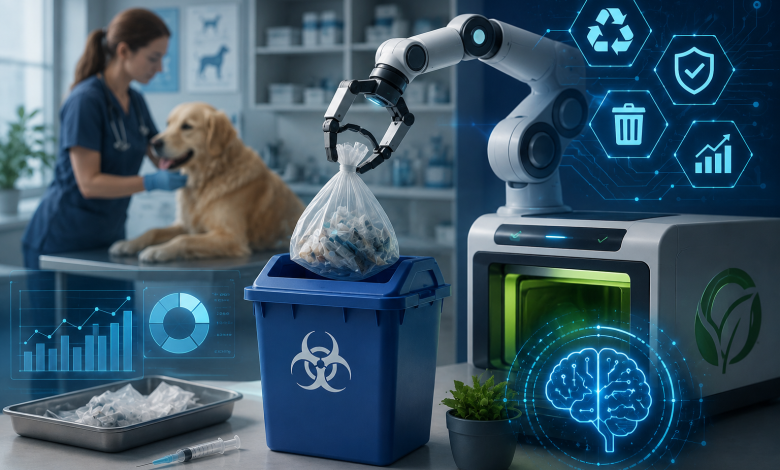
Veterinary clinics help animals every day through surgeries, diagnostic testing, vaccinations, and routine health care. These activities generate medical waste that must be disposed of safely. Today, AI and technology are helping veterinary practices manage medical waste more efficiently, reducing risks for employees, improving compliance, and protecting the environment.
Modern veterinary clinics are increasingly using digital tracking systems, smart inventory tools, and technology-based disposal processes to improve waste management. These systems help clinics identify waste categories, monitor storage conditions, and ensure that hazardous materials are handled properly.
Understanding Veterinary Medical Waste
Veterinary clinics produce different types of waste every day. Some waste is not harmful and can go in regular trash cans. Other waste needs special care because it can make people sick or hurt them.
Examples of this waste include used syringes and scalpels. Gloves and bandages used in surgery can also get contaminated. Blood samples and tissue specimens need to be handled with care. Animal bodies from certain procedures need to be disposed of in approved ways. Knowing what type of waste you have helps clinics follow safety rules and save money on disposal. Veterinary clinics must handle medical waste properly.
Technology platforms can help clinics classify waste correctly and maintain digital records for regulatory compliance, making waste management more organized and accurate.
Using Technology for Waste Segregation
We need to sort waste as soon as we make it. This way it is easier to get rid of waste and safer for everyone. Sorting waste also stops hazardous materials from getting mixed up with regular trash.
Every treatment room needs to have the correct bins. When we are done with needles, they should go into sharps containers. Infectious waste should be kept separate from office waste, and medicines should have a designated storage area until they are collected.
Some veterinary facilities now use color-coded digital labeling systems and barcode tracking to reduce sorting errors and improve waste handling accuracy. Proper segregation keeps employees safe and helps reduce disposal costs.
Technology-Assisted Sharps Management
Sharps need to be handled carefully from the moment they are used. After using needles or blades, staff members should place them into approved containers immediately. Sharps should never be left on tables or counters.
Sharps containers should always be close by so staff can dispose of them safely. Workers should avoid recapping used needles whenever possible, and containers should be replaced before they become too full.
Smart sharps containers and monitoring systems can help clinics know when containers are approaching capacity, reducing the risk of overfilling and accidental injuries.
Digital Tracking for Pharmaceutical Waste
Veterinary clinics use many medications every day. Some medicines expire before they can be used, while others remain after treatment is completed. These medications should never be thrown into regular trash or poured down drains.
Digital inventory systems can help veterinary clinics track medication usage, monitor expiration dates, and reduce unnecessary pharmaceutical waste.
“The expired medicines need to be kept in a secure place until they can be thrown away. The clinics should keep track of all the medicines they have. They should check what they have in stock on a regular basis. This helps to prevent waste. There are companies that are licensed to get rid of medicines in a safe way. If the clinics get rid of the medicines properly, it helps to keep the water clean and safe for the wildlife. These licensed companies safely dispose of the pharmaceutical waste. This helps to protect the pharmaceutical waste from harming the water supplies and the wildlife.”
– Kevin Webber, CEO of TriHaz Solutions
Proper pharmaceutical waste management helps protect water supplies and wildlife from contamination.
Handling Animal Tissue and Biological Waste
Surgeries and laboratory work generate biological waste such as animal tissue, blood-soaked materials, and other potentially infectious items. These materials can spread infection if they are not handled correctly.
Waste should be stored in closed containers and kept in a secure area until it is collected. Proper storage helps reduce odors, prevent leaks, and protect employees and the surrounding community.
Digital tracking systems can also help clinics document collection times, storage conditions, and disposal records for biological waste.
AI-Powered Inventory Management for Waste Reduction
Good inventory management helps prevent waste before it is created. Clinics should only purchase supplies they expect to use, which reduces expired products and unnecessary disposal.
Older supplies should be used before newer ones, and staff should monitor expiration dates throughout the year.
AI-driven inventory tools can analyze usage patterns and help clinics order supplies more accurately. This reduces excess inventory, lowers costs, and minimizes medical waste generation.
Using inventory systems allows veterinary practices to keep better track of stock levels and make smarter purchasing decisions.
Technology and Disposal Partner Coordination
Many veterinary clinics rely on licensed disposal providers to remove regulated medical waste. Technology is making this coordination easier through digital scheduling systems, electronic pickup records, and automated compliance documentation.
Cloud-based tracking tools allow clinics to monitor collection dates, maintain disposal records, and reduce the risk of missed pickups. These systems can also improve communication between veterinary practices and waste disposal partners, helping clinics stay organized and compliant with local regulations.
“Technology is changing how businesses manage waste disposal. Digital scheduling, electronic tracking, and automated recordkeeping help facilities stay organized and reduce delays. For veterinary clinics, having accurate disposal records can improve both operational efficiency and regulatory compliance.
– Jason Wright, Owner of Wright Dumpster Rentals
By combining proper waste-handling procedures with modern waste-management tools, veterinary practices can create safer workplaces and maintain more reliable waste-disposal operations.
Conclusion
Medical waste disposal remains an important responsibility for every veterinary practice. AI and technology are making this process safer and more efficient by improving waste classification, inventory management, compliance tracking, and disposal planning.
Veterinary clinics that combine proper waste handling procedures with modern technology can reduce risks, control costs, and better protect employees, animals, and the environment. As digital tools continue to evolve, technology-driven waste management will become an increasingly important part of responsible veterinary care.
Veterinary practices that manage waste responsibly demonstrate professionalism and environmental stewardship. By embracing both safe disposal practices and modern technology, clinics can create healthier workplaces and stronger communities while supporting the future of veterinary medicine.