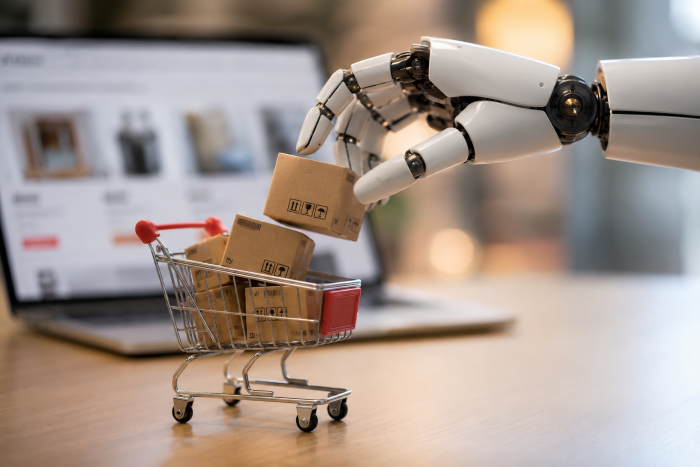
For twenty years, e-commerce rode high on a single narrative of creating a straight line between buyer and seller. It was convenient, quick, and transparent. No need for a middleman, they said. Then AI agents entered the stage, and here we go again. Except this time, the algorithm isn’t chasing a financial commission – it wants something much more valuable: the buyer’s actual decision.
Having spent twelve years building infrastructure that connects buyers with local sellers across fifty-plus countries, I’ve caught quite a lot of retail shifts. Platforms absorbed everything users craved: mobile-first approach, social commerce, same-day delivery. Meanwhile, AI-commerce feels different. It doesn’t just extend the existing model, it shatters the core assumption the whole system was built on.
When Amazon won a court order in March 2026 to block Perplexity’s AI agent from buying things on its platform, the tech press called it a data security issue. But the real problem is the fact that AI hacks the marketplace’s monetization model itself. Amazon relies heavily on ad revenue, beating over $68 billion in ad revenue in 2025. It’s all about shoppers scrolling through sponsored listings, ‘similar’ products, banners, and search results before purchasing. By routing a user straight to the checkout, Perplexity’s AI completely bypasses those screens thus damaging Amazon’s revenue. This distinction really matters if you want to understand where e-commerce is actually going.
The Browsing Journey Is About Monetisation
Let’s say it loud: standard online checkout funnels were never designed to help the buyer. They were built to monetise the time you spend scrolling through them. In fact, by mid-2025, nearly 10% of all the money Amazon made came from selling these ads to shoppers on their way to buy something specific. Such a dynamic has always created a quiet war between platforms and brands.
The marketplace owns customer data so they can easily dictate their own rules on a path of customers finding your profile. Buyers think they have a freedom of choosing from more options, while sellers know visibility is something you pay for.
The AI agents completely ruined this setup as they have no emotional involvement at all. While people pay attention to the quality of photos, brand vibes, reviews from real customers, algorithms ignore all the ‘noise’. It only processes the raw data from the website – exact price, current availability, and how fast it ships – and buys it instantly.
In July 2025, AI-driven traffic to US retail sites grew by 4,700 % compared to the year before. During Cyber Week 2025, Salesforce estimated one in five global orders was AI-influenced. Experts project bots could control up to $5 trillion of global shopping by 2030, leaving platforms with no money coming from the whole browsing journey.
Who Pays When a Bot Buys Wrong?
Big wins like the Amazon-Perplexity court get some extra time, but they still don’t call off a huge shift in how we all shop online. It’s only been a bit more than a month (April 2026) since Target updated its rules right before launching a new AI shopping assistant built on Google Gemini. They added a sneaky clause stating that if the AI buys the wrong thing, you still have to pay for it.
People roiled on, but the whole situation highlighted the question no one asked yet: if a bot messes up your order, who pays for the mistake? Target covered their own backs legally, but the price of such a ‘legal’ solution may cost customer’s trust.
I think the company that built the bot should own the mistake, but figuring out who is at fault when software makes a bad guess is incredibly messy. Right now, there’s no official rulebook for this, and Target’s policy just proves the tech world has a huge problem to be solved.
Nobody Priced Trust Correctly
A Worldpay study found that 44% of American consumers are totally fine with an AI agent shopping for them; and that number jumps to 59% if you look at people aged 18 to 34. But being okay with a bot trying to shop for you is not the same as being okay with a bot messing up your order.
I see this all the time because of what we do at Udora. Gifting is all about emotional connection and trust. If you buy an everyday item like shampoo and the bot gets it wrong, it’s annoying, but it’s not a disaster. But if a bot picks out the wrong birthday bouquet or wedding gift on our platform, it completely ruins a special moment. No refund can fix that. For now, figuring out who takes the blame when a bot makes a mistake isn’t just a legal issue, but a big responsibility for businesses that actually care about their customers.
This isn’t just about the gifting. Morgan Stanley predicts that up to 20% of all US e-commerce sales will be AI-driven by 2030. At such a scale, having clear guidelines on keeping customer’s trust is a must. It’s the exact difference between a shopping channel that everyone loves and one that people don’t come back to because of the ruined trust.
What About Small Businesses?
While giants argue over legal details, independent sellers have no voice at all in how these algorithms process data that influences their lives. A research from New Generation pointed out that those shops are about to gain more clients that adapt their catalogues to the AI.
AI bots focus on speed, so they scan raw data codes, leaving all the emotional value overboard. Those businesses that don’t have real-time stock feeds and clean developer links, aren’t just ranking lower — they can be completely invisible to the bot. The point is, most small businesses don’t have such tech to fit into modern AI standards.
Most of the 1,500 local sellers Udora works with built their businesses over years through great products, nice photos, communication style, and solid reviews from real people. Now, their survival relies entirely on whether our platform can translate their physical craft and emotional involvement into backend data the AI can eat.
Still, only 21% of business leaders say they’re 100% sure how bots behave inside their own companies. If retail giants with massive tech teams can’t see what these bots are doing, what is left for small businesses?
The Storefront Is Moving Inside the AI
Online storefront is actually moving from the website screen directly into the AI itself. This means ‘Answer Engine Optimisation’ (AEO) is taking over traditional SEO. On paper, you have to format your data so a machine can read it instantly. In reality, there’s still a real person behind every transaction. And businesses just need to balance: you need to take care of people who want to feel trust and empathy, and satisfy the AI that only expects the right codes.
Businesses need to act on three things immediately. First, big platforms that make money off ads need to redesign their ad networks around the AI bots. Second, companies that use their own AI bots need to work out their strategy for mistakes before any AI mistakes ruin their reputation. Finally, we need to stop just talking about big tech tech and pay attention to small businesses, giving them tools they need to stay visible.
It’s obvious that the digital storefront is changing, and banning bots is not the answer – it is just delaying the inevitable. The key to success now is to figure out how to balance machine-ready code with real human empathy.