Aleksei Kipin has spent well over a decade designing products across Russia, Singapore, and the United States, and he keeps running into the same pattern: companies add AI to a workflow, watch it dazzle in a demo, then watch employees quietly go back to their spreadsheets. His argument is that most enterprise AI fails not because the technology is weak but because it ignores how people decide to trust a system.
He works at the intersection of design, product, and AI, currently leading transformation work in enterprise recruiting, an area where a bad recommendation carries legal, ethical, and human weight. Outside of that work, his Figma plugins have reached more than 11,000 designers, which has shaped how he thinks about adoption: users rarely want a grand vision; they want one annoying problem solved fast.
We spoke with him about the trust systems underneath hiring, the cultural assumptions that break AI products in new markets, and why he thinks the industry is overvaluing what AI can generate and undervaluing the judgment to know what should exist in the first place.
Enterprise recruiting is one of the first areas getting disrupted by AI. As someone leading AI transformation in this space, what’s the biggest mistake you see companies making when they try to add AI to their hiring processes?
The biggest mistake is treating recruiting as a simple automation problem. Companies look at hiring and see repetitive tasks: screening, scheduling, summarizing interviews, writing feedback. So they add AI on top of the workflow and expect efficiency.
But hiring is not just a workflow. It is a trust system. Candidates need to feel they are evaluated fairly, recruiters need to trust the recommendations, hiring managers need to understand the reasoning, and legal teams need to know the process is defensible. If AI makes the process faster but less transparent, it creates more risk than value.
The best use of AI in recruiting is not replacing judgment. It is reducing noise around judgment.
Most business leaders understand AI can automate tasks, but fewer know how to design AI features that employees actually trust and adopt. What separates AI implementations that get embraced from ones that get quietly abandoned?
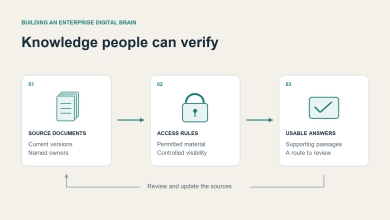
The difference is control. Employees do not trust AI because it is “smart.” They trust it when they can understand it, correct it, override it, and see why it made a recommendation.
Bad AI features feel like a black box. Good AI features feel like a very capable assistant that stays in its lane. They show sources, explain confidence, ask clarifying questions, and make it easy for a human to make the final call.
A lot of enterprise AI fails because it is designed for executive demos, not for the messy reality of daily work. The demo looks impressive, but employees quietly go back to spreadsheets, Slack, email, and manual work because those tools feel safer.
You’ve designed products across Russia, Singapore, and the US. When companies expand AI products internationally, what cultural assumptions do they make that end up costing them adoption in new markets?
The biggest assumption is that trust works the same way everywhere. It does not. In some markets, people are comfortable with automation if it comes from a strong institution. In others, people need much more transparency before they trust a system. The tone also matters. A direct AI assistant that feels efficient in the US can feel rude or careless in another culture. A very cautious assistant that feels safe in one market can feel uselessly slow in another.
Companies also underestimate how much local workflow, regulation, hierarchy, and communication style shape adoption. Translation is the easy part. The hard part is adapting the product’s behavior to how people actually make decisions in that culture.
In your role, you influence strategy without managing a team. For executives trying to drive AI transformation, what do you wish they understood about how individual contributors actually move these initiatives forward?
Executives often think strategy moves through org charts. In reality, a lot of AI transformation moves through senior ICs who can connect product, design, engineering, legal, data, and operations.
The most valuable ICs are not just making screens. They are turning ambiguity into something concrete: prototypes, workflows, decision models, risk maps, and tradeoffs that teams can react to. That is where strategy becomes real.
For executives, the lesson is simple: do not measure senior ICs only by output volume. The real value is often in framing the right problem, preventing expensive mistakes, and getting multiple teams aligned around a direction that is actually buildable.
Your Figma plugins have 11,000+ users. What does building tools for designers teach you about the gap between what executives think users need from AI versus what they’ll actually use?
Building tools for designers teaches you that users do not care about your big vision at first. They care whether the tool solves one annoying problem immediately.
Executives often want AI to be transformative. Users usually want it to save them five minutes, remove a repetitive step, or make something easier without changing their whole workflow. That sounds small, but that is how adoption starts.
The mistake is trying to build an AI “platform” before you have earned trust with a useful feature. In my experience, the best tools are narrow, fast, predictable, and easy to abandon if they do not help. That is a much higher bar than making something look impressive in a keynote.
When you’re designing an AI feature for an enterprise product, how do you balance what’s technically possible, what’s legally compliant, and what employees will actually trust enough to use?
I start by separating capability from permission. Just because AI can do something does not mean it should do it. The product needs clear boundaries: what the AI can decide, what it can only recommend, when it must ask for human review, and what evidence it needs to show. In enterprise products, especially in sensitive areas like hiring, auditability matters as much as usability.
The ideal AI feature does not force people to trust it blindly. It earns trust by being transparent, reversible, and useful in small moments before it takes on bigger responsibilities.
A lot of AI transformation fails because the technology works but human adoption doesn’t; what are the warning signs executives should watch for that indicate their AI rollout is heading toward resistance rather than adoption?
The clearest warning sign is when people use the AI in demos but not in real work. Another one is when employees copy the AI output into another tool and rewrite everything manually. That usually means they do not trust the output, the format, or the workflow.
You should also watch for vague positive feedback. If people say “this is cool” but cannot name a specific task it replaces, adoption will probably be weak.
Real adoption is boring. People use the feature repeatedly, complain when it breaks, and start expecting it to be part of the workflow. If nobody depends on it, it has not transformed anything.
As AI reshapes product design and development, what’s one thing the industry is getting wrong right now that business leaders should be preparing to address?
The industry is overvaluing generation and undervaluing judgment. AI can generate screens, code, research summaries, and product ideas very quickly. But speed is not the same as quality. The hard part is knowing what should exist, what should not exist, what is risky, what is generic, and what actually solves the business problem.
Business leaders should prepare for a world where production gets cheaper, but taste, product judgment, and systems thinking become more valuable. AI will not remove the need for strong designers and product thinkers. It will expose the teams that never had strong judgment in the first place.