

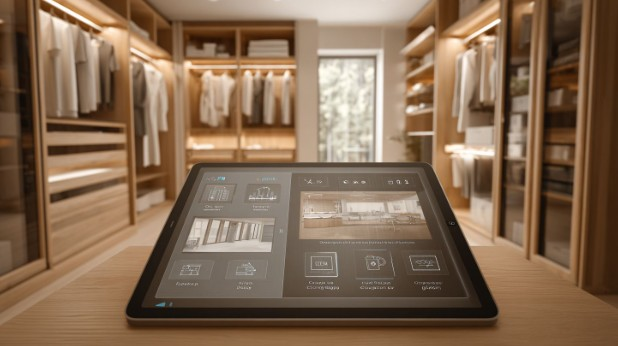
The global furniture industry is undergoing a major transformation, driven by automation, data-backed manufacturing, and smarter business models. Closet manufacturers around the world are no longer relying on traditional production methods alone — they are integrating technology, scalable franchise systems, and digital design tools to meet rising consumer demand for customized, high-quality storage and wardrobe solutions.
Among the companies leading this shift, OPPEIN wardrobes have become a notable example of how technology-driven manufacturing and business expansion strategies can reshape an entire industry segment.
The Business Case for Modern Closet Manufacturers
Consumer expectations have changed. Homeowners and developers now expect personalized, efficient, and durable storage systems rather than generic, mass-produced units. This shift has created strong business opportunities for closet manufacturers willing to invest in automation, smart design software, and scalable production systems.
Companies that combine manufacturing efficiency with strong business infrastructure are positioned to capture a growing share of the global home furnishing market. This is where brands like OPPEIN wardrobes have built a competitive advantage — by treating manufacturing not just as a production process, but as a data-driven business system.
Automation and Smart Manufacturing Driving Industry Growth
Modern closet manufacturers increasingly rely on automated machinery, precision-cutting systems, and intelligent design software to scale production without sacrificing quality. This technology-led approach allows companies to:
- Improve accuracy in product dimensions
- Maintain consistent quality across large production volumes
- Support efficient mass customization
- Reduce manufacturing errors
- Shorten delivery timelines
For brands such as OPPEIN wardrobes, this kind of smart manufacturing infrastructure has become central to their global competitiveness, enabling them to serve both individual homeowners and large-scale commercial developers.
Franchise and Scalable Business Models in the Furniture Sector
As demand grows, more entrepreneurs are exploring scalable business opportunities within the furniture and home storage industry. One emerging trend is the franchise-based growth model, where independent investors collaborate with established closet manufacturers to bring premium wardrobe and cabinet solutions to local markets.
This model allows manufacturers to expand their market presence without bearing the full operational cost of opening new outlets directly. For investors, it offers a structured entry point into a growing industry backed by proven manufacturing systems, design technology, and brand recognition — an approach reflected in how companies like OPPEIN wardrobes structure their global expansion strategy.
Data-Driven Design and Digital Customization Tools
Technology is also reshaping how closet manufacturers interact with customers. Many companies now use 3D visualization tools, digital measurement systems, and design software that allow customers to preview and customize their wardrobe layouts before production begins.
This shift toward digital-first customer experiences reduces costly errors, improves customer satisfaction, and shortens the sales-to-installation cycle — a clear example of how data and technology are becoming core business assets in the furniture manufacturing sector.
Global Expansion Powered by Technology and Business Strategy
The most successful closet manufacturers are those that combine manufacturing technology with strong international business strategy. By partnering with architects, developers, and distributors across different regions, companies can adapt their offerings to local market needs while maintaining consistent product quality.
OPPEIN wardrobes illustrate this approach well, with a manufacturing and business model built to operate across multiple international markets, supporting both residential and commercial furnishing projects.
Why This Matters for the Future of the Industry
The convergence of automation, scalable business models, and digital customer experience is redefining what it means to be a competitive closet manufacturer in today’s market. Businesses that fail to modernize risk falling behind, while those that invest in smart manufacturing systems and structured growth models — similar to the strategy seen with OPPEIN wardrobes — are better positioned for long-term success.
Conclusion
The closet and wardrobe manufacturing industry is increasingly being shaped by technology adoption and smart business strategy rather than traditional production methods alone. As automation, digital design tools, and scalable franchise-style business models continue to grow in importance, manufacturers that embrace this shift — as seen in the global strategy of brands like OPPEIN wardrobes — are setting the pace for the next generation of the furniture industry.