Artificial intelligence (AI) is rapidly transforming healthcare, creating opportunities to move from reactive, episodic care to continuous, personalized health monitoring. AI-driven analytics, paired with advanced biosensors, can translate streams of physiological data into actionable insights, helping clinicians and individuals make informed decisions in real time. But with great power comes great responsibility in ensuring that these tools are accurate, ethical, and privacy-conscious. This is critical if they are to achieve their potential.
AI and the Promise of Real-Time Monitoring
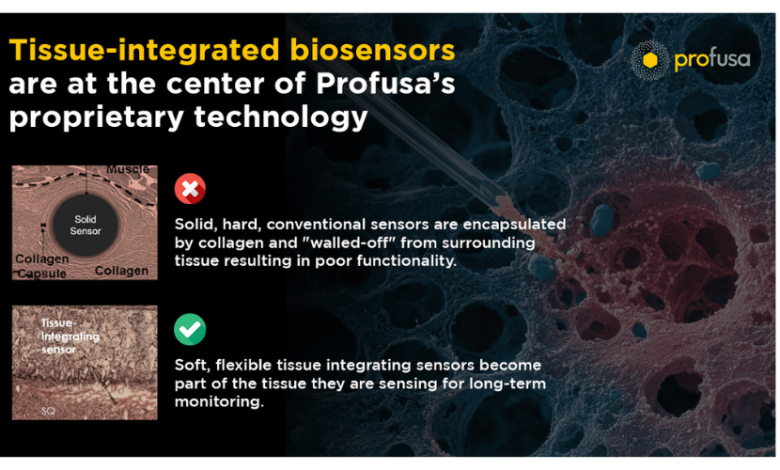
Traditional healthcare relies heavily on periodic measurements, think annual blood tests, sporadic lab work, and occasional imaging studies. While these snapshots are useful, they fail to capture the dynamic nature of the human body. AI, when paired with continuous biosensing technologies, such as Profusa, can monitor key biochemical and physiological markers in real time, detect subtle changes, and anticipate potential health issues before they escalate. This shift allows for proactive interventions, improving patient outcomes and helping clinicians make data-driven decisions. (Source)
Data Quality: The Foundation of Safe AI
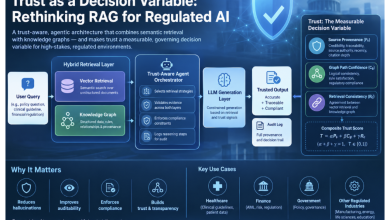
The effectiveness of AI tools in healthcare is entirely dependent on the quality of their underlying datasets. Large Language Models (LLMs) or AI algorithms trained on unverified or incomplete data can produce insights that are noisy at best and dangerous at worst. For AI to be reliable in clinical contexts, datasets must be curated, scientifically validated, and continuously updated to reflect real-world physiological changes. Without this foundation, AI tools risk providing guidance that is misleading or clinically inappropriate.
Ethics, Ownership, and Consent
The rise of continuous health monitoring brings ethical considerations to the forefront. Patients must retain ownership and control over their biological data, determining how it is collected, used, and shared. AI development often requires large volumes of data to achieve accuracy, but aggregating this information must not come at the expense of consent. Transparent models of data governance and patient authorization are essential to maintain trust and uphold the patient-provider relationship.
Navigating the ‘Untrained Hand’
AI tools frequently present recommendations with an authoritative tone, which may create risks if individuals interpret guidance without professional oversight. Safeguards are necessary to ensure that AI outputs are cross-referenced against verified clinical standards. Providing AI insights to patients should be done thoughtfully, with contextual validation and clear communication of limitations, so that individuals can make informed, safe decisions about their health. (Source)
 Privacy in the Age of Continuous Monitoring
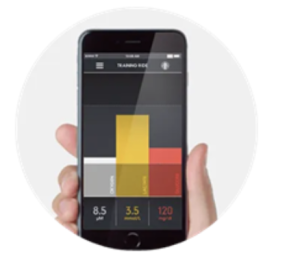
Health data is among the most sensitive personal information, and continuous monitoring generates large volumes of it. However, there is a significant risk of secondary misuse. For instance, an insurance company might analyze heart rate variability or sleep patterns collected from a wearable device to identify early signs of chronic stress or cardiovascular issues, subsequently raising premiums or denying coverage before a medical professional has even issued a formal diagnosis. Insurers, employers, or other parties could interpret these raw patterns in health data to make life-altering decisions about coverage or employment. Consequently, privacy protections, secure storage, and ethical use policies must evolve in tandem with technology to prevent such misuse while still enabling the life-saving benefits of AI-enabled monitoring. (Source)
The Role of AI in Chronic Disease Management
Continuous monitoring combined with AI analytics can fundamentally reshape chronic disease care. Real-time visibility into biomarkers such as glucose, lactate, or tissue oxygenation allows clinicians to adjust treatment plans more rapidly, intervene early, and guide patients in making lifestyle changes before complications arise. The convergence of AI and biosensors has the potential not only to optimize chronic disease management but also to move toward disease prevention by identifying risk patterns and informing behavioral interventions.
Global Impact and Accessibility
The ultimate promise of AI in health monitoring lies not only in accuracy and insight but in accessibility. Technologies that provide real-time, clinically relevant data must be cost-effective and scalable to reach populations across the globe. Ethical, affordable, and validated AI-enabled monitoring can help bridge gaps in care, bringing high-quality insights to regions historically underserved by healthcare infrastructure. Global collaboration and adherence to rigorous regulatory standards are critical to ensure safety and efficacy worldwide. (Source)
Conclusion
AI-driven health monitoring stands at a transformative juncture. Continuous biosensors, validated datasets, and ethically designed AI tools—such as ChatGPT Health and other specialized medical LLMs—offer the possibility of more proactive, personalized, and effective healthcare by translating complex data into actionable insights. Achieving this vision requires careful attention to data quality, patient consent, clinical validation, and privacy safeguards. By prioritizing these considerations, we can harness AI not merely to observe health trends, but to empower patients with understandable health information, support clinicians in diagnosis, and ultimately improve human well-being in a responsible, global, and sustainable way.
References
- Topol, E. (2019). Deep Medicine: How Artificial Intelligence Can Make Healthcare Human Again. Basic Books.
- Chen, M., et al. (2022). “AI in Wearable Biosensors: Applications and Challenges.” Sensors, 22(4), 1234.
- FDA. (2025). “Digital Health Technologies for Remote Monitoring.” https://www.fda.gov/medical-devices/digital-health
- Sandle, T. (2025). “Q&A: Real-time digital healthcare for 2026.” Digital Journal. https://www.digitaljournal.com/tech/q-and-a-real-time-digital-healthcare
About Ben Hwang, Ph.D., Chairman and Chief Executive Officer
From his early exposure as an undergraduate research fellow at the lab of Leroy Hood at Caltech, where the automated DNA sequencer was developed, to bringing cutting edge life sciences tools to the market at Life Technologies Corp. (acquired by Thermo Fisher Scientific, Inc.), Ben has seen first-hand the transformative impact that science and technology have to change our world. Prior to Profusa, Ben served in a variety of leadership roles at Life Technologies Corp., including President of the Asia Pacific Region and Head of the qPCR Division. A former management consultant at McKinsey and Company, Ben earned his M.A. and Ph.D. in Biology from The Johns Hopkins University.