SCADask Research Finds AI Is Shifting from Production to Direction — and SCAD Is Building the Curriculum to Match
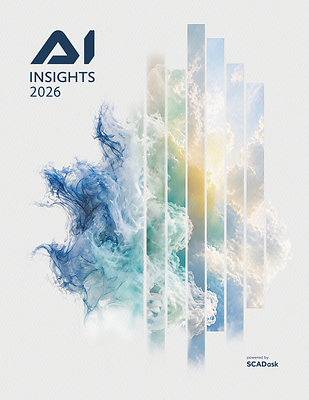
SAVANNAH, Ga., June 4, 2026 /PRNewswire/ — The Savannah College of Art and Design (SCAD) is excited to present the SCAD AI Insights 2026 Report, developed by the university’s applied research unit, SCADask. Drawing on a pre-summit survey of more than 100 creative leaders across entertainment, technology, healthcare, and automotive sectors, and on summit proceedings featuring practitioners from NVIDIA, Google, Adobe, Netflix, Amazon, Canva, Deloitte Digital, The Coca-Cola Company, and others, the report argues that the most consequential challenge in creative practice today is directional.
Survey data anchors the case: AI is driving its biggest efficiency gains where work is generative: research and insights synthesis at 76%, content creation at 67%, ideation at 63%. But 63% of practitioners still define their primary KPI for AI success as time saved, while output quality, customer outcomes, and revenue growth together account for just 16%. The field, the report concludes, is measuring what’s easiest to count.
“This report confirms something we’ve been teaching at SCAD for several years: the most durable creative skill has never been production speed, its judgment,” said Nye Warburton, Dean of the School of Creative Technology at SCAD. “AI accelerates the making. It doesn’t replace the knowing. The designers, directors, and strategists who will lead in this moment are the ones who can look at what a machine generates and ask, ‘Does this feel right?’ Building on taste, context, and intention that’s what a creative education is for.”
Direction Over Fluency: What Creative Leaders Want
Across the summit, a consistent signal emerged: hiring is moving toward resilience and direction, not tool fluency. Creative direction and storytelling lead the human skills gaining most ground — at 61% and 56% respectively — followed by strategy at 44%, research synthesis at 40%, and data literacy at 33%. Prompt craft and technical integration ranks near the bottom. What practitioners are reaching for, the report finds, is interpretive. This moment represents a restructuring of how the industry looks at the creative role.
Students Building with OpenUSD and Omniverse: The Summit’s 48-Hour AI Jam
At this year’s summit, SCAD launched its first AI Summit Jam, a 48-hour sprint powered by NVIDIA. Eighteen teams of more than 70 students across disciplines were challenged to scale 3D content and simulation using digital twins, OpenUSD, and NVIDIA Omniverse, integrating directly into existing pipelines with access to SCAD’s Satellite AI Lab.
The solutions students produced spanned industries and scales: 2D documentation converted to 4D preservation, immersive worldbuilding, a digital twin of hospital foot traffic, a customizable coral reef, and rescue robot training simulations for collapsed interiors. The work that would take quarters to learn was compressed or eliminated by AI-driven platforms, allowing students with the least technical background to keep pace.
The winning team, Project R.E.M. (Remember Every Moment), built a system that lets people capture and step back inside their own memories — assembling a production pipeline across Blender, Unreal Engine 5, Luma AI, Meshy, and Figma within the 48-hour window. Integrating 3D Gaussian splats into Unreal Engine required engineering work-arounds; the team solved it and then went further, identifying a practical path to consumer adoption and use cases the brief hadn’t specified, including applications for individuals with visual or memory impairments.
Dan Schneider, Enterprise Platforms Product Specialist at NVIDIA, observed: “I’m amazed that the students were able to ideate and build such a memorable product in just 48 hours — all while learning new toolsets.”
The AI Jam is a direct expression of the report’s core argument. Multi-agent orchestration, identified by 31% of survey respondents as the emerging AI trend most likely to reshape their industry, is not a future skill. SCAD students are already building it.
How SCAD Is Responding
SCAD is building curriculum and studio infrastructure to develop the direction layer — not just tool fluency:
- Bachelor of Design in Applied AI program: A first-of-its-kind program preparing students to steer emerging technologies with intention.
- Satellite AI Lab: Specialized R&D hubs where students and faculty prototype AI integrations with industry partners, building the organizational and technical fluency the report identifies as the next competitive edge.
- AI Jam Challenges: High-pressure studio environments that encourage students to move beyond prompting and into building complex, ethical technical pipelines with creativity and innovation in mind.
- SCAD AI Values: A university-wide framework emphasizing human creativity, ethical responsibility, transparency, and intentional human-AI collaboration across creative disciplines.
Human-AI collaboration studios lead university investment priorities at 65% across survey respondents, ahead of all other categories. SCAD is already there.
The SCAD AI Insights 2026 report is available now. To learn more about AI education at SCAD and the future of design, visit scad.edu.
SCAD: The University for Creative Careers
SCAD is a private, nonprofit, accredited university, offering 100 graduate and undergraduate degree programs across locations in Atlanta and Savannah, Georgia; Lacoste, France; and online via SCADnow. SCAD enrolls approximately 18,500 undergraduate and graduate students from more than 100 countries. The future-minded SCAD curriculum engages professional-level technology and myriad advanced learning resources, affording students opportunities for internships, professional certifications, and real-world assignments with corporate partners through SCADpro, the university’s renowned research lab and prototype generator. SCAD has earned top rankings for degree programs in interior design, architecture, film, fashion, digital media, and more. Career success is woven into every fiber of the university, resulting in a superior alumni employment rate. A 2025 study found that 99% of recent SCAD graduates were employed, pursuing further education, or both within 12 months of graduation. SCAD provides students and alumni with ongoing career support through personal coaching, alumni programs, a professional presentation studio, and more. Visit scad.edu.
SCADask
SCADask is an applied research studio that leverages the university’s collective expertise to facilitate and generate strategic insights for business and media partners. Our design-centered research identifies business opportunities that reveal the future of commerce, creativity, and culture. SCADask initiatives include the university’s annual Al Summit, an event that unites design and technology luminaries with SCAD leadership, faculty partners, and students to discuss Al’s impact on design, education, and creative careers. SCADask research and award-winning publications like The Future of the American Dream and the Al Insights 2024 and 2025 reports have been featured in USA Today, Fast Company, Paste Magazine, AP News, Yahoo! Finance, California Business Journal, and more. To partner with us on custom research, email [email protected].
 View original content to download multimedia:https://www.prnewswire.com/news-releases/scads-new-ai-insights-report-accelerates-creative-value-302791738.html
SOURCE Savannah College of Art and Design