The marketing industry is no stranger to disruption, but the current wave of AI-driven transformation is creating huge uncertainty for adland.
In a relatively short space of time, AI has embedded itself into every layer of modern marketing. From media buying to creative testing, machine learning models now process vast datasets in real time, identifying patterns and making decisions at scale, something no human could match. Campaigns can therefore be optimised continuously, which, coupled with precise budget allocation, allows for improved outcomes and remarkable efficiency.
Now the question arises: where do humans fit into this automated ecosystem?
The risks of over-reliance – when optimisation goes too far
AI is exceptionally good at achieving the goals it is given. If the objective is to maximise click-through rate (CTR), it will find ways to do so. If the goal is conversions, it will optimise toward that endpoint.
The problem is not the execution; it’s the objective itself. Optimisation, by definition, is narrow. It focuses on measurable outcomes, often with fast turnarounds. When those outcomes become the sole definition of success, other, less quantifiable dimensions of marketing begin to erode.
Left unchecked, AI-driven optimisation can lead to a gradual but significant dilution of brand identity. As algorithms learn which formats, messages, and creative elements perform best, they tend to converge on similar patterns. The result is a kind of creative homogenisation, where ads across different brands begin to look and feel indistinguishable. Marketing approaches that win the click are repeated, scaled, and refined until differentiation disappears.
The pursuit of performance can also encourage what might be called “cheap attention.” Tactics that drive immediate engagement, such as sensational headlines or exaggerated claims, may deliver short-term wins. However, these often do so at the expense of long-term trust. Over time, these tactics erode the very relationships brands are trying to build.
Brand health is harder to measure than clicks or conversions, but remains crucial to long-term success. Without human oversight to provide a broader perspective, brand health can become dangerously sidelined in the optimisation process.
The other extreme – why ignoring AI isn’t viable
For businesses operating in the digital media sector, ignoring AI or minimising its use is no longer an option. Modern marketing operates at a level of complexity and speed that simply cannot be managed through human intuition alone. The volume of data, the fragmentation of channels, and the pace of consumer behaviour all demand tools that can process information and act on it in real time.
However, this framing creates a false dichotomy between AI and humans. In reality, the future of marketing depends on rejecting these binary choices.
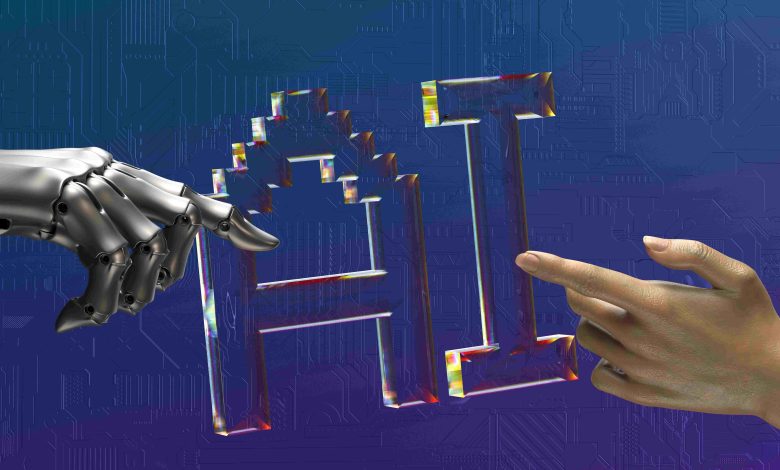
There are clear differences in capabilities that warrant noting. For example, AI brings speed, scale, and precision. It can identify patterns invisible to the human eye and optimise campaigns with relentless consistency. Humans, on the other hand, bring judgment, context, and creativity. They understand nuance, emotion, and cultural relevance. Crucially, they are capable of thinking beyond immediate metrics, balancing short-term performance with long-term brand building.
This is why humans must remain the guardians of brand health in the AI era. Their role is not to compete with machines on efficiency, but to define the parameters within which optimisation occurs.
That means setting the right objectives and establishing guardrails that prevent the pursuit of performance from undermining trust or distinctiveness. It also means continuously evaluating whether the AI-generated outputs reflect the brand’s identity and values.
The case for collaboration
With this approach, AI becomes an amplifier, rather than a decision-maker. It executes at scale, but within a framework shaped by human insight. The result is not simply better performance, but more meaningful performance that contributes to both immediate results and long-term brand equity.
As generative models produce creative assets and autonomous systems take on more decision-making responsibility, the risk of losing control of brand expression will continue to grow. Without clear human direction, brands could find themselves optimised into irrelevance.
The opportunity, however, is equally clear. Brands that successfully integrate AI into their operations can harness the power of data without losing sight of what makes them unique. We’re beyond wondering whether AI will transform marketing; it already has. The question now is how to strike the right balance between machine efficiency and human judgement.
In the end, brand marketing is about more than optimisation; it is about human connection. As of today, humans are still best at defining what that should look like.