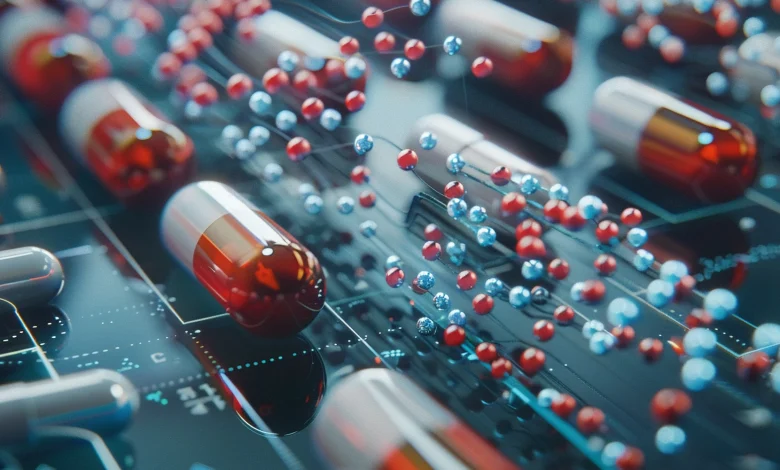
For a long time, medicine worked on a basic guessing game, giving the same standard treatments to everyone with a certain diagnosis, even though every human body is different.
But this approach is finally changing.
Doctors are starting to make use of precision medicine by combining modern biotechnology and, of course, artificial intelligence (AI).
The new approach focuses on each individual instead of a blanket approach for all.
Through research, the exact molecular flaws causing a disease can now be pinpointed by looking at genomics, new ways of finding drugs, and data-driven healthcare innovation.
Medicine can now be built specifically for your biological blueprint, proactively and predictively.
1. Understanding Precision Medicine in the Modern Healthcare Era
It is like having a suit tailor-made for you.
Doctors are now able to choose a treatment for you based on your personal biological markers and genetic profile, as well as your daily lifestyle.
Precision oncology and chronic disease management are completely changing because of this approach.
A good example would be two people who might have the same cancer, but their tumors have different genetic mutations, which means they need totally different drugs.
No one wants to waste precious time on trial-and-error treatments, which means more people are demanding personalized healthcare solutions.
Because of technology, these advanced tools are being normalized.
2. The Role of AI in Accelerating Drug Discovery
In the past, finding a new medicine and getting it to patients was a massive, incredibly expensive gamble.
It often took over a decade and cost billions of dollars to get a single drug through all the testing.
Having to test compounds manually through traditional lab work is a slow process.
But with AI and machine learning, precious time is saved.
Think of these computational tools as a wonderful shortcut. They can scan and analyze massive biological datasets in days rather than years.
Before anyone even approaches a physical lab, AI is able to predict how different chemicals will react together, weed out dangerous options, and spot new disease targets.
AI-driven drug discovery platforms are being invested heavily in by biotech companies because they cut down on timelines and offer more accurate results.
3. How Small Molecule Research Supports Targeted Therapies?
AI is the digital tool designing the blueprints, but small molecule research provides the actual physical keys to fix the problem.
These molecules are minute chemical compounds and are able to slip through cell walls.
Their size makes it possible for them to lock onto specific disease-causing proteins to turn them off.
The main reason targeted therapies are so successful is because of the accuracy; the side effects are cut out, and they only attack the sick cells.
For precision oncology and regenerative medicine, these tools are essential.
In molecular biology and targeted research studies, GSK-3 inhibitors are widely used to see how the cells change and grow.
To build better, safer treatments and study these inner cell reactions, researchers frequently use specific tools like Laduviglusib.
4. AI-Driven Genomics and Personalized Medicine
To study our DNA and act like an instruction manual for the body, genomics is the answer.
The human eye alone can’t read these billions of lines of genetic coding, which brings us to healthcare innovation and data science to do the job.
Within seconds, these machine learning algorithms are able to read through these genetic libraries.
They are able to detect how a person’s body will react to specific medications as well as hidden patterns that indicate expected illness later in life.
This means doctors don’t have to wait for you to get very sick before they do predictive analytics.
This enables them to catch problems early on and to pick the perfect medication for your illness and body.
5. Faster Identification of Disease Pathways Through Machine Learning
A disease pathway is like a biological highway inside your body, like a chain reaction where cells pass messages along until something goes wrong and causes an illness.
Mapping out these highways is incredibly hard because there are millions of moving parts.
Hidden patterns and glitches in a biological system that could easily be missed by humans can now be detected with machine learning.
Scientists can now figure out what steps to take to block a disease because AI is able to speed up the pathway analysis.
To ensure that the math is correct, we still need some real lab experiments, because computers can do all of it.
High-purity research compounds support laboratory innovation and pathway studies by giving scientists a reliable way to test their ideas.
For instance, pathway-focused inhibitors are commonly used in stem cell research and cellular signaling studies to turn specific cell signals on or off.
To control pathways in the lab, scientists regularly use CHIR-99021, which proves that AI models work in the real world.
6. Challenges Facing AI-Powered Precision Medicine
 There are, however, a few challenges to overcome, even though the technology sounds incredible.
Sequencing DNA is incredibly expensive, and so is building advanced AI systems, which means not everyone is able to make use of this treatment at this point.
AI needs to look at huge amounts of private medical information and keep it safe from hackers, which means data privacy is a concern.
On top of that, medical regulators are trying to figure out the safest ethical ways to approve medicines designed by computers.
A new generation of smart researchers who understand computer coding and complex biology is needed to make it available and affordable in clinics.
7. The Future of AI-Assisted Precision Oncology
The fight against cancer will completely change in the near future because of AI-assisted precision oncology.
Cancers that typically mean a death sentence will become treatable and manageable with modern immunotherapy and targeted therapies.
Because of growing partnerships between biotech firms and AI companies that bring the best science and medicine together, fast progress is being made.
In the coming decade, a new era of healthcare innovation will be brought about through the powerful combination of small molecule research, artificial intelligence, and inhibitors like ABT-199.
Conclusion
Medicine as we know it is changing as we speak because of the collaboration of small molecule research and artificial intelligence.
Scientists are working towards personalized care for everyday patients with computers that predict problems and tiny molecules to fix them.
This means that the next generation of medicine will be safer and much more effective.
AI-assisted drug discovery will lead to better patient care and fairer healthcare systems for all.