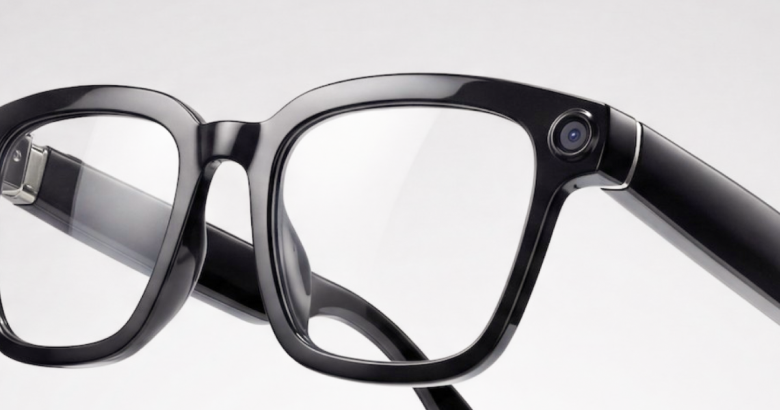
For years, conversations about augmented reality glasses centered on digital overlays, immersive interfaces, and spatial computing. The smart glasses gaining traction today look quite different. Devices like Meta Ray-Bans aren’t trying to project complex holographic graphics. They emphasize something more fundamental: everyday wearability.
That shift exposes a blind spot in how the industry has approached wearable eyewear, because for millions of people, glasses already serve an essential purpose before they become a technology platform. They help people see. That’s a constraint no hardware refresh resolves on its own.
Glasses are not optional for many people
About 75% of adults use some form of vision correction. For most of them, prescription lenses aren’t a preference. They’re on from the moment they wake up, and no amount of interesting technology changes that. Unlike a smartwatch or wireless earbuds, smart glasses enter a category where the hardware already has a job to do.
“They’re medical devices people rely on every day,” says dispensing optician Neggie Saadatpay-Wright, who works with customers at SmartBuyGlasses and has experience across both retail and private optometry.
“The smart features won’t matter if the visual experience isn’t clear and comfortable,” she explains. “If prescription integration isn’t seamless, the device becomes something you try occasionally instead of something you wear all day.”
Many smart glasses concepts assume users can easily swap between devices or treat smart eyewear as situational. That assumption may be one of the biggest barriers to mainstream use.
Workarounds create friction
When devices don’t support prescription lenses well, users improvise: contacts underneath, smart glasses layered over regular frames, or situational use only. These solutions introduce friction, and friction is often what prevents promising hardware from becoming habit.
“Contacts aren’t comfortable for everyone, especially for long days,” Saadatpay-Wright says. “Layering frames adds weight and distortion. And switching between devices makes it feel like extra work.”
Most prescription wearers put their glasses on in the morning and leave them on until bedtime. Each additional step required chips away at the likelihood of long-term adoption. The product may be technically impressive, but habits are built on convenience, not capability alone.
“People don’t want to manage two visual systems,” she says. “They want one pair that works.”
Retailers like SmartBuyGlasses are already seeing how prescription needs shape how consumers approach emerging eyewear categories, particularly when devices are intended for all-day wear. Customers researching smart glasses increasingly ask about prescription compatibility before they ask about features.
The optical complexity behind smart glasses
Integrating prescription lenses into smart glasses isn’t a matter of inserting corrective optics into an existing frame. Electronics change the physical architecture of the eyewear. Temple arms become thicker, weight distribution shifts, frame geometry changes, and all of it affects how lenses sit in front of the eye.
“Pupillary distance accuracy, optical center placement, progressive corridor design, base curve, and frame tilt all have to align properly,” Saadatpay-Wright explains. “Even small misalignments can impact comfort and clarity over a full day of wear.”
For people with stronger prescriptions, the challenges compound further. Lens thickness, edge thickness, and distortion sensitivity all increase. If frames aren’t designed with these realities in mind from the start, the final product reflects that.
“Higher prescription patients are often the first to notice,” Saadatpay-Wright says. And they’re also among the least likely to tolerate a workaround for long.
Prescription as the foundation, not an add-on
The manufacturers positioned to lead this segment will be those who design for prescription wearers from the beginning, not those who retrofit compatibility after the hardware is finalized. That means optical-grade lens integration, support for progressive lenses and higher prescriptions, and weight distribution that accounts for electronic components before other decisions get locked in. It also means working closer to the retail and optical dispensing side of the industry, where the practical realities of prescription eyewear are better understood.
“The wearer shouldn’t feel like they’re sacrificing their vision for technology,” Saadatpay-Wright says. “It should feel like a premium pair of everyday glasses, just smarter.”
Rethinking what “augmentation” means
The AR industry has long defined augmentation as digital information layered onto the world. But improving how people see the world is also augmentation, and corrective lenses have been doing it for centuries.
Smart glasses that integrate vision correction aren’t just accommodating a medical need. They’re combining two things people actually want into a single object. The industry hasn’t fully reckoned with what that opportunity looks like.
For the millions of people who already rely on glasses every day, the most successful wearable technology may not feel like a gadget at all. It may just feel like a great pair of glasses, one that happens to do more.
For SmartBuyGlasses, that shift reflects a clear direction for the category, as consumers increasingly expect eyewear to combine vision correction and technology seamlessly.