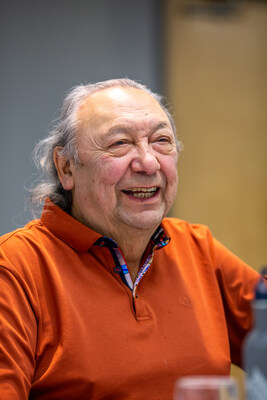
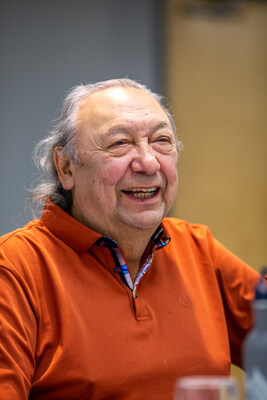
Richard Ejinagosi Kistabish and Sophie Malavoy to receive honorary doctorates at the 2026 Graduation Ceremony
QUÉBEC CITY, May 20, 2026 /CNW/ – Institut national de la recherche scientifique (INRS) will recognize two outstanding individuals by awarding honorary doctorates to Anishinabe leader Richard Ejinagosi Kistabish and science communicator Sophie Malavoy at its graduation ceremony on May 23. This will be the first honorary doctorate for both recipients, who have devoted their lives to sharing knowledge and lived experiences to advance our society.
On this occasion, INRS will also confer the title of Professor Emeritus on Professor Jean–Pol Dodelet, a distinction awarded for the first time since 2022.
This year’s ceremony will be historic, as INRS will welcome the largest graduating cohort in its history.
Richard Ejinagosi Kistabish: A messenger of Indigenous knowledge and experience
Richard Ejinagosi Kistabish’s commitment to advocating for the recognition of Indigenous nations and cultures is rooted in his personal experience with residential schools. Throughout his career, his political and community engagement has been focused on healing, reconciliation, and the search for solutions.
As leader of the Legacy of Hope Foundation, Mr. Kistabish played a key role in collecting 800 testimonies from residential school survivors–testimonies that informed the work of the Truth and Reconciliation Commission of Canada. Today, he continues to raise awareness of issues surrounding Indigenous languages. Since 2022, he has served as Chair of the Canadian Commission for UNESCO and represents North America on the global task force for the International Decade of Indigenous Languages (2022–2032).
“We commend the commitment and courage of Richard Ejinagosi Kistabish, an Anishinabe symbol of resilience, a visionary, and a deeply engaged political figure. The fact that Indigenous voices can now be heard more broadly, and that their realities are increasingly reflected within our universities, is thanks to individuals like him, who have spoken up on behalf of their communities, denounced injustices, and fostered meaningful dialogue between peoples in Québec.”
— Luc–Alain Giraldeau, Chief Executive Officer of INRS.
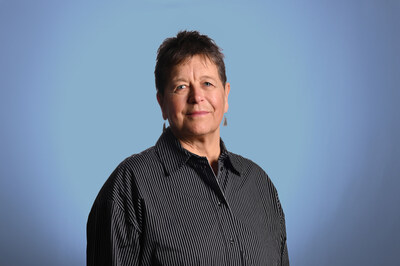
Sophie Malavoy: Sharing science with everyone
A chemical engineer by training, Sophie Malavoy has dedicated her career to making science accessible, engaging, and inspiring. As an author, professor, filmmaker, and journalist, she has led numerous initiatives aimed at bridging the gap between research and society.
Over 16 years as director of the Cœur des sciences at UQAM, she helped organize more than 1,000 outreach activities, reaching audiences of all ages and fostering a deeper understanding of scientific issues.
Internationally recognized, she has been named a Knight of the French National Order of the Legion of Honour and is a recipient of the Thérèse–Patry Award presented jointly by the Association des communicateurs scientifiques du Québec (ACS) and Radio–Canada.
“For Sophie Malavoy, as for us at INRS, democracy, quality of life, and sound decision-making depend on access to scientific knowledge. Throughout her career, she has championed the dissemination of scientific knowledge and culture. A leading science communicator, she has also inspired others to follow her example. Through her achievements and her vision of science, Ms. Malavoy is a source of inspiration for the INRS community.”
— Luc–Alain Giraldeau, Chief Executive Officer of INRS.
Tribute to Jean–Pol Dodelet, named Professor Emeritus
For the first time since 2022, INRS will award the honorary title of Professor Emeritus to Jean–Pol Dodelet, following a 34–year career at the Énergie Matériaux Télécommunications Research Centre.
A renowned scientist and global leader in fuel cell catalyst research, Professor Dodelet has made major scientific contributions, including numerous publications–in the journal Science among others–and several patents. He also held an industrial research chair, a first in the history of INRS and its centre. A Fellow of the American Association for the Advancement of Science (AAAS), he is among the most highly cited researchers at INRS, with more than 260 publications.
“Professor Dodelet has left a lasting mark on energy research, significantly contributing to the national and international reputation of INRS. Although retired from INRS since 2015, he continues to play an active role in advancing knowledge in the field of fuel cells. In recognition of his exceptional contributions to science and the ongoing excellence of his research program, INRS is proud to confer upon him the title of Professor Emeritus.”
— Luc–Alain Giraldeau, Chief Executive Officer of INRS.
A historic graduation ceremony for INRS
The honorary degrees will be awarded by INRS Chief Executive Officer Luc–Alain Giraldeau during the graduation ceremony on May 23 at Palais Montcalm. The 2025–2026 cohort is the largest in INRS history, with 201 graduates.
For more information, visit: inrs.ca/en/studies/graduation-ceremony
About INRS
INRS is an academic institution dedicated exclusively to graduate research and training in strategic sectors in Québec. Since its creation in 1969, it has actively contributed to Québec’s economic, social, and cultural development. INRS ranks first in Québec in research intensity. It is made up of five interdisciplinary research and training centres located in Québec City, Montréal, Laval, and Varennes, which focus their efforts on strategic sectors: water, earth, and environment (Eau Terre Environnement Research Centre); energy, materials, and telecommunications (Énergie Matériaux Télécommunications Research Centre); urbanization, culture, and society (Urbanisation Culture Société Research Centre); and health and biotechnology (Armand-Frappier Santé Biotechnologie Research Centre). Its community includes nearly 1,500 members, including students, postdoctoral fellows, faculty members, and staff.
About Indigenous Studies at INRS
The INRS–UQAT Joint Research Unit in Indigenous Studies stands at the crossroads of scientific and Indigenous knowledge, with the aim of highlighting the contributions of Indigenous Peoples to the future of our societies and to humanity’s cultural heritage. In Abitibi-Témiscamingue, researchers are engaged in the co-creation and mobilization of knowledge to address issues and questions of importance to Indigenous communities. Our master’s and doctoral programs in Indigenous Studies–unique in Québec–draw on innovative pedagogical approaches, including talking circles. We are actively working to strengthen cultural awareness, build meaningful relationships, and ensure the relevance of research conducted at INRS, while fostering greater recognition of Indigenous knowledge within the Université du Québec network.
SOURCE Institut National de la recherche scientifique (INRS)