



Tablets have quietly become one of the most important pieces of modern technology infrastructure. Once viewed primarily as entertainment devices, iPads are now widely used for remote work, digital collaboration, education, design, travel and everyday communication.
As digital lifestyles continue evolving, many consumers are becoming increasingly dependent on mobile devices that can seamlessly move between personal and professional use. For millions of users, tablets now function as portable workstations, creative tools and productivity hubs all at once.
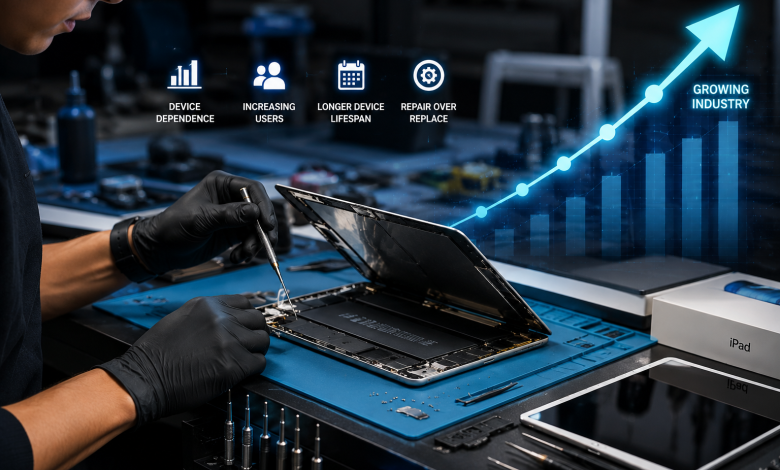
That growing reliance has also created a parallel shift in consumer behavior: more people are choosing ipad repair over full device replacement when problems arise.
The trend reflects broader changes happening across the technology industry, where rising hardware costs, sustainability concerns and smarter maintenance practices are reshaping how consumers think about electronics ownership.
The changing economics of consumer technology
Premium consumer electronics have become significantly more expensive over the past decade. Devices are now designed with increasingly advanced displays, processors, cameras and integrated software ecosystems that encourage long-term use.
At the same time, consumers are becoming more selective about when — and why — they replace devices.
For many users, a cracked screen or weakened battery no longer justifies purchasing an entirely new tablet, especially when repair technology has improved dramatically in recent years.
This shift is helping drive demand for:
- tablet repair services
- iPad screen repair
- iPad battery replacement
- Apple device repair
- same-day repair services
Rather than treating damage as the end of a device’s lifecycle, consumers increasingly view repairs as part of routine smart device maintenance.
The broader “repair versus replacement” conversation has become especially relevant as inflation, rising electronics prices and sustainability awareness influence purchasing decisions worldwide.
Why tablets have become essential daily tools

The role of tablets changed considerably during the rise of remote and hybrid work models.
Many users now rely on iPads for:
- virtual meetings
- note-taking
- content creation
- digital illustration
- media editing
- online education
- document management
For students and professionals alike, tablets often occupy a middle ground between smartphones and laptops, offering both mobility and productivity.
As a result, device downtime has become far more disruptive than it once was.
A cracked iPad screen or battery issue can interrupt workflows, communication and academic responsibilities almost immediately. This growing dependence has increased expectations around:
- fast turnaround times
- reliable diagnostics
- professional repair technicians
- convenient service models
Consumers increasingly expect repair solutions that match the speed and convenience of modern digital lifestyles.
The growing impact of sustainability and repair culture
One of the most important trends influencing the tech repair industry is sustainability.
Electronic waste has become a major global concern as consumers cycle through devices at faster rates. At the same time, manufacturers continue releasing increasingly premium hardware that requires substantial resources to produce.
This has fueled broader discussions around:
- electronic waste reduction
- circular economy models
- sustainable tech practices
- device longevity
- right-to-repair initiatives
Consumers are becoming more conscious of extending the lifespan of devices rather than replacing them unnecessarily.
In many ways, modern repair culture reflects a larger shift in how people think about ownership. Instead of viewing electronics as disposable products, users increasingly see them as long-term investments that can be maintained, upgraded and preserved over time.
That perspective has helped normalize professional iPad repair solutions as part of responsible technology ownership.
Common issues driving repair demand
Despite advances in hardware durability, tablets remain vulnerable to everyday wear and accidental damage.
Some of the most common repair requests include:
- cracked iPad screen replacement
- battery degradation
- charging port issues
- water damage
- touch responsiveness problems
- speaker and microphone faults
- accidental drops and impact damage
Battery wear, in particular, has become a major issue for long-term users. As tablets age, performance often declines due to reduced battery efficiency, leading many users to seek replacement services rather than upgrading entirely.
Similarly, water damage continues affecting thousands of devices despite improved water resistance technologies across consumer electronics.
The increasing sophistication of repair tools and diagnostics systems has made many of these problems more manageable than in previous years.
How repair technology is evolving
The repair industry itself has undergone significant modernization.
Today’s repair environments increasingly use:
- advanced diagnostic software
- precision repair tools
- component-level analysis
- digital testing systems
- AI-assisted diagnostics
Artificial intelligence is beginning to influence aspects of consumer electronics repair by helping technicians:
- identify hardware failures faster
- streamline diagnostics
- predict recurring issues
- improve repair efficiency
While human expertise remains essential, automation and smart diagnostics are improving both accuracy and turnaround speed across the industry.
This shift mirrors broader automation trends happening throughout the technology sector, where AI is increasingly supporting operational workflows rather than replacing skilled professionals entirely.
In the future, AI-driven repair diagnostics may become even more sophisticated, particularly as devices themselves become more connected and self-monitoring.
Why repair quality matters more than speed alone
Consumer expectations around same-day phone and tablet repair have risen sharply. However, speed alone is no longer the only priority.
Many users are now paying closer attention to:
- repair quality standards
- technician experience
- replacement part quality
- warranty protection
- data security
- transparent pricing
Poor-quality repairs can create additional long-term problems, including:
- display malfunctions
- shortened battery lifespan
- touch sensitivity issues
- overheating
- compromised device performance
For devices containing sensitive personal or professional information, trust and data protection have also become increasingly important considerations.
As consumers store more financial, professional and personal data on mobile devices, confidence in repair handling practices has become a major factor in service selection.
What consumers should look for in iPad repair services
As repair options continue expanding, choosing the right service provider has become more important.
Consumers often benefit from evaluating:
- technician expertise
- diagnostic transparency
- warranty coverage
- repair turnaround times
- communication quality
- replacement component standards
Clear pricing structures and realistic repair assessments are also increasingly valued by consumers seeking trustworthy repair experiences.
In many cases, reliable repair outcomes depend not only on technical capability but also on accurate diagnosis and careful quality control procedures.
Consumers are becoming more informed about repair processes, especially as online reviews, repair communities and digital comparison tools make service quality easier to evaluate.
The future of the repair industry
The future of mobile device repair is likely to be shaped by several overlapping trends:
- rising premium device pricing
- sustainability demands
- AI-assisted diagnostics
- right-to-repair advocacy
- increasing digital dependence
- longer consumer upgrade cycles
As tablets become more deeply integrated into education, business and communication ecosystems, maintaining device functionality will become even more important.
This could lead to broader investment in:
- repair infrastructure
- advanced technician training
- modular repair systems
- predictive diagnostics
- sustainable electronics programs
At the same time, consumers are likely to continue prioritizing smarter lifecycle management for high-value devices.
Why ipad repair is becoming part of long-term technology strategy
The growing importance of ipad repair reflects more than simple convenience. It highlights a larger shift in how consumers interact with technology itself.
Devices are no longer viewed as short-term accessories. For many users, they are central tools for productivity, communication and daily life.
As technology becomes more essential — and more expensive — consumers are increasingly adopting maintenance-focused mindsets that prioritize:
- longevity
- sustainability
- repairability
- value preservation
For the technology industry, this represents an important transition toward more sustainable consumer behavior and smarter device ownership practices.
Rather than replacing devices at the first sign of damage, many consumers are now embracing repair as a practical, cost-conscious and environmentally responsible solution within an increasingly connected digital world.