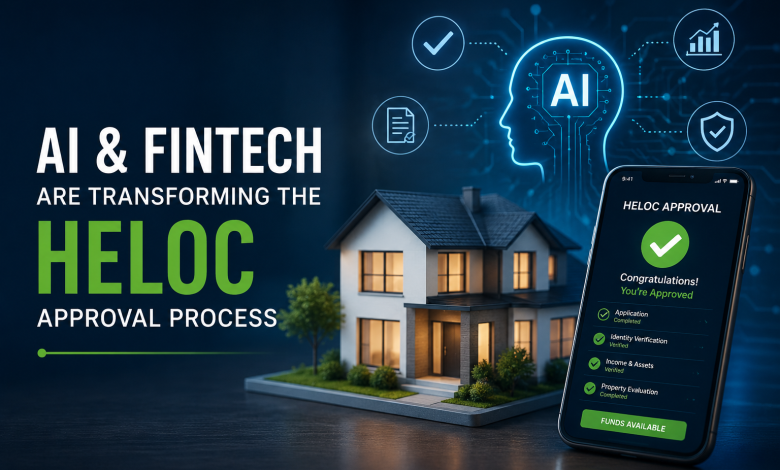
The home equity lending industry is undergoing a major digital transformation. In 2026, artificial intelligence (AI) and fintech innovation are reshaping how homeowners apply for and receive Home Equity Lines of Credit (HELOCs). What was once a paperwork-heavy process involving weeks of underwriting, manual reviews, and in-person appointments is rapidly becoming faster, more automated, and far more borrower-friendly.
As consumers increasingly expect digital-first financial services, lenders are adopting AI-driven tools to simplify HELOC approvals, reduce processing times, and improve the overall customer experience.
Why Traditional HELOC Approvals Were Often Slow
Historically, getting approved for a HELOC could take several weeks. Borrowers often had to provide:
- Tax returns
- W-2s or pay stubs
- Bank statements
- Property appraisals
- Extensive financial documentation
The underwriting process typically involved manual reviews by multiple departments, which created delays and increased operational costs for lenders.
For self-employed borrowers, freelancers, and gig workers, the process could become even more complicated because traditional income verification methods did not always reflect actual cash flow accurately.
As mortgage technology evolved, fintech lenders began looking for ways to modernize the process and reduce friction for borrowers.
.webp)
AI Is Accelerating HELOC Underwriting
Artificial intelligence is now playing a major role in mortgage and home equity lending. AI-powered underwriting systems can analyze financial data much faster than traditional manual reviews.
Modern lending platforms use machine learning algorithms to:
- Evaluate borrower risk
- Analyze income patterns
- Detect fraud indicators
- Verify assets
- Assess repayment probability
This automation allows lenders to process applications more efficiently while reducing human error.
One of the biggest changes is the rise of automated income verification. Instead of relying solely on tax returns, many fintech platforms can now analyze banking activity and cash flow data directly through secure integrations.
This has been particularly helpful for self-employed borrowers who may have significant income but complex tax filings.
Homeowners researching alternative income qualification options often explore bank statement-based HELOC programs that provide greater flexibility for non-traditional borrowers.
Fintech Is Making HELOC Applications Faster
Fintech companies are streamlining nearly every stage of the HELOC process. Many borrowers can now:
- Apply online in minutes
- Upload documents digitally
- Receive instant pre-qualification decisions
- Sign paperwork electronically
- Complete remote closings
This digital-first approach dramatically reduces approval timelines compared to traditional lending models.
Some lenders are also integrating AI chatbots and automated customer support systems to guide borrowers through the process in real time.
Digital HELOC platforms are becoming especially popular among younger homeowners who expect a fast, mobile-friendly borrowing experience similar to other modern financial apps.
Lenders are also investing heavily in digital HELOC infrastructure to improve efficiency and shorten funding timelines.
Automated Property Valuations Are Replacing Some Traditional Appraisals
Another major fintech innovation is the use of Automated Valuation Models (AVMs). These AI-driven systems estimate property values using:
- Real estate market data
- Comparable home sales
- Geographic trends
- Historical property records
- Market appreciation patterns
In many cases, AVMs are helping lenders reduce or eliminate the need for full in-person property appraisals.
This can lower borrower costs while significantly speeding up approvals.
As home prices continue fluctuating across U.S. markets, lenders are increasingly relying on real-time valuation technology to make faster lending decisions.
Borrowers seeking quicker access to equity are also exploring no-appraisal HELOC options that simplify the approval process.
AI Is Expanding Access for Self-Employed Borrowers
One of the biggest impacts of fintech lending is improved accessibility for self-employed individuals and non-traditional earners.
Traditional mortgage underwriting often relies heavily on tax returns, which may not accurately reflect the income of:
- Entrepreneurs
- Freelancers
- Independent contractors
- Real estate investors
- Gig economy workers
AI-powered systems can now evaluate broader financial behavior using:
- Bank statement deposits
- Cash flow trends
- Business revenue patterns
- Asset reserves
This shift is making HELOC approvals more accessible for borrowers who may have previously struggled with conventional underwriting standards.
Programs that allow borrowers to qualify without traditional tax return requirements are also becoming increasingly common in the non-QM lending space.
The Benefits of AI-Driven HELOC Lending
The adoption of AI and fintech tools is creating several advantages for borrowers:
Faster Approvals
Automated systems reduce underwriting delays and speed up funding timelines.
Less Paperwork
Digital document verification simplifies the application process.
Improved Accessibility
Alternative income verification helps more borrowers qualify.
Better Borrower Experience
Online applications and mobile-first platforms create smoother user experiences.
More Personalized Lending
AI systems can analyze borrower profiles and recommend more customized loan solutions.
According to Jeff Miller, CEO of Truss Financial Group, digital lending technology is helping create a more efficient and flexible borrowing experience for homeowners seeking access to their equity.
Challenges and Risks of AI Lending
Despite its advantages, AI-based lending also introduces challenges.
Some concerns include:
- Data privacy risks
- Algorithm bias
- Cybersecurity threats
- Regulatory compliance issues
- Over-reliance on automation
Financial regulators continue monitoring how AI models are used in lending decisions to ensure fair lending practices remain intact.
Many industry experts believe the future of mortgage lending will combine automation with human oversight to balance efficiency and responsible underwriting.
The Future of HELOC Lending
As fintech adoption continues accelerating, the HELOC process will likely become even more streamlined in the coming years.
Emerging trends may include:
- Instant HELOC approvals
- Real-time home equity tracking
- Embedded lending within banking apps
- Personalized AI-generated borrowing recommendations
- Fully digital mortgage ecosystems
For homeowners, this transformation means faster access to equity and greater financial flexibility.
As inflation, interest rates, and consumer borrowing habits continue evolving, AI and fintech are positioning HELOCs as a more accessible and technology-driven financial solution for the modern housing market.