AI is transforming how organizations operate. It is also transforming how they fail.
Over the past two years, I have watched enterprises adopt AI at a pace that outstrips their ability to govern it. New tools get deployed. New vendors get onboarded. New attack surfaces open up. And the compliance and risk functions responsible for managing all of it are still running on infrastructure built for a different era — one where risk moved slowly enough that a once-a-year questionnaire could reasonably approximate reality.
That era is over.
The Questionnaire Was Never the Answer
Third-party risk management has operated on a foundational assumption for decades: that you can learn about a vendor’s security posture by asking them about it. You send a questionnaire. They fill it out. You file it. You move on.
The problem is that a completed questionnaire is a claim, not evidence. It tells you what a vendor believes, or wants you to believe, about their controls at a single point in time. It does not tell you whether those controls are operating. It does not tell you whether anything has changed since the form was submitted. And it almost certainly does not keep pace with the velocity of AI adoption happening inside that vendor’s environment right now.
When your vendors are deploying AI agents that access sensitive systems, generate code, and make decisions autonomously, the gap between a completed questionnaire and actual security posture is not a minor inconvenience. It is a liability.
AI Doesn’t Just Change What You Build — It Changes What You Have to Prove
Here is the shift that most compliance programs have not yet internalized: AI does not just accelerate operations. It accelerates the rate at which evidence goes stale.
A vendor could be SOC 2 compliant in January and in material breach of their controls by March — not because anyone made a bad decision, but because an AI-driven workflow changed how data moved through their environment, and nobody updated the control documentation to reflect it. The audit trail that should show continuous control operation instead shows a gap where human-readable evidence used to be.
This is not hypothetical. It is the natural consequence of deploying probabilistic systems inside deterministic compliance frameworks and hoping the gap doesn’t get noticed.
The organizations building AI-native products understand this intuitively. If your AI system makes decisions that affect customers, you need to be able to explain those decisions, trace them back to documented controls, and demonstrate that the system operated within the bounds you represented to your customers and your auditors. That is an evidence problem. And it requires an evidence solution.
From Assurance Theater to Actual Assurance
At Strike Graph, we have spent years building toward a different model. The premise is simple: documentation is not evidence. It is a claim. Evidence is what proves a control operated as designed, at a specific time, in a specific context, for a specific vendor or internal team.
The difference matters enormously when a breach happens. When a regulator asks questions. When a customer wants to know whether their data was protected by the vendor you onboarded eight months ago. Claims collapse under pressure. Evidence does not.
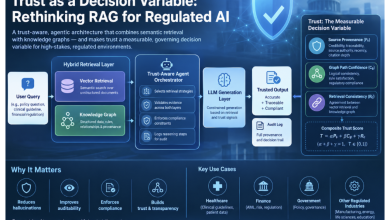
Our platform, Trust Chain, was built on this premise. Traditional TPRM sends a questionnaire and hopes. Trust Chain uses Verify AI — our patent-pending evidence validation engine — to test real evidence from vendors in real time. Not self-reported answers. Actual proof of control operation.
Verify AI ingests a vendor’s security posture, writes a testing rubric based on their specific controls and frameworks, and then evaluates whether the evidence collected actually meets the criteria. Where it doesn’t, it produces a gap report with remediation guidance. This is not a checklist exercise; it is continuous validation.
The result is that enterprise security teams stop asking “did our vendor say they have controls in place” and start asking “do we have proof those controls are working right now?” That is a fundamentally different question, and it produces fundamentally different outcomes.
Why This Matters More in an AI World
The compliance industry tends to treat AI as a feature — a way to automate document collection or speed up control mapping. Those things have value. But they miss the harder problem.
AI changes the operating environment of every organization that adopts it. New workflows, new data flows, new access patterns, new vendors. The security posture that your auditor signed off on last year may bear little resemblance to the posture you are actually running today. And if you are relying on static evidence and self-reported questionnaires to bridge that gap, you are making a bet you may not be able to afford to lose.
The shift from “trust but verify” to “verify continuously” is not optional for organizations operating at AI pace. It is table stakes.
The companies that figure this out early will earn something that no questionnaire can confer: actual trust — the kind that holds up when a customer asks hard questions, when an auditor looks closely, or when something goes wrong.
That is what we are building at Strike Graph. Not compliance as paperwork. Compliance as proof.