For years, we’ve imagined artificial intelligence the way Hollywood taught us to: one super-intelligent system, a single algorithm that understands everything, solves everything, and ultimately rules everything. The story was always about the model—the brain. Build the smartest one, and you win.
That intuition made sense early on. Breakthroughs in large language models created visible leaps in capability. Each new version felt like a step toward that all-powerful system. It reinforced a simple narrative: whoever builds the best base model dominates.
But as the field matures, that narrative is starting to break.
The real battleground isn’t just the base model anymore. It’s the ‘wrapping’ around it: how the model is connected to data, how it is deployed, how it is secured, and how it is turned into a product that people actually use. In many cases, these layers matter as much as the model itself, and sometimes more.
You can see this shift in how leading AI companies are building. Take Anthropic’s recent code leak which provided a glimpse into the system. What stood out in how Claude was constructed was not the model, but the scaffolding around it: system prompts, guardrails, retrieval layers, and orchestration logic. These elements shape behavior, control outputs, and determine whether the system is reliable in real-world use. The difference between a raw model and a usable product often lies in these layers, not in the underlying weights.
This is becoming even clearer in how AI is being used. Many of the most successful applications don’t rely on proprietary base models at all. Instead, they build on top of existing models and differentiate through product design and integration.
A striking example is Cursor. Cursor does not have its own base model. It relies on models built by others. And yet, it has become one of the most compelling AI products in the market. Why? Because of how it is “wrapped” around the developer workflow: understanding entire codebases, maintaining context across files, and reducing friction in day-to-day work. The value isn’t in the underlying model; it’s in how that model is embedded into a system people actually use.
This is exactly why moves by leaders like Elon Musk are so telling. The interest in acquiring tools like Cursor, even without owning a base model,signals a shift in where value is being created. It’s no longer just about raw intelligence. It’s about distribution, integration, and control over the user experience. In other words, the ‘wrapping’ has become strategic. For Musk’s portfolio, this critical component was clearly missing.
The same pattern is emerging across enterprises. Companies don’t just need a powerful model but one that can run on-premise, comply with regulations, connect securely to internal data, and produce consistent outputs. A slightly less powerful model that is deeply integrated into workflows is often far more valuable than a cutting-edge model that sits in isolation.
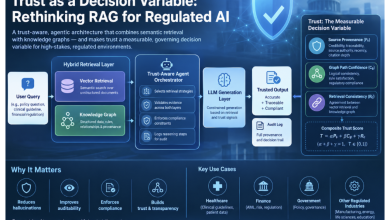
Context has also become central. A model’s usefulness depends heavily on the information it has access to and how that information is structured. Retrieval systems and internal data pipelines often determine the quality of answers more than marginal improvements in the base model. In practice, a well-integrated system can outperform a more powerful but poorly connected one.
History offers a useful analogy. In computing, the winners were not always those with the most powerful chips, but those who built the best systems around them—operating systems, developer tools, and user interfaces. The same is now happening in AI. The base model is the engine, but the product is the car. And most users care far more about how the car drives than the theoretical performance of the engine.
This doesn’t mean the base doesn’t matter. It still sets the ceiling of what’s possible. But as that ceiling rises and begins to converge across leading labs, differentiation shifts elsewhere. It moves to who can build the best “last mile”—the layer that turns raw capability into real utility.
The future of AI won’t be defined by a single algorithm that rules them all. It will be defined by systems, like networks of models, data, interfaces, and infrastructure, carefully designed and deeply integrated.
The base matters. But it’s not the whole story.And increasingly, it’s not even the most important part.
Judah Taub is founder and managing partner of Hetz Ventures, former Israeli intelligence officer, and adviser to governments on AI, cybersecurity and defense strategy.