Artificial intelligence (AI) is currently transforming digital defense systems through its ability to operate at unprecedented levels and speed. Organizations increasingly adopt AI-powered security solutions to improve their cybersecurity defenses because cyber threats are becoming more advanced, frequent and more damaging. The process of implementing this technology creates three main difficulties that organizations must solve: they need to find a suitable balance between automated systems and human monitoring, they must establish methods to improve detection while safeguarding private information, and they need to create rules for responsible technology implementation. This article presents current developments in artificial intelligence along with its various advantages and disadvantages, and ethical issues and necessary strategic frameworks for managing AI development in cybersecurity.
The Growing Cybersecurity Challenge
The combination of massive data streams, interconnected networks and hackers who seek financial gain creates extreme difficulty for cybersecurity experts who work in advanced technology fields. The traditional signature-based detection system fails to identify new security threats which include polymorphic malware, zero-day exploits, advanced persistent threats, deep fakes and social engineering attacks. According to a recent survey, more than 84 % of cyberattacks involved phishing attacks which made this type of attack the most common form of cybercrime. The need for better systems that can detect and counter phishing threats especially through artificial intelligence solutions, has become an urgent requirement because of the rising danger of phishing attacks.
Recent industry reports have illustrated how attackers are leveraging AI:
- AI-based automation systems enable attackers to execute their operations at faster speeds while some security breaches now spread across networks within minutes of their first detection.
- State-funded organizations leverage generative AI models to automate campaigns with hardly any human input.
- The pervasiveness of phishing and the rise of impersonation campaigns in AI-generated communications are now more convincing than ever.
The recent advancements demonstrate two opposing truths which exist in the world of artificial intelligence. The technology provides defenders with improved capabilities to respond to threats while attackers receive new automated tools which help them hide their activities.
Core Contributions of AI to Cybersecurity
Multifaceted is the impact that artificial intelligence has on cybersecurity, though several strategic areas abound wedging its value.
- Enhanced Threat Detection and Analysis
AI systems that use machine learning deep learning and natural language processing techniques demonstrate exceptional capabilities when they process extensive datasets to discover patterns that indicate potential security threats. The systems can perform multiple functions:
- Monitor network traffic and user behavior to spot any anomalies.
- Discover zero-day or polymorphic viruses.
- Put together apparently incongruous signals to contrast and detect concealed sources of attack.
- Automation and Response
The primary advantage of artificial intelligence for cybersecurity purposes exists through its ability to automate various tasks which need human input. The implementation of automated systems for threat assessment, vulnerability detection, patch distribution and security incident management allows organizations to enhance their defense mechanisms. The system allows AI to perform immediate protective measures which include system isolation and malicious traffic blocking and automatic access control modifications that help decrease the time available for attackers to inflict harm.
- Predictive Capabilities and Threat Intelligence
The ability of AI to predict possible vulnerabilities through pattern recognition and predictive analytics creates opportunities for security teams to establish proactive defense systems. AI provides security teams with the capability to forecast potential attack methods which enables them to establish defensive measures before threats occur. The predictive advantage of this system improves organizations ability to evaluate risks while developing their strategic response plans.
- Behavioral Insights and Anomaly Detection
AI-powered behavioral analytics establishes standard behavior patterns which determine what people consider to be normal behavior. Any behavior that goes outside these established standards will create alerts which show that an account has been compromised or that someone has committed insider threats or engaged in illegal activities. The system functions as an effective tool to discover hidden security breaches which need extended periods to develop their full impact because static security measures lack the capacity to detect such breaches.
Automation Versus Human Oversight: The Balancing Act
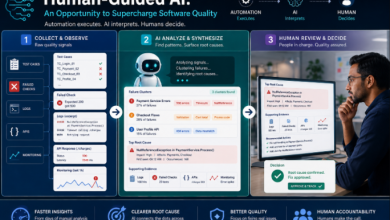
AI systems provide substantial benefits through their ability to increase operational efficiency and their ability to extend service areas. The organization needs to find an optimal solution which combines automated systems with human expertise.
- The Value of Human Judgment
Humans who work as security analysts can understand situations better than machines because they possess contextual knowledge, intuition and ethical reasoning skills. The AI system creates alerts yet humans need to handle alert interpretation because complex environments demand their expertise.
- Handle situations which exist between clear and ambiguous boundaries.
- Determine how particular dangers will impact the strategic operations of the organization.
- To truly make ethical decisions about EU user privacy rights and data control.
- Avoiding Automation Bias
An excessively mechanized preoccupation with AI may give rise to a threat vested in automation bias, a condition in which teams give machinations a free reign to operate, unobjectionably. This behavior can provoke cataclysm, in a way.
- AI models may produce false negatives to overload analysts.
- Consider this interesting notion: False negatives might ease one team into an unstable sense of security, letting evil attackers take advantage.
- A significant reason why society is not overly critical of AI, as it might and should be, is that AI is too often perceived as infallible.
It is crucial to include human supervision within high-impact critical decision loops in order to minimize risk.
Ethical, Privacy and Governance Considerations
AI presents cybersecurity operations with complicated ethical and governance conflicts.
- Data Privacy and Accountability
AI can only get better when it has extensive access to data. And in today’s world, that’s scary.
- How is data collected, stored, and handled?
- When AI models evaluate the behavior of humans, are individuals informed or protected?
- How far does accountability go for AI-decision frameworks?
AI governance needs to ensure that AI systems comply with all applicable legal requirements through their entire operational life because various legal frameworks govern their functioning.
- Bias, Transparency and Explainability
Artificial Intelligence models still operate as ‘black boxes,’ meaning transparency was impaired as far as decision processes are concerned. The system’s lack of transparent operations creates two main problems for security evaluation. Organizations use explainable AI (XAI) methods to make their cybersecurity decisions understandable and necessary for security.
- Dual-Use Risk and Adversarial Exploitation
Attackers can use AI defense tools which were created for military defense purposes for their own purposes. Malicious actors use prompt injection techniques to control models which let them succeed in security tests while creating dangerous content and avoiding detection. AI systems need governance frameworks which must establish testing standards to protect against potential system misuse.
Regulation, Standards, and Responsible Use
The fast development of artificial intelligence within security systems has surpassed the capacity of existing regulatory systems to handle. The cybersecurity industry now understands that organizations require risk management systems together with common standards for testing their security and partnerships with other businesses. At least 177 countries have adopted one or more cybersecurity or personal data protection laws or regulations which demonstrates a worldwide commitment to improving digital security and privacy protection measures. The legal frameworks which govern AI-based cybersecurity systems become essential because these systems will increasingly be used by businesses throughout the world. Recent expert reports advocate for globally harmonized approaches to AI safety that include:
Experts, in their recent papers, have brought forth the view that seeker-friendly approaches to AI safety could also include:
- Guidelines in Terms of the Ethical Application and Deployment of AI.
- logging framework for measuring the performance of an AI algorithm.
- People are continually appearing in each other’s monitoring or assessment frameworks and vice versa, when appropriate.
Security regulations need to align with legal requirements according to corporations and governments, which must establish a balance between their technological advancements and their duty to maintain responsible operations.
Market Dynamics and Future Trends
The AI-based cybersecurity market currently presents all technological advancements and market strategic developments which exist at present. Market research indicates strong growth, with projections showing substantial increases in investment as organizations prioritize AI-enabled detection, automation and risk analytics systems. The expanding market shows that companies need AI-driven cybersecurity solutions because they handle sensitive data requirements of financial services, healthcare and critical infrastructure sectors. The sectors encounter severe security threats which current security tools cannot effectively manage.
Key forecast drivers include:
- Evolving complexities in cyber harassment necessitating intuiting security mechanisms.
- Solutions take longer to come in, causing problems that are severe in many cases.
- A shortage of trained cybersecurity professionals will hasten the adoption of AI and ML-based solutions.
The workforce problem continues to create difficulties because organizations face unfilled cybersecurity positions that number in the millions which hinders their ability to operate their AI systems.
Best Practices for Responsible Integration
Develop a comprehensive strategy which enables the use of AI for cybersecurity in a responsible and effective manner.
- Establish Clear Governance Frameworks
- Networking principles and working policy come from the same idea.
- Enable the interoperability between the principles of privacy and the legal standards for compliance.
- Enhance Explainability and Transparency
- Then there are also application servers utilizing that require identification for actualization.
- Review models regularly to scan for bias and unreliable operation.
- Maintain Human-In-the-Loop Oversight
- Pair automated systems with skilled analysts.
- Lowering the chance of false positives in alerts and speeding up the process of manually reviewing activities.
- Invest in Workforce Development
- Look into the development of training programs that adopt AI in educating cybersecurity professionals.
- Formulate subjects of mutual interaction by melding applied technical know-how with the understanding of ethics as well as justice.
- Monitor and Adapt Continuously
- AI integration should be treated as a process that requires continuous development.
- Organizations need to update their models and operational strategies according to developing threats.
The integration of AI into cybersecurity systems represents a fundamental change which transforms how digital security operations function. The modern security landscape requires organizations to use AI technology because it improves detection abilities and handles standard security operations while providing organizations with future threat assessment capabilities. Cybersecurity defenders face a complex challenge because attackers use AI for malicious activities, while defenders must choose between automated systems and maintaining human control and ethical standards, as well as their security management procedures.
According to Pristine Market Insights, the process of achieving equilibrium between automated systems and their detection capabilities, together with their accountable application, requires both technical solutions and strategic ethical considerations. Organizations that develop artificial intelligence (AI) in cybersecurity market must select operational frameworks which enhance performance while protecting user privacy and preserving organizational transparency and authority. Through this approach organizations can achieve complete AI utilization while maintaining their fundamental principles and protecting their organization from hidden threats.