
Sales teams are adopting AI tools rapidly, but it’s still unclear how much AI tools and chatbots boost productivity. The results so far are inconsistent. Plenty of studies and commentaries state various benchmark scores, but it’s not entirely clear whether those benchmarks provide trustworthy information.
As research expands and practical experience grows, it’s becoming quite clear that AI is only as good as the data feeding it. This is a problem for many companies because they often have three or four disconnected systems between teams. This article describes a practical approach to building the data foundation that makes sales AI work optimally.
Why You Need a Trusted Data Layer
Most revenue teams operate on three separate digital systems: a CRM, a marketing platform, and a product database. Together, these systems form the backbone of a company’s go-to-market (GTM) operation, but they’re rarely built to work as one. Each system has its own data structure and update frequency.
Comparing data from these systems side by side, you’ll see contradictions. AI models that take a holistic picture by comprehensively integrating large data sets may struggle when the cumulative knowledge doesn’t quite add up.
Inconsistencies in these systems tend to follow predictable patterns when they are not aligned:
- Conflicting job titles or company names in duplicate contact records
- Engagement scores in the marketing platform don’t match up with lead status in the CRM
- Usage data shows that the account is being used, but the CRM says that the account has been closed.
- Pricing or terms of contracts are stored differently in CRM and billing systems.
For example, here are some common points of divergence between the revenue team data. A lead scoring model may flag a contact as a potentially high-value client based on marketing engagement, but the CRM data might show that the deal fell through months ago. This could result in the AI GTM assistant recommending sales efforts for an account with next to no chance of making a conversion. Because of the disparity between the data, the AI assistant isn’t able to figure out what’s going on at the company.
Data Contract
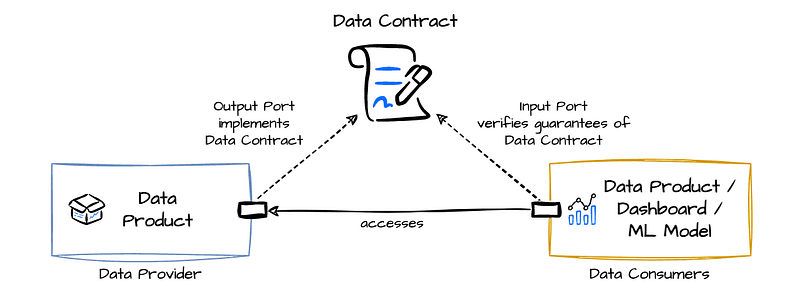
A data contract is a formal agreement between the team that produces the data and the team that consumes it. It sets out guidelines for exactly what the data feed will contain and how it will be presented and updated. Essentially, it’s an agreement to export data according to certain rules, formats, and categories.
For example, the CRM team might agree to export account records several times a day and include a defined format. This kind of structure is very helpful for AI tools as they can easily start comparing large data sets. A data contract should specify the type of data being shared and the exact definition. There should be clearly acceptable file formats and data types for each field.
Without that level of detail, teams end up making assumptions, and those assumptions are where data quality starts to fall apart.
Entity Resolution
Entity resolution is the process of identifying when two or more different records in different systems refer to the same real-world entity, whether that’s a person, a company, or an account. The system then merges them into one conclusive record.
For example, if somebody uses a Gmail account, the domain for the email could either be @Gmail or @Google Mail. A good entity resolution system can tell that this email is from the same domain and will not treat anyone using either of those variations as separate people.
Governance and Privacy Controls
Data governance is the set of rules that determines who can access, modify, and act best on data. Data privacy laws such as GDPR in Europe and CCPA in California clearly rule on what kind of data and information can be stored and processed. Some personal information simply can’t be fed into AI systems. A data governance strategy is essential to ensure compliance with regulations.
Building a retrieval augmented generation AI. RAG is a technique where an AI model pulls relevant context from a live data set before generating a response. In the context of sales AI, this means the model can see the history of an account, such as recent sales, calls, or last purchase. For this kind of system to be effective, your data needs to be stored in a systematic format with all of the data kept up to date and well organized.
The consequences for violating data governance rules can be serious. For example, if you’re dealing with EU customer data, large companies violating GDPR face a €10 million fine. The information you feed into AI needs to be fully compliant with all applicable standards.
Measuring Whether the Data Layer is Working
Building your data set requires ongoing measurement to confirm it’s still functioning well. You should track the following key metrics:
- Data freshness: You can’t let your information fall too far out of date.
- Match rate: What percentage of records across systems have been successfully resolved into a single data entity?
- Model accuracy over time: Check if recommendations or evaluations are drifting in quality and correctness.
No single metric tells the full story on its own. If the matched records are old, a high match rate doesn’t mean much, and new data is useless if it hasn’t been properly resolved. You can get the best understanding of how well your data layer is performing by regularly reviewing these metrics together.
Optimizing AI for Sales Teams
The gap between companies getting real value from sales AI and those still struggling with it almost always comes down to data. Tools and models will keep improving, but none of that matters much if the underlying data is fragmented or out of date. Building a trusted data layer isn’t the most exciting part of an AI strategy, but AI research suggests it’s the most important element in a well-functioning AI system.
If you’re interested in learning more about some similar topics, see our other blog posts.