
Over the past two decades, enterprise software has evolved through distinct layers: on-premise systems, cloud infrastructure, and Software-as-a-Service (SaaS). Each phase simplified complexity and improved accessibility. Today, a new paradigm is emerging in the form of AI agents, and it is redefining how businesses operate at a fundamental level.
AI agents are not just enhancing software. They are replacing SaaS platforms as the primary interface for business operations. This shift moves organizations from human-operated tools to autonomous, machine-executed workflows.
From SaaS Interfaces to AI-Driven Execution
Traditional SaaS platforms are built around human interaction. They rely on dashboards, forms, and CRUD operations such as create, read, update, and delete. Even with automation, SaaS assumes that humans are responsible for orchestrating workflows.
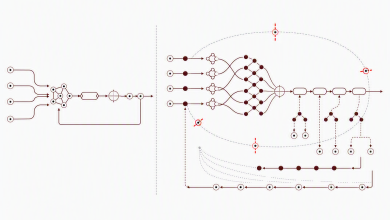
AI agents eliminate this assumption. Instead of interacting with software interfaces, users define goals and intelligent agents handle execution. These agents can plan multi-step tasks, call APIs across systems, execute actions autonomously, and continuously improve based on feedback. This represents a shift from interface-driven workflows to intent-driven execution.
For example, a typical SaaS workflow might involve logging into a CRM, exporting data, analyzing customer churn, building reports, and emailing stakeholders. With AI agents, a user simply defines the objective, such as identifying at-risk customers and sending retention offers. The agent handles everything from data retrieval to analysis, messaging, and outreach without manual intervention.
Why AI Agents Represent a Platform Shift
AI agents are not just another feature layered onto SaaS. They represent a new computing paradigm. Cloud computing abstracted infrastructure and enabled scalable, API-driven systems. SaaS platforms abstracted application deployment and standardized business processes like CRM, ERP, and HR. AI agents go one step further by abstracting the use of software itself.
Instead of interacting with applications, businesses interact with outcomes. AI agents replace interfaces with reasoning engines and execution loops, often monetized through usage-based or outcome-based pricing models. The progression is clear. Cloud abstracts infrastructure, SaaS abstracts applications, and AI agents abstract workflows and labor.
Core Technologies Powering AI Agents
The rise of AI agents is enabled by several converging technologies. Large Language Models translate natural language into structured intent, enabling reasoning, planning, and tool selection. API orchestration allows agents to interact with SaaS platforms programmatically and chain multiple services into unified workflows.
Memory systems provide both short-term context and long-term knowledge, often supported by vector databases for retrieval-augmented generation. Agent frameworks enable task decomposition, multi-agent collaboration, and iterative refinement. Event-driven architectures allow agents to respond to real-time data, system triggers, and external signals. Together, these technologies create a foundation for autonomous and intelligent execution systems.
SaaS Is Becoming Backend Infrastructure
SaaS platforms are not disappearing, but their role is changing. In an AI-driven architecture, SaaS tools become backend infrastructure rather than user-facing products. CRM systems like Salesforce become data layers. Marketing platforms like HubSpot function as messaging APIs. HR systems like Workday act as systems of record. Users no longer interact directly with these tools because AI agents operate them behind the scenes. This transformation shifts SaaS from destination software to headless services that are abstracted by intelligent agents.
Economic Impact From Seats to Outcomes
The traditional SaaS business model is based on per-user licensing and feature tiers. AI agents disrupt this model by reducing the need for large teams managing software tools. Organizations can achieve the same outcomes with fewer human operators supported by AI agents. This leads to a shift toward usage-based pricing models such as compute consumption or API calls, and outcome-based pricing tied to results like leads generated or tickets resolved. As a result, value shifts away from SaaS interfaces and toward AI orchestration layers, model providers, and data ownership.
Organizational Transformation in the Age of AI Agents
Many modern roles exist primarily to operate software systems, including sales operations, marketing operations, and data analysts. AI agents are collapsing these roles by automating core workflows. New roles are emerging in their place. System designers define workflows and constraints for AI agents. AI supervisors monitor outputs and handle exceptions. Data strategists ensure high-quality inputs and governance. The required skill set is shifting from tool proficiency to outcome orchestration and systems thinking.
Risks and Challenges of AI Agent Adoption
Despite their potential, AI agents introduce new challenges. Reliability remains a concern, as agents can produce inconsistent results or inaccurate outputs. Security risks include prompt injection, unauthorized API access, and data leakage across systems. Observability is limited, making it difficult to trace decision-making processes or debug complex workflows. Governance is another critical issue, as organizations must define accountability and ensure compliance in autonomous systems. Enterprises that proactively address these risks will be better positioned to scale AI adoption successfully.
How Early Adopters Are Winning
Leading organizations are not simply adding AI features to existing SaaS platforms. Instead, they are building agent-first architectures. They wrap legacy systems with APIs, develop internal orchestration frameworks, and replace dashboards with natural language interfaces. Most importantly, they redesign business processes around what can be automated rather than which tools to use. This mindset shift is key to unlocking the full potential of AI agents.
The Future Autonomous Business Operations
The next phase of enterprise software is not better tools. It is fully autonomous business functions. AI agents will manage revenue pipelines, execute marketing campaigns, handle financial forecasting, and resolve customer support tickets end-to-end. As this happens, traditional software categories will dissolve. What remains are business objectives, operational constraints, and intelligent execution systems powered by AI.
Final Thoughts
Cloud computing removed the burden of infrastructure. SaaS eliminated the complexity of software deployment. AI agents go even further by removing the need to operate software altogether. This is not incremental innovation. It is a platform shift that transforms how work itself is done. Companies that recognize this shift early and build around it will define the next generation of enterprise technology.