Agriculture has long been viewed as a volatile, low-margin sector—difficult to underwrite and difficult to scale. Weather, yields, prices, and execution risk collide in an environment with limited data transparency, making predictability elusive for farmland investors and financial institutions.
Today, that perception is beginning to change.
Agriculture is at an inflection point, transitioning from intuition-led decision-making to a more data-driven, measurable discipline. Just as finance, insurance, and real estate became more investable once data enabled clearer risk modeling and performance forecasting, agriculture is now undergoing a similar shift. Advances in digital infrastructure, sensing technologies, and artificial intelligence are turning biological complexity into actionable insight, allowing risk to be measured, managed, and priced with far greater precision.
AI is emerging as the missing layer that connects field-level data with financial predictability. By translating agronomic variables into forward-looking indicators, such as yield forecasts, resource efficiency, and climate exposure, AI is helping transform agriculture into a sector that can support more consistent returns. In doing so, it is reshaping agriculture from a necessity-driven industry into a more transparent, resilient, and investable asset class.
Here’s how.
Making Agriculture an Investable Industry
AI is reshaping agriculture from a high-risk, low-margin sector into a more stable and financially attractive one.
Predictive analytics reduce the season-to-season variability that has traditionally hindered predictability and profitability. Farmers can now forecast weather patterns, soil conditions, and crop health with more foresight than ever before, minimizing risks, enabling proactive decision-making, and optimizing the use of key resources like water and fertilizers. These capabilities help farmers manage climate risks and reduce uncertainty, lowering operational volatility and improving the predictability of returns. The result is an agricultural landscape that is both more resilient and more investable.
For example, AI can analyze satellite imagery and sensor data to predict harvest outcomes weeks in advance, helping growers and lenders better manage financing cycles. Investors and financial institutions can then utilize these insights to design new forms of credit and insurance tied to measurable performance indicators.
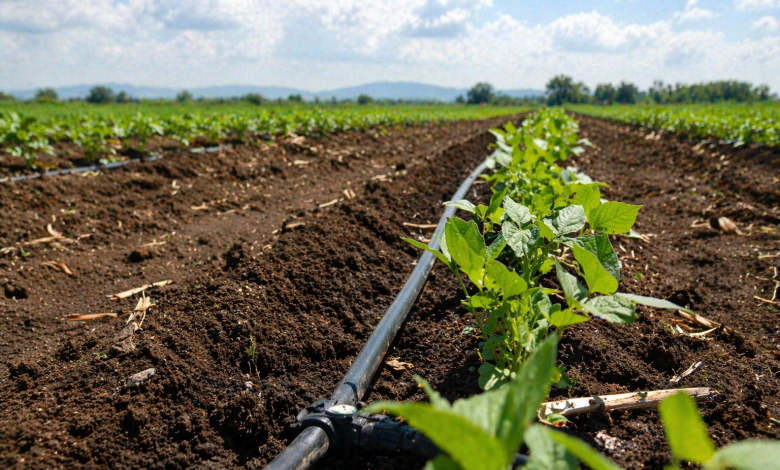
In many regions, irrigation is the single most influential factor in determining yield stability and operational risk. AI-driven precision irrigation systems translate real-time soil, crop, and climate data into precise irrigation decisions; when to irrigate, how much to apply, and where variability exists within the field. By aligning water application with actual crop demand, farmers reduce yield volatility, avoid over- or under-irrigation, and gain tighter control over one of their most critical input costs. For investors and lenders, this level of control directly improves confidence in performance forecasts and downside protection.
These types of innovative approaches can help position agriculture as an emerging investment-grade asset class, capable of delivering consistent returns while addressing global challenges such as food insecurity and labor shortages. Just as machinery, GMOs, and fertilizers revolutionized agriculture in the past, AI will become the foundation for the evolutions of the future.
AI as a Hedge and Growth Catalyst
Amid heightened climate volatility and an increasing global population, AI-powered agricultural solutions aren’t just a hedge against risk and a catalyst for growth: they’re critical to our food stability.
AI-powered precision irrigation systems, digital farming platforms, and predictive modeling tools help farmers mitigate against climate risks, optimize inputs, and automate age-old processes to protect and maximize yields in an unpredictable environment. AI has been shown to increase crop yields by between 15-20%, while significantly reducing required investment by 25-30% and making farming operations more efficient by 20-25%.
With such measurable improvements, investments in AI solutions create a powerful force multiplier, enhancing farmer resilience and strengthening long-term sector stability by promoting superior crop management and reduced resource waste. Indeed, as these technologies become more widely adopted, their impact multiplies across the entire agriculture ecosystem – boosting farm profitability, creating more consistent returns, and establishing agriculture as a more predictable investment sector.
Infrastructure for AI-Enabled Agriculture
The full potential of AI in agriculture depends not only on technological adoption but on building the right ecosystem of data, infrastructure, and collaboration.
To deliver real impact, AI systems require interoperable data standards, reliable connectivity, and cross-sector partnerships that bridge the gap between smallholder farms, agribusinesses, and investors. Recent advances in edge computing are helping to bridge these divides, extending AI’s reach to regions without internet access. Likewise, public–private partnerships are beginning to pool agronomic, meteorological, and supply-chain data to train smarter, more localized models that will help farms of any size and kind.
Impact investors and development banks both play a key role in financing these critical infrastructures and data-sharing frameworks. This dual backbone can transform agriculture from a fragmented industry into a connected network of insight and resilience, driving productivity and sustainability.
As these systems mature, AI will become an embedded layer within the global food economy, one that can balance profitability with sustainability at scale.
The Future of Agriculture is Stable and Profitable
Even as food demand increases and climate uncertainty grows, AI is redefining agriculture as a powerful investment frontier, turning climate and operational uncertainty into measurable insights.
Collaborative digital infrastructure is expanding across the sector, bridging the gap between sustainability and profitability. As AI becomes an increasingly widespread force behind the global food economy, it will empower farmers, strengthen supply chains, and draw capital toward solutions that feed the planet sustainably.
Agriculture’s future lies in the union of insight and innovation, one where every byte of data works to ensure the next bite of food for every person on the planet.