

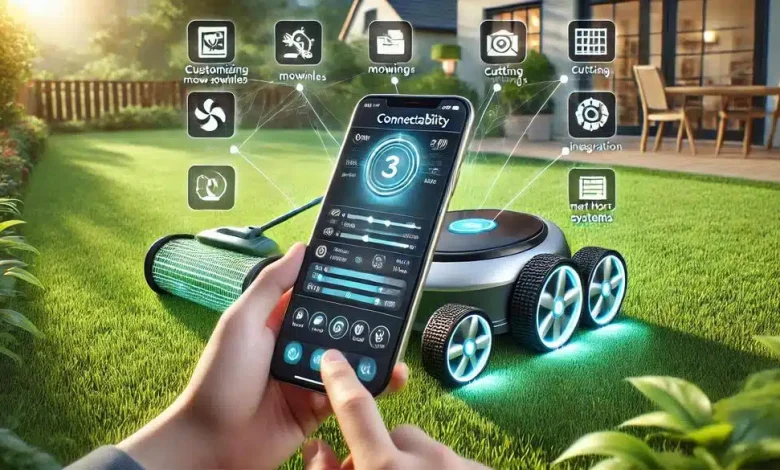
Artificial intelligence is transforming robotic lawn mowers by enabling them to learn from real-world experience. Unlike traditional systems locked into fixed programming, AI-powered mowers continuously analyze data, refine their models, and adapt to changing conditions — becoming more capable with every use.
This evolution is especially evident in advanced models like the AI Vision Robotic Mower, which combines AI vision, machine learning, and autonomous navigation to build a self-improving system designed for long-term performance.
1. Industry Shift: From Rule-Based Systems to AI Robotic Mowers
Traditional robotic mowers relied on rule-based automation. They followed rigid, pre-programmed instructions using boundary wires, GPS mapping, or fixed navigation patterns.
While effective in simple, controlled environments, these systems struggled with real-world challenges:
- Limited environmental awareness
- No ability to learn or adapt
- Poor performance on complex terrain
- Heavy dependence on manual setup
In contrast, modern AI robotic mowers are powered by data-driven intelligence. Instead of blindly executing fixed commands, they learn directly from experience.
2. The Core Mechanism: Continuous Learning in AI Lawn Mowers
At the heart of AI robotic mowers is a continuous learning loop driven by real-world data.
Every mowing session collects detailed environmental information, including:
- Terrain variations and slope conditions
- Grass density and growth patterns
- Obstacle locations and movement behavior
- Navigation efficiency metrics
Machine learning algorithms then process this data to refine the mower’s behavior over time.
The learning process follows a clear cycle:
- Data collection during operation
- Pattern analysis through AI models
- Path and behavior optimization
- Model updates for future cycles
- This ongoing feedback loop ensures the mower becomes noticeably more efficient with each use.
3. AI Vision: The Foundation of Environmental Intelligence
AI vision is the cornerstone technology that gives modern robotic mowers true understanding of their surroundings.
Unlike basic sensors that can only detect objects without identifying them, AI vision provides semantic perception. Using camera-based deep learning models, the mower can recognize and understand specific elements in its environment:
- Static objects such as trees, fences, rocks, and garden structures
- Dynamic objects such as pets, humans, and moving obstacles
- Surface types such as grass, soil, gravel, and uneven terrain
This contextual awareness goes far beyond simple detection, enabling:
- More accurate real-time obstacle avoidance
- Enhanced safety in homes and commercial spaces
- Superior navigation through complex landscapes
4. Sensor Fusion and Edge AI Architecture
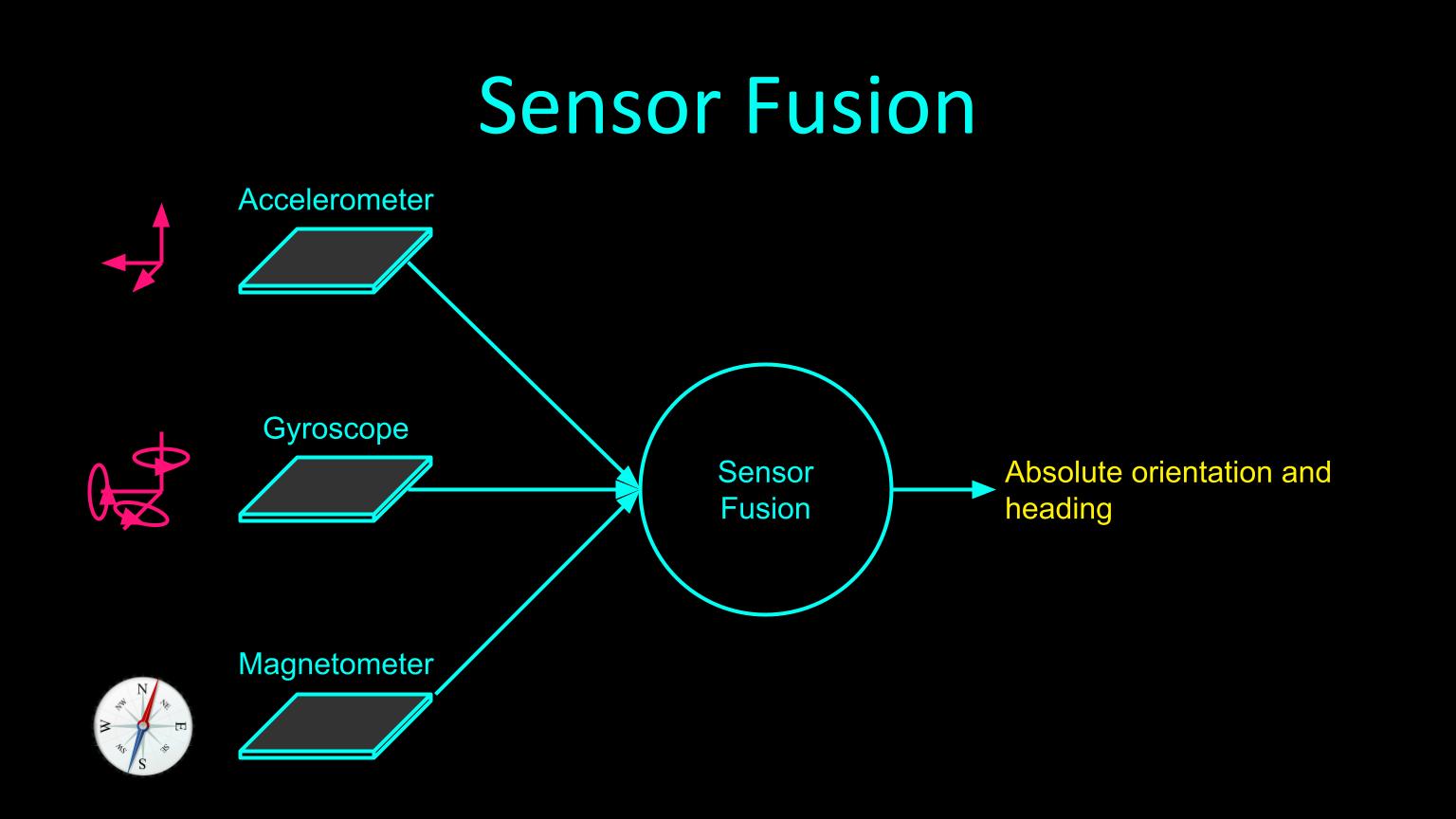
To achieve reliable performance, AI mowers integrate multiple sensors and process data through an advanced architecture:
- AI vision systems for object recognition
- LiDAR or depth sensors for precise spatial mapping
- GPS modules for large-area positioning
- IMU sensors for motion stability
Sensor fusion algorithms merge all these inputs into a single, coherent environmental model. Most systems use edge computing, handling data directly on the device rather than in the cloud. This local processing improves speed, reduces latency, enhances reliability, and protects user privacy through encryption and secure updates.
5. How AI Makes Lawn Mowers Smarter Over Time
The greatest advantage of AI-powered mowers is their ability to improve continuously through operation. As the system gathers experience, it optimizes performance in several key areas:
Navigation Efficiency
Routes become smarter, eliminating unnecessary travel and reducing mowing time.
Cutting Accuracy
Mowing patterns automatically adjust to varying grass density and terrain conditions.
Energy Optimization
Battery life is extended through intelligent path planning and power management.
Environmental Adaptation
The mower learns to handle seasonal changes, new structures, and evolving garden conditions without manual intervention.
As a result, the mower grows increasingly intelligent and efficient the more it operates.
6. OEM and Scalable AI Robotic Lawn Mower Manufacturing
As AI technology advances, OEM Robotic Lawn Mowers (Original Equipment Manufacturer) and ODM (Original Design Manufacturer) models are accelerating widespread adoption. OEMs produce hardware for other brands, while ODMs provide complete ready-to-rebrand solutions.
This approach allows manufacturers to quickly integrate:
- AI vision navigation systems
- Autonomous mowing algorithms
- Custom hardware configurations
- Application-specific software tuning
Brands can therefore launch high-performance AI mowers faster and more cost-effectively, driving global growth in intelligent lawn care.
7. Market Applications of AI Robotic Lawn Mowers
AI-powered robotic mowers are now used across a wide range of environments, from private homes to large-scale commercial sites:
- Residential gardens
- Commercial landscaping companies
- Public parks and green spaces
- Golf courses and large estates
- Industrial facility grounds
In every setting, AI reduces labor costs while delivering higher precision and consistency.
8. Future Outlook: Fully Autonomous Lawn Care Ecosystems
The next phase of development is moving toward complete, connected outdoor ecosystems. Key advancements on the horizon include:
- Fully wire-free navigation powered by AI vision
- Cloud-edge hybrid learning for even faster improvement
- Multi-robot coordination systems
- Predictive lawn maintenance based on environmental data
- Seamless integration with smart city infrastructure
In this future, robotic mowers will function as intelligent outdoor managers — analyzing conditions, making adaptive decisions, and delivering fully autonomous lawn care.
Through AI vision, sensor fusion, and continuous machine learning, today’s robotic mowers have moved far beyond traditional automation. They are becoming genuinely intelligent systems that learn, adapt, and improve over time, shaping the future of smart lawn management.


