Artificial intelligence no longer lives in isolated demos. It now supports clinical review workflows, financial decision systems, and enterprise operations where failure carries real cost. As these systems are transferred to new, regulated, and high-stakes areas, variability becomes operational risk. The key attributes for evaluating whether an AI system can remain stable at scale are latency, traceability, and cost control.
Max Barinov approaches AI from a production mindset. With more than 12 years of experience shipping scalable web systems and AI integrations, he focuses on clear architectural constraints, controlled interaction layers, and defined release criteria. As a founding full-stack engineer, he translates large language model capability into systems that behave predictably under real operating conditions.
We spoke with Barinov about reliability, structured retrieval, and what separates production systems from short-lived prototypes.
You began your career building production web applications before moving into founding engineer roles. What early engineering principles continue to shape how you design AI systems today?
Early production systems enforce discipline. Web applications fail quickly when performance degrades or boundaries blur. That environment taught me to treat architecture as a means of enforcing constraints and protecting system boundaries. I learned to define clear API contracts, maintain high test coverage, and instrument observability from day one.
When I moved into AI systems, I applied the same principles. Probabilistic models introduce variability. Structured interfaces, logging, and reproducible evaluation turn that variability into defined failure modes we can measure and contain. Production reliability starts with explicit boundaries, not model capability alone.
As AI moved from demonstrations into production products, what changed from an engineering perspective?
Demonstrations can tolerate ambiguity. Production systems cannot. Variability is a risk to be addressed once AI becomes part of the workflow. Teams present pipelines for logging, evaluation, and rollback. Cost shifts from theoretical to concrete. Token usage, latency, and infrastructure overhead directly impact sustainability.
Engineering decisions must account for reproducibility, traceability, and clear audit logs. The constraints shift from “Can the model answer?” to “Can the system answer consistently within defined thresholds?” Trust becomes the result of architectural decisions rather than presentation.
You emphasize that AI systems must be engineered for trust. How do you introduce predictability into probabilistic systems?
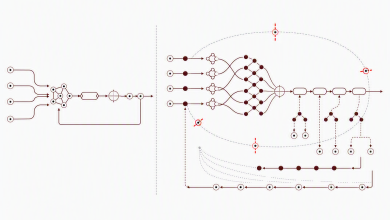
I isolate probabilistic components behind deterministic interaction layers. The system defines structured inputs, structured outputs, and explicit retrieval boundaries. Evaluation loops run before release, using predefined quality benchmarks and regression checks. If output quality drops below predefined thresholds, the system blocks deployment.
I also implement fallback logic for uncertain responses. Determinism does not remove model uncertainty. It constrains it within measurable limits. Clear system boundaries allow us to reproduce outputs, inspect inputs, and detect failure modes before they reach users.
You advocate for structured context rather than expanding prompts. What architectural distinction does that create in real systems?
Expanding prompts increases context but reduces control. Raw prompt dumping associates authoritative information with relatively loose signals, producing outputs that are hard to trace. Structured retrieval imposes constraints on what is placed in the context window and links individual inputs to verifiable sources. Pipelines index content, rank relevant results, and only qualify inputs that are found to be valid for the model.
It enhances reproducibility, minimizing hallucination risk, and improves auditability, since engineers can examine the precise context of each request, guiding reasoning within defined limits.
You built and open-sourced RepoGPT to help developers navigate repositories. What engineering gap were you solving?
Large repositories fragment knowledge. Developers struggle to trace dependencies across files. RepoGPT indexes repository structure and exposes relevant context through retrieval rather than raw prompt expansion. The goal was not automation for its own sake but clarity. Structured retrieval allowed the system to surface specific code paths and documentation segments.
That design improved reproducibility and reduced ambiguous outputs. The open-sourced implementation reinforced the importance of defined context boundaries when building developer tooling.
You have designed conversational and voice AI prototypes. What additional constraints emerge in real-time systems?
Real-time systems introduce latency sensitivity and turn-taking control. Even minor delays degrade user trust. Engineers must monitor token usage, response time, and streaming behavior. Context windows also require stricter management because conversations accumulate state quickly.
I design systems that compress context and enforce structured session boundaries. Real-time AI cannot rely on long prompt histories without incurring high costs. Deterministic state management stabilizes both responsiveness and predictability under sustained usage.
Many teams focus on model capability. You treat token efficiency and cost control as architectural constraints. Why?
Cost scales with usage. Without token discipline, a system becomes economically unstable at a certain volume. Latency also increases with context size. I treat token limits as release criteria. Retrieval controls reduce unnecessary context. Evaluation tracks both quality and cost per request. This keeps engineering decisions aligned with long-term sustainability. Model capability matters, but operational efficiency determines viability.
In your founding engineer role, building a HIPAA-aligned multi-agent AI platform, what design considerations are unavoidable?
In healthcare environments, auditability and controlled data exposure are mandatory. We structure electronic medical record data into a validated AI context rather than passing raw documents directly to the model.
Each agent operates within defined data permissions, with full traceability of which inputs influence each output. Compliance also shapes our release process. We gate deployments behind evaluation checks and enforce audit logging at every interaction. That structure reduced manual compliance review time from days to hours and makes each decision traceable under review.
What distinguishes a useful AI product from a fragile prototype?
A useful product defines performance thresholds before release, exposes failure modes, and provides rollback mechanisms. A prototype may demonstrate impressive outputs without that discipline. Production systems require logging, cost tracking, and reproducibility. Engineers must articulate why decisions occur and how outcomes change under load.
Without observability and defined boundaries, variability compounds. Reliability differentiates sustained value from temporary novelty.
Looking ahead, what kinds of AI systems will have the most meaningful long-term impact?
Systems that reduce cognitive load while remaining measurable will define the next phase of adoption. Deterministic interaction layers, structured retrieval, and cost-aware pipelines will shape enterprise integration. I focus on architectures that balance probabilistic reasoning with controlled interfaces and measurable constraints. AI will continue to expand into regulated sectors, and engineering maturity must keep pace. Predictability, observability, and auditability will determine which systems remain operational at scale.