Why Finding the Right Partner and Asking the Right Questions is Key to a Successful GeoAI Program
Artificial intelligence (AI) is reshaping the geospatial landscape, and the technology is no longer optional for organizations that rely on GIS. The evolution is well underway. AI is already woven into many geospatial workflows, sometimes so seamlessly that teams don’t even realize it’s there.
But the true transformation ahead isn’t about embedding AI into isolated tasks. It’s about enabling AI to accelerate insight, scale operations and support faster, more confident decision‑making across the enterprise. When applied effectively, AI can turn massive volumes of multi‑sensor data into meaningful business intelligence.
This potential comes with unique challenges. Geospatial intelligence is fundamentally different from other data domains: spatial data is multi‑modal, multi‑scale and consumed across a patchwork of disconnected systems. That complexity means organizations cannot simply adopt new software or add AI features to existing tools and expect meaningful results. A successful GeoAI program requires a strategic partner—one who ensures AI is aligned with mission outcomes, not just layered onto disparate legacy processes.
AI Requires Architecture, Not Add‑Ons
The way AI is applied matters as much as the decision to apply it in the first place. AI delivers real value only when it is designed into a system, not bolted on as an afterthought.
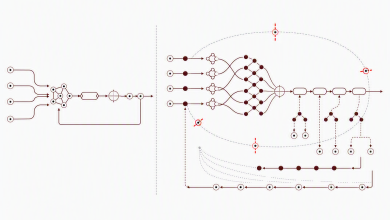
Many organizations are beginning to recognize this shift. They are moving away from tool‑centric GIS environments and toward intelligence‑centric architectures, where analytics are not just executed but operationalized. In these environments, AI becomes part of the operational backbone, orchestrating data, workflows and decisions across the enterprise.
This architectural mindset is what separates organizations that experiment with AI from those that truly transform with it.
Don’t DIY: Why the Right Implementation Partner Matters
It’s tempting to treat AI like a DIY project—something an internal team can piece together with enough time, curiosity and determination. That approach might work for home renovations, but it’s not the right strategy for initiatives designed to give your company a competitive advantage.
AI is evolving at a pace that even highly capable internal teams struggle to keep up with. Understanding the latest advances is one challenge; knowing how to apply them effectively within geospatial operations is another entirely.
This is where the right partner becomes indispensable. A partner with deep expertise in both GIS and application of AI technologies can help organizations define the right use cases, assess data readiness, identify architectural gaps, prioritize investments, and build governance frameworks that ensure responsible and scalable adoption. They also help ensure interoperability across tools, sensors and systems, which becomes increasingly critical as AI capabilities expand.
Without this level of strategic guidance, AI efforts often become fragmented, unreliable and difficult to scale. What began as innovation can quickly devolve into technical debt.
Clarifying the Problem Before Choosing the Technology
One of the most common reasons AI initiatives fail is not because the technology is inadequate, but because objectives were never clearly defined. Organizations often jump to solutions before articulating what decisions they need to accelerate, what risks they need to reduce, or what workflows they hope to automate or augment. Leadership may have a vision for transformation, but without clarity on the outcomes that matter most, AI becomes a collection of disconnected experiments.
A consultative engagement helps organizations slow down long enough to ask the right questions. It creates space to define objectives, align stakeholders, and ensure that AI is deployed with purpose rather than in pursuit of being at the bleeding edge. This clarity becomes the foundation for every architectural and operational decision that follows.
Building a Data Foundation AI Can Trust
AI is only as strong as the data structures that support it. In geospatial environments, that foundation must be especially robust. Organizations need standardized spatial, temporal and metadata schemas; repeatable ingestion pipelines; rigorous quality controls; and lineage tracking that ensures transparency and trust. They must also prepare for the integration of multimodal data—everything from raster and vector datasets to satellite imagery, LiDAR, point clouds, IoT streams and real‑time sensor feeds.
Without this foundation, even the most advanced AI models will produce inconsistent or unreliable results. With it, AI becomes a powerful engine for insight.
Architecting for Agentic Intelligence
Many organizations begin their AI journey with assistive capabilities, such as copilots, embedded analytics or conversational interfaces. But the next frontier is agentic intelligence. Agentic AI goes beyond assistance. It can plan, orchestrate and execute workflows autonomously, coordinating across systems to deliver outcomes rather than simply answers.
Unlocking agentic intelligence requires intentional design. Organizations need scalable compute aligned to mission environments, modular architectures that support rapid evolution, cross‑system orchestration and clearly defined operational boundaries. Human‑in‑the‑loop validation remains essential, confirming that AI behaves predictably, responsibly and aligned with professional judgment.
A consultative partner helps organizations navigate these complexities, ensuring that agentic systems accelerate time to insight without compromising trust and accountability.
Avoiding Lock‑In Through Strategic, Technology‑Agnostic Design
The AI ecosystem is evolving too quickly for any organization to lock itself into a single vendor or proprietary stack. A technology‑agnostic approach—one that prioritizes flexibility, interoperability and cloud readiness—protects long‑term investments and ensures adaptability as models, sensors and intelligence needs evolve.
A strategic partner can help organizations design architectures that remain resilient amid rapid change. This future‑proofing is not just a technical advantage; it’s a business and financial imperative.
Preparing the Workforce for an Intelligence‑Driven Future
As AI reduces friction between disciplines, GIS teams must broaden their understanding of how systems, datasets and business questions intersect. The workforce of the future will need to operate confidently in an intelligence‑centric environment, one where geospatial expertise is augmented by data science, systems thinking and cross‑functional collaboration.
Consultative partners play a critical role in this transition. They help organizations upskill teams, redesign workflows, break down silos and build the collaborative muscle needed to fully leverage GeoAI.
GeoAI Requires Partnership, Not Plug‑Ins
Organizations that lead in the next decade will be those that architect for intelligence now. They recognize that AI is not a feature to be installed but a capability to be cultivated. And they understand that cultivating it requires guidance, governance and strategic alignment.
Working hand‑in‑hand with a partner who brings both GIS expertise and AI acumen ensures that GeoAI is not just adopted but operationalized. Collaboration will ensure that automation is applied responsibly, that intelligence is trusted and that the organization is prepared for the next wave of geospatial innovation.
GeoAI is not a plug‑in. It’s a partnership—and the right one makes all the difference.