In 2026, artificial intelligence (AI) will allow state and local government agencies to deliver better services to all residents, regardless of language, background, or technological savvy. The days of frustrating form-heavy interactions, hard-to-navigate websites, and lengthy phone calls that tie up both customer service agents and residents will continue to fade. Instead, agencies will deliver intuitive, conversational, and human-centered engagements improved by AI that quickly provide community members with the information they need, in the ways they prefer.
Here are five ways AI will change the way state and local governments interact with residents in 2026:
Accessibility expands for all residents
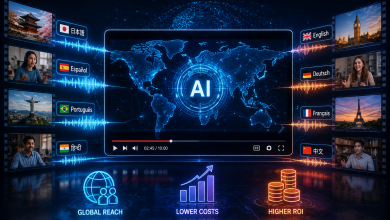
AI will empower local, state, and federal agencies to move beyond baseline Americans with Disabilities Act (ADA) standards and expand equitable access to civic information for all residents. By making it easier to convey information across languages and formats, governments can better serve increasingly diverse communities.
For example, AI can translate city council agendas and public notices into the most spoken languages in the community and adapt content for different reading levels and assistive technologies. It can also help staff generate meeting materials such as agendas, minutes, and plain-language summaries more quickly and consistently, so accurate information reaches residents sooner and in easier-to-understand formats.
Conversational AI enhances forms
Government websites are not known for being intuitive or easy to navigate. To address this, agencies can move away from complex, disconnected pages and processes and toward simpler, most resident-friendly experiences powered by agentic AI.
Chatbots and AI assistants will interact directly with community members, eliminating the need to hunt through pages or complete unnecessary forms. These services will function as purpose-built GPTs for local governments, providing accurate, contextual answers to a single question.
AI agents will interpret requests, pull relevant data from trusted sources, and guide residents through the next steps. The result is a self-service experience that frees up valuable time for government employees while making government interactions faster, easier, and more human.
Trust in AI strengthens through clear guardrails and trusted “domains of information”
For many local government employees, AI can feel like a “black box,” which naturally creates skepticism, especially considering high-profile stories about AI producing inaccurate or misleading information. Agencies need confidence that the solutions they deploy include appropriate safeguards.
AI vendors need to provide clear guardrails, transparent explanations of how systems generate outputs, and confidence in their recommendations. At the same time, governments must establish and maintain trusted “domains of information” that are authoritative, verified sources derived from official government records, including permitting and licensing platforms, public records repositories, and so on.
Maintaining full control over these domains ensures AI systems rely only on verified, accurate data and never ingest or surface untrusted information.
Voice-enabled AI expands access and reduces administrative burden
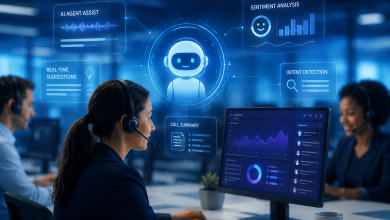
Voice-based AI agents will become increasingly common as agencies modernize their phone systems to deliver fast, reliable service to people who prefer calling rather than using websites or text-based solutions.
For agencies, voice AI will reduce call center workloads and allow staff to focus on complex issues that require human expertise. For residents, voice-enabled AI expands access to government services and critical information across underserved and technology-averse populations.
By offering the familiarity of a phone call with the efficiency of AI, governments can meet residents where they are without adding to the administrative burden of already stretched teams.
Predictive AI powers proactive resident services
The predictive capabilities of AI will enable governments to anticipate residents’ needs and proactively deliver relevant information. By analyzing data from prior interactions with community members, agencies can offer personalized recommendations and shift from a reactive service model to a proactive one.
For example, if a resident frequently searches for trash pickup schedules or local recreational activities, AI systems can recognize these patterns and automatically deliver tailored information without prompting. Residents may receive recommendations, information, and insights via their preferred channels, including text alerts, emails, and automated phone calls.
Agencies may not fully implement these capabilities in 2026; many will begin laying the groundwork for this shift with building the infrastructure needed to make proactive data-driven engagement the norm.
That future described here looks very different from the reality state and local governments experienced even a year ago. The rapid evolution of AI, along with its accelerating adoption in the public sector, is opening the door to more equitable, accessible, and meaningful community experiences, setting new standards for resident-first digital services.
Author:

CivicPlus® Product Director Phil Claiborne leads the Platform & Shared Services that connect our solutions and power the Civic Impact Platform. His teams are responsible for the AI agents, intelligent workflows, and data-driven insights that enable governments to deliver more efficient, intuitive, and resident-centered experiences. Phil strives to bring CivicPlus products together into a unified technology platform through the continued development of platform tools, integrations, and intelligent capabilities. He has over 25 years of experience in the govtech space and is passionate about helping government work better for both staff and the residents they serve.