Published on 03.04.2026
The modern market dictates new rules: products must constantly evolve, taking into account the subtlest nuances of user demands. In the face of digital competition, AI is becoming not just a trendy technology but a true copilot in the work of a product manager. New machine learning tools allow for the analysis of vast amounts of data on customer behaviour, emotions, and feedback in real time. This changes the very approach to forming product hypotheses: assumptions are now backed by precise analytical conclusions rather than intuition.
Why the Market Is Changing Now
Digitalisation has lowered market entry barriers for startups and changed consumer habits. If a customer is not satisfied with a product or service, they will easily switch to an alternative. Research shows that when a desired product is unavailable or the experience is unsatisfactory, 39% of buyers switch to a competitor’s product, while only 13% are willing to wait for a restock [1]. In effect, loyalty has become fragile, forcing companies to seek the deep-seated motives behind user behaviour. Simultaneously, demands for personalisation are growing: 71% of consumers now expect a personalised approach when purchasing and interacting with a brand, and 76% lose patience in its absence [2]. Together, these factors are shifting the focus of product management towards identifying underlying needs and ensuring flexible product adaptation.
How the New Technology Works
AI algorithms operate differently depending on the task. NLP (Natural Language Processing) makes it possible to “read” the texts of feedback, chats, and social media and to identify topics, tonality, and emotions. Analysis of voice communications and image recognition (CV) completes the picture by identifying non-verbal signals and behavioural patterns. Data on user actions (clicks, time in the app, path on the website) are analysed using behavioural models and clustering. Clustering groups of similar user profiles, identifying segments with common needs. Beyond high-level analytics, AI tools reshape the daily research workflow of product teams. Modern LLM-based systems automatically process interview transcripts, cluster user statements into problem themes, and extract stable behavioural patterns that previously required long manual coding. Embedding-based models compare large volumes of qualitative feedback and translate them into structured Jobs-to-Be-Done statements, enabling fast hypothesis formulation within hours rather than weeks. Voice and text analysis tools reveal user misunderstandings during onboarding and interaction scenarios, which allows product managers to adjust prototypes earlier in the discovery cycle. As a result, AI becomes not only an analytical instrument but a continuous insight engine that keeps product research dynamically updated. As a result, it becomes possible to automatically discover hidden patterns: customer pain points, promising market niches, and synergies between previously disparate insights. Computer vision and emotion analysis tools help to understand how users react to UI/UX and content. In sum, these technologies provide the product manager with a powerful “radar” for building product strategies. AI-supported prototyping tools significantly reduce the cost of early experimentation. Systems such as Figma AI, Uizard and lightweight code-generation environments produce interface drafts or functional prototypes directly from textual descriptions. Combined with automated A/B testing platforms, these tools shorten the validation cycle: a single idea can pass through formulation, prototyping and first-round user tests within one or two days. This rapid loop changes the strategic logic of product management, shifting attention from long planning sessions to continuous hypothesis-driven iteration.
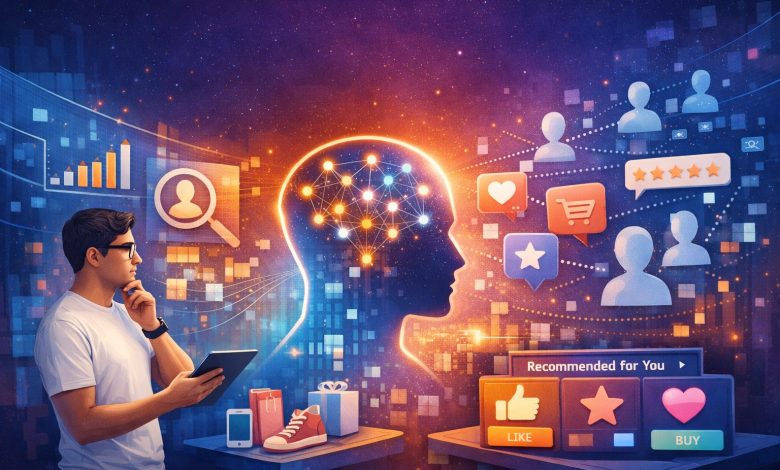
Picture 1. AI-powered transformation of Customer Journey Maps
Source: author’s development
The integration of NLP, clustering, and embeddings transforms the chaotic stream of customer data into understandable segments and insights. This allows for the construction of dynamic Customer Journey Maps that are updated in real time and better reflect the true needs of users.
Practical Examples and Case Studies
Real companies are already demonstrating the effectiveness of AI in product management. Internal product workflows demonstrate the practical use of AI even more clearly. For example, the use of LLM-based assistants for event labelling in mobile apps allows teams to interpret behavioural signals without long manual data preparation. Another common scenario is the use of AI-driven “ChatPRD” tools that turn fragmented workshop notes into coherent product requirement drafts. In discovery sessions, product teams rely on summarisation agents that convert raw interview notes into ranked problem statements, helping to identify which hypotheses deserve first-round validation. These applications illustrate how AI accelerates concrete tasks rather than abstract strategic decisions. Ferrari (automaker) has integrated machine learning into its car configurator: generative models (Amazon Bedrock) help customers select car options in 3D, and personalisation based on ML speeds up the configuration process. After the release of the new configurator, sales leads increased, and the time to assemble a configuration was reduced by 20% [3]. In addition, Ferrari uses AI to accelerate design: generative algorithms allow for running millions of virtual simulations of structures, which significantly reduces the time to bring new models to market.
BlaBlaCar (a carpooling platform) uses AI through the Chattermill service to analyse user feedback and chats. The automated processing of millions of messages showed developers which specific aspects of the service were causing difficulties for people. For instance, after the introduction of the new “Boost” feature, it became clear (based on AI data) that users did not understand how to use it. This information allowed for a quick redesign of the UX flow: the interface was improved, and user onboarding was conducted. As a result, the adoption of the feature was accelerated, and customer churn was reduced.
In a real B2B financial product serving small businesses, the same adaptive-onboarding approach was used to move new companies from “registered” to “transacting” faster, without spamming everyone with generic prompts.
The team trained a simple model on early onboarding signals (KYB step timings, document upload patterns, bank-transfer verification results, first login behaviour, whether the admin invited finance teammates, whether a payout schedule was configured, whether the accounting integration was connected) to predict both activation likelihood and the most probable blocker for each account (for example: beneficial-owner details mismatch, stuck in verification, confusion about limits, missing payout settings, or “no time” drop-off after the first session). Then, instead of a one-size checklist, the product served the “next best step” dynamically – some accounts got a short in-app walkthrough to finish KYB, others saw a contextual nudge to invite an accountant and set roles, and high-intent accounts were routed to a rapid human callback when the model detected friction that typically ends in abandonment. This maps directly to this product’s onboarding challenge: we’re not trying to make everyone do more steps – we’re trying to identify the one step that unlocks value for each customer (e.g., completing verification, configuring payouts, connecting systems, or adding collaborators) and deliver the smallest, safest intervention at the right moment, so more businesses reach their first successful transaction and build a habit before the initial excitement fades.
Finally, technology giants actively use ML to improve their product processes. Amazon processes hundreds of millions of user interactions daily (approximately 150 million inquiries) to make decisions about service development. The recommendation and demand forecasting algorithms at Amazon are considered crucial for sales growth. Similarly, Netflix states that its AI personalisation systems generate over $1 billion in annual value by retaining its audience. These examples show that even best-in-class products are enhancing their product teams with AI tools, turning customer data into practical changes.
Effect on the Industry and Users
The impact of AI is tangible for both businesses and the user experience. According to a Bain & Company survey, 76% of company executives noted a significant reduction in the time-to-market for new products thanks to the application of AI [5]. The automation of routine tasks (from collecting metrics to generating reports) frees up product managers’ time for creativity and strategic decisions, which accelerates the entire development cycle. Through data analysis, the accuracy of product hypotheses increases: now, a team can quickly test an idea on large samples (for example, A/B tests with automated analytics), whereas before, we were largely operating blindly. The flexibility of the Customer Journey Map has also sharply increased—receiving feedback in real time allows for the prompt correction of interaction scenarios. In return, users receive a more accurate and meaningful product. For product teams, the most transformative outcome lies in the acceleration of the discovery-to-validation cycle. Routine documentation, initial research synthesis, early prototyping and data preparation become semi-automated, enabling product managers to concentrate on prioritisation and strategic interpretation. Instead of waiting for full research rounds, teams receive continuous insight updates generated from real-time user signals. This shift reinforces a new operational model in which AI acts as a permanent copilot, supporting rapid movement from insight to tested hypothesis. Because this accelerated validation loop is built on continuous real-time user signals, the same data stream becomes directly applicable for experience-level adaptation and personalisation decisions. According to McKinsey estimates, a personalised approach can provide a 10–15% increase in a company’s revenue, while enhanced customer satisfaction reduces the likelihood of churn and leads to an increase in customer lifetime value (LTV), turning the product into a self-tuning system in which every incoming user signal deepens the understanding of the audience’s needs [2].
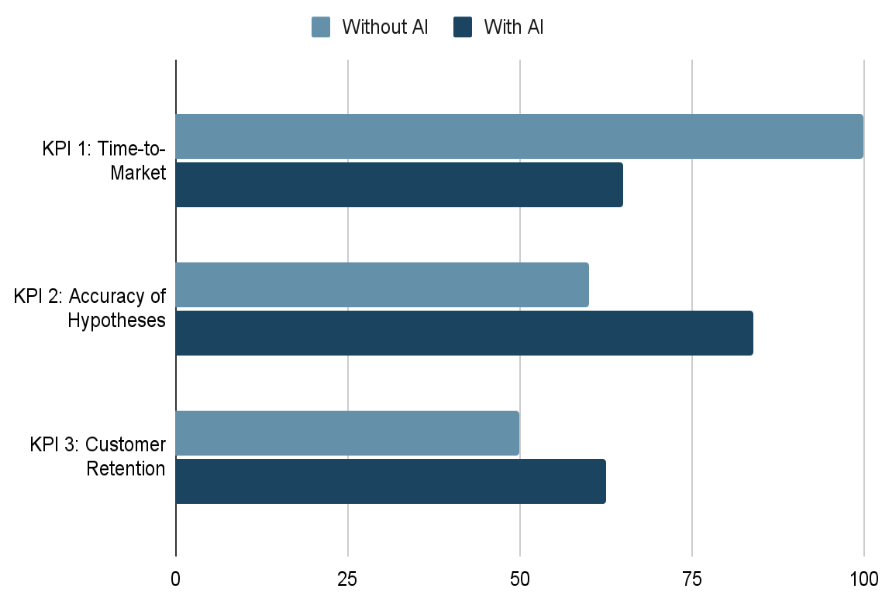
Figure 2. The influence of artificial intelligence on the measurable parameters of product management efficiency
Source: author’s development
The deployment of intelligent algorithms markedly accelerates the transition to market, enhances the precision of validated hypotheses, and exerts a positive influence on customer loyalty, which vividly illustrates that reliance on intelligent systems is evolving into a fundamental prerequisite for the steady advancement of any digital solution.
Future Vector and Assessment of Prospects
The prevailing momentum unmistakably reflects the transformation of artificial intelligence into an essential component of the product team’s operational framework, which, in applied terms, manifests through the widespread incorporation of intelligent services and assistants into mainstream digital environments: at present, engineering teams are embedding AI-driven architectures into systems for backlog coordination, customer relationship processes, experimental validation procedures and analytical infrastructures, while autonomous AI agents—already integrated into collaborative pipelines—carry out data acquisition, report generation and the formulation of proposals aimed at refining product strategies.
Among the expected trends are the widespread adoption of generative models (assistants in product and content design), the growth of No-code ML platforms for non-specialised professionals, and the strengthening of the role of “AI product” experts. AI is ceasing to be an exotic experiment: it is transforming into an integrated infrastructure for product development, acting as a new operating system for companies striving for leadership.
AI is no longer just a futuristic idea—today, it is a standard element in the product manager’s toolkit. It reduces uncertainty, accelerates the testing of hypotheses, and makes the product more attractive to the end user. Executives and specialists who ignore this transformation risk being left out of the market. Conversely, the flexible combination of human intuition and the powerful analytical capabilities of AI opens up fundamentally new horizons: products are created “based on” the real, deep-seated needs of the customer, and teams get a “copilot” who always knows the next step. In 3–5 years, product management without AI will be perceived as archaic as manual CRM management is today. The winners will be the companies that are already implementing AI solutions and building dynamic Customer Journey Maps based on them.
References:
- McKinsey & Company. (2021, December 14). US consumer sentiment and behaviors during the coronavirus crisis. https://www.mckinsey.com/capabilities/growth-marketing-and-sales/our-insights/survey-us-consumer-sentiment-during-the-coronavirus-crisis
- McKinsey & Company. (2021, November 12). The value of getting personalization right—or wrong—is multiplying. https://www.mckinsey.com/capabilities/growth-marketing-and-sales/our-insights/the-value-of-getting-personalization-right-or-wrong-is-multiplying
- Amazon Web Services. (2024). Ferrari advances generative AI for customer personalization and production efficiency: Case study. https://aws.amazon.com/ru/solutions/case-studies/ferrari-generative-ai-case-study
- Davis, C., & Lopes, A. (2025, September 11). Product management in the era of AI. CIO. https://www.cio.com/article/4054992/product-management-in-the-era-of-ai.html
- Chu, U. (2025, October 1). AI in product management: Top use cases you need to know. SmartDev. https://smartdev.com/ai-use-cases-in-product-management