Every few years, a new generation of students is labelled as distracted, disengaged or difficult. Gen Z has taken plenty of flak for being quiet in class, glued to their phones and reluctant to speak up. Gen Alpha, now coming through primary schools, is already being framed in similar terms.
But this criticism misunderstands how today’s young people learn and communicate. These generations are deeply engaged, just not in the way that previous generations were.
Silence is not a lack of engagement
Teachers often interpret silence as a lack of interest. A student who does not raise their hand or contribute verbally can be seen as passive. In reality, many of these students are processing, questioning and responding in ways that feel more natural to them than speaking out loud in a crowded room.
Gen Z and Gen Alpha are digital natives. Speaking out loud isn’t the default method of communication anymore. Instead, messaging is the way that this generation expresses themselves and engages best. They are used to expressing ideas in writing, reacting in real time, and contributing without the social pressure of speaking in front of peers.
In-person environments work for many, but for others, especially some SEND students or those who are struggling with confidence, online environments lower the barriers to participation and take the pressure off.
Students can ask questions the moment they arise, without fear of embarrassment for getting answers wrong or having to wait their turn so as to not speak over their peers. Seeing thousands of peers who are so engaged, with a teacher that’s an authority, encourages these students to come out of their shell.
If we judge engagement solely by who speaks the loudest, we risk missing the majority of learners. The education system so far has failed to realise this.
The ‘TikTok Generation’
There has been a lot of commentary on a social media ban for children under the age of 16. For many educators, social platforms are seen as distractions at best and dangers at worst.
This is not to say that there are not valid concerns about social media. There’s far too many untrustworthy actors out there and social media algorithms can be relentless in how they take advantage of children.
However, banning social media doesn’t make it go away, and failing to acknowledge its impact in the classroom only serves to widen the gap between how students live and how they are taught.
Social media is where Gen Z and Gen Alpha spend their time learning many educational topics informally and sharing that knowledge with each other. By failing to address this, the education system does our children a disservice, missing an opportunity to significantly boost engagement by recognising its positive impact on learning.
A recent Ofcom survey showed that more than seven in ten parents felt that being online helped their children with their schoolwork and homework.
Crucially, this content levels the playing field. A student does not need to attend a high-performing school or afford private tutoring to benefit from content from the best teachers. All they need is a phone and an internet connection.
Social media, when used responsibly, can democratise access to high-quality education. It can spark interest and build confidence, while humanising teachers, showing students that expertise and approachability are not mutually exclusive.
It’s not just children that need help
Finally, and maybe most importantly, the incorporation of social media and online learning into education is not simply a matter of making it more enjoyable and effective for children, but it’s also about addressing the teacher shortage crisis.
Teachers are under more pressure than they ever have been before, with their time being taken up by tasks that have little to do with teaching. From managing behaviour and administration to playground supervision and safeguarding responsibilities, the role has expanded well beyond the classroom.
The result is a shocking level of unhappiness and low wellbeing in the sector. A recent survey tested teachers’ wellbeing using the Warwick-Edinburgh Mental Wellbeing Scale (WEMWBS), which gives an overall picture of a person’s mental health. Over a third of education staff reported scores on this scale which indicated clinical depression.
This statistic shows that the education system is under pressure and failing its teachers, when they should be putting them on a pedestal as some of the most important people in society. It’s hardly surprising that more than six teaching posts in every 1,000 are being left unfilled, double the vacancy rate record before the Covid pandemic.
Teachers who remain in post are stretched thin, trying to support growing class sizes with fewer resources. The system is at a breaking point and needs reform to properly support its teachers.
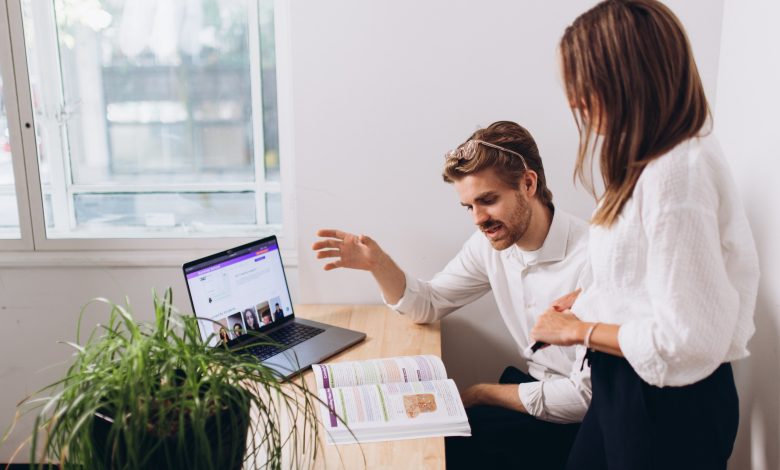
This is where online learning comes in. It’s not a replacement for schools or teachers, rather a powerful support system that allows teachers to spend their energy on explanation, interaction and feedback.
This model also allows schools to extend their capacity. Online lessons can support revision, catch-up learning and exam preparation, as well as providing access to specialist teachers in subjects where recruitment is difficult.
Teachers clearly need more support. Online learning is a powerful tool to help them manage their workload and give them world-class teaching assistance to give their students the best experience possible.
The way forward
The future of education does not lie in choosing between traditional classrooms and digital platforms. It lies in integrating the best of both.
Schools that embrace online learning and social media as tools, rather than threats, will be better equipped to support teachers and engage students.
If we want to keep teachers in the profession and help students thrive, we need to stop judging new generations by old measures. The way young people learn has changed and education needs to change with it.