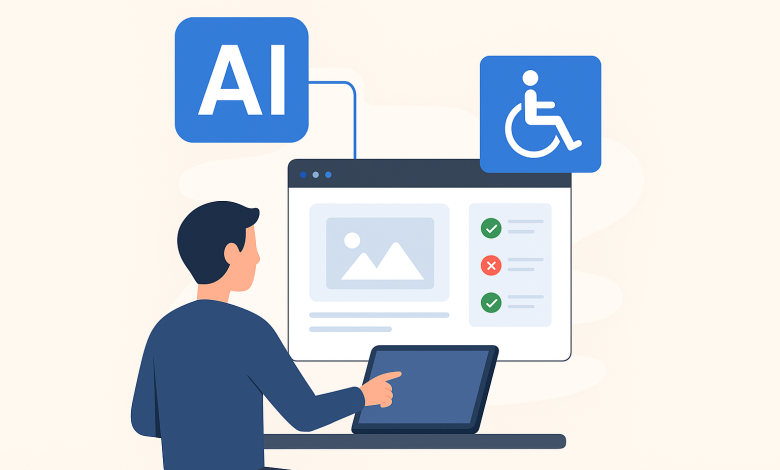
Digital accessibility continues to be one of the most pressing challenges in technology today. According to recent studies, 98% of websites fail to meet accessibility standards, leaving millions of people with disabilities at a disadvantage when navigating digital content. For developers, designers, and organizations, creating inclusive experiences is both a moral responsibility and a practical necessity. Yet many teams lack the knowledge, tools, or workflow guidance to make accessibility a reality.
Fortunately, artificial intelligence (AI) is emerging as a powerful tool to support inclusive design, helping developers create digital products that can be used by everyone, including people with disabilities.
Why Accessibility Matters
Accessibility is not just a legal requirement; it’s a matter of social responsibility and business sense. Approximately 20% of the U.S. population lives with a disability, representing a significant portion of potential users or customers. Excluding these individuals from digital experiences limits reach and engagement, while also contributing to frustration and inequity.
For many organizations, accessibility can feel daunting because it requires understanding technical standards, design best practices, and real-world usability for diverse users. AI tools provide a bridge, giving developers actionable insights and guidance without requiring extensive prior expertise in accessibility.
AI in Accessibility: How It Helps Developers
AI-powered accessibility tools are designed to assist developers in identifying and remediating barriers across websites and mobile applications. Some of the key areas where AI can help include:
- Automated issue detection: AI can scan code for missing alternative text, low color contrast, keyboard navigation problems, and other common accessibility errors.
- Prioritization of fixes: By analyzing the severity and frequency of issues, AI can help teams focus on the changes that will have the greatest impact on users.
- Code-level guidance: AI can provide recommendations for implementing fixes in HTML, CSS, or JavaScript, supporting developers who may not have specialized accessibility training.
- Continuous monitoring: AI tools can track updates over time, flagging new accessibility issues and helping teams maintain compliance as digital products evolve.
By incorporating AI into accessibility workflows, organizations can reduce the time and effort needed to create inclusive products, while still ensuring a high level of quality.
Human Verification Remains Essential
While AI is highly effective in identifying technical issues, it cannot fully replicate the experience of real users with disabilities. Human verification remains a critical part of the process. Testing with users who have disabilities provides valuable insight into how people interact with digital products in the real world.
This combination of AI-driven analysis and human testing creates a robust, holistic approach to accessibility. It ensures that fixes are not only technically correct but also practically usable for the intended audience. Together, AI and human insight form the backbone of effective inclusive design.
AI for Social Good
The integration of AI into accessibility work is a prime example of “AI for social good.” By leveraging AI to solve real-world problems, developers and organizations can expand access to digital resources for people who might otherwise be excluded.
Inclusive digital design not only benefits users with disabilities—it strengthens communities, enhances user satisfaction, and can even improve business outcomes. Accessible products tend to be easier to navigate for everyone, reduce customer support issues, and demonstrate a commitment to equity and inclusion.
Practical Strategies for Developers
For teams looking to integrate accessibility into their workflows, there are several practical strategies:
- Start early: Consider accessibility from the initial design and development phases, rather than as a final check.
- Use AI-assisted tools: Implement AI-powered scanning and code guidance to identify potential issues quickly.
- Combine with human testing: Engage users with disabilities to validate fixes and provide real-world insights.
- Educate your team: Provide developers and designers with resources and training on accessibility standards and inclusive design.
- Monitor continuously: Accessibility is not a one-time task; continuous monitoring ensures that updates and new features remain usable for all users.
By following these strategies, organizations can build digital products that are inclusive, scalable, and sustainable.
The Road Ahead for Accessibility
The future of digital accessibility is bright, but challenges remain. AI will continue to play an increasingly important role, assisting developers in creating usable, inclusive experiences. However, technology alone is not enough. Successful accessibility programs require a combination of human insight, organizational commitment, and ethical design practices.
As awareness of accessibility grows, organizations that invest in inclusive design will not only comply with standards but also gain a competitive edge, expand their audience, and demonstrate social responsibility. AI-assisted accessibility represents a unique opportunity to align innovation with social good, benefiting both users and the broader digital ecosystem.
Conclusion
Accessibility should never be treated as an afterthought. With AI for social good, developers now have the tools to identify and fix barriers efficiently while ensuring digital products are usable for everyone. By combining intelligent automation, practical guidance, and real-world user testing, organizations can make meaningful strides toward digital inclusion—creating experiences that are equitable, effective, and impactful.