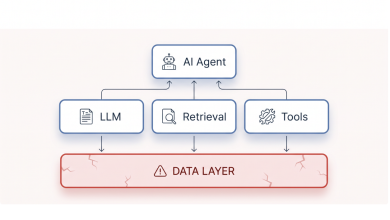
For US enterprises, carbon accounting software needs to connect emissions data, supplier collection, and reporting controls.
This shortlist compares seven platforms for complex programs. The order is not a ranking. Each entry notes the buying priority it fits.
Key Takeaways
- Persefoni suits audit-focused teams and offers a free single-user tier.
- Watershed suits data-intensive inventories that need detailed audit trails.
- Sweep suits supplier-heavy, multi-entity programs.
- Salesforce and Microsoft merit consideration within their existing ecosystems.
- IBM Envizi connects reporting with planning; Sphera emphasizes life cycle assessment.
- Pilot supplier workflows and trace calculations before committing.
How I tested
This is a desk review of publicly available product information, not hands-on testing.
Scope 3 is usually where evaluations get difficult, because the data sits with suppliers who use different formats and measurement methods.
That problem is explored in this look at why Scope 3 emissions are so hard to pin down.
I compared the platforms on:
- Scope 1 to 3 coverage and product footprints
- Supplier data collection
- Source, method, factor, and approval records
- How AI features document their outputs
- Framework reporting support
- Pricing transparency
Prices and packaging change often. Before procurement, confirm current terms and which US or international requirements apply to you, including California SB 253 and SB 261.
Persefoni
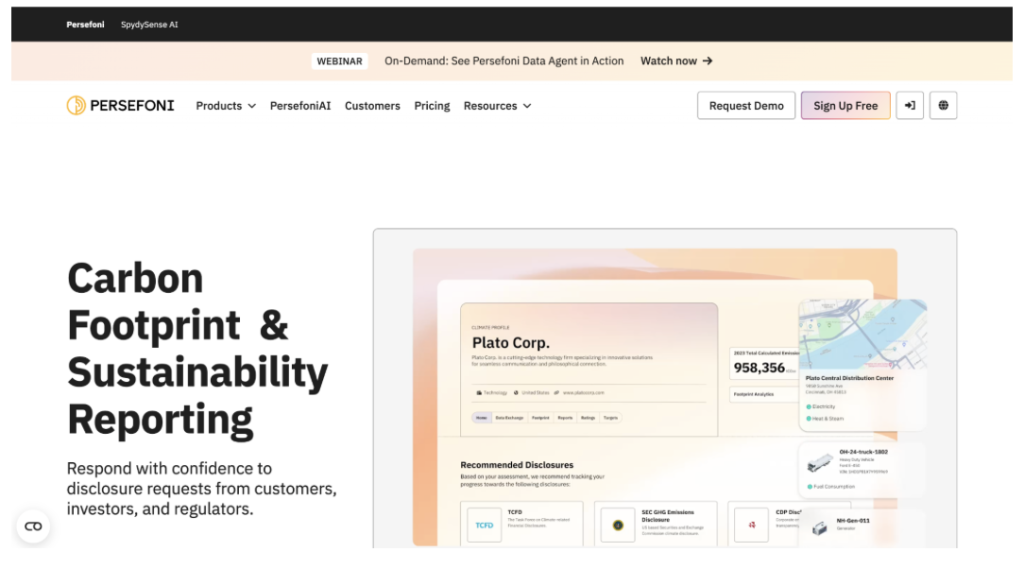
Persefoni pros
- A free, single-user Pro tier covers Scope 1 to 3, including all 15 Scope 3 categories.
- Footprint Ledger records emissions data, with review and approval steps available in Advanced.
- Sustainability Report Builder supports frameworks including CSRD and ISSB.
Persefoni cons
- Pro allows one user; multi-user access and role-based permissions require Advanced or paid add-ons.
- Advanced pricing is quote-based.
Evaluation notes: Persefoni
I’d shortlist Persefoni for teams that need to review calculation evidence. Its Advanced plan adds data reviews and approvals, and its portfolio analytics suit financial institutions.
In a demo, check whether reviewers can follow a figure back to its original source, and ask how corrections are recorded.
Persefoni pricing
Pro is free with no time limit. Request an Advanced quote and confirm which framework-ready reports and user seats it includes.
Watershed
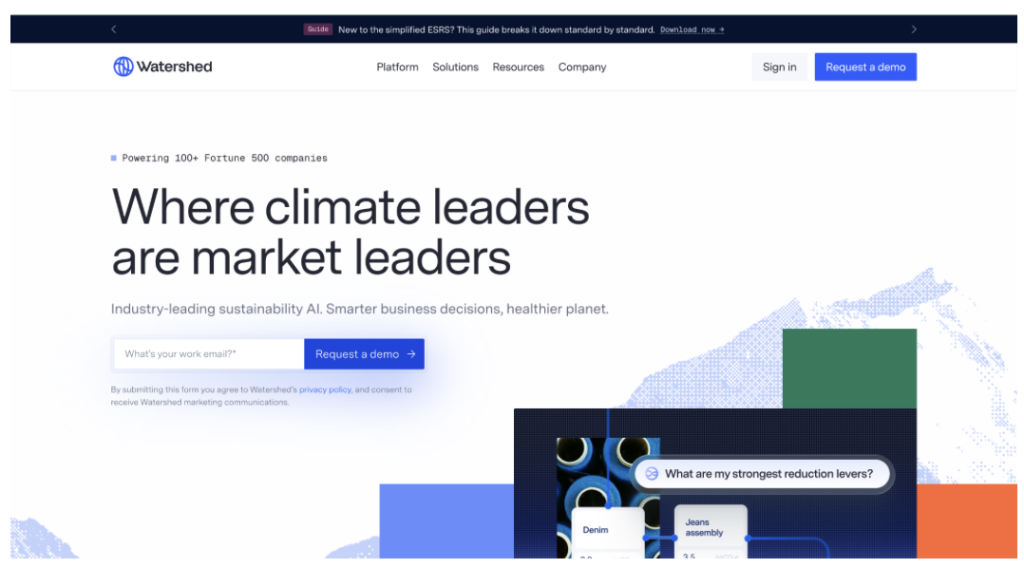
Watershed pros
- Audit trails show how each carbon figure was calculated.
- Integrated supplier engagement supports Scope 3 reduction.
- Teams can bring their own emissions factors and methodologies.
Watershed cons
- No published pricing tiers.
- Value depends on connecting finance, procurement, and supplier data sources.
Evaluation notes: Watershed
I’d include Watershed for large transaction datasets. It pulls data from existing business systems, uses role-based access controls, and shows sources for its AI outputs.
A pilot should test messy spend files and factor selection. Vendor audit support does not replace independent assurance, so confirm what your assurance provider needs.
Watershed pricing
Request a scoped enterprise quote. Confirm which data integrations and advisory services are included.
Sweep
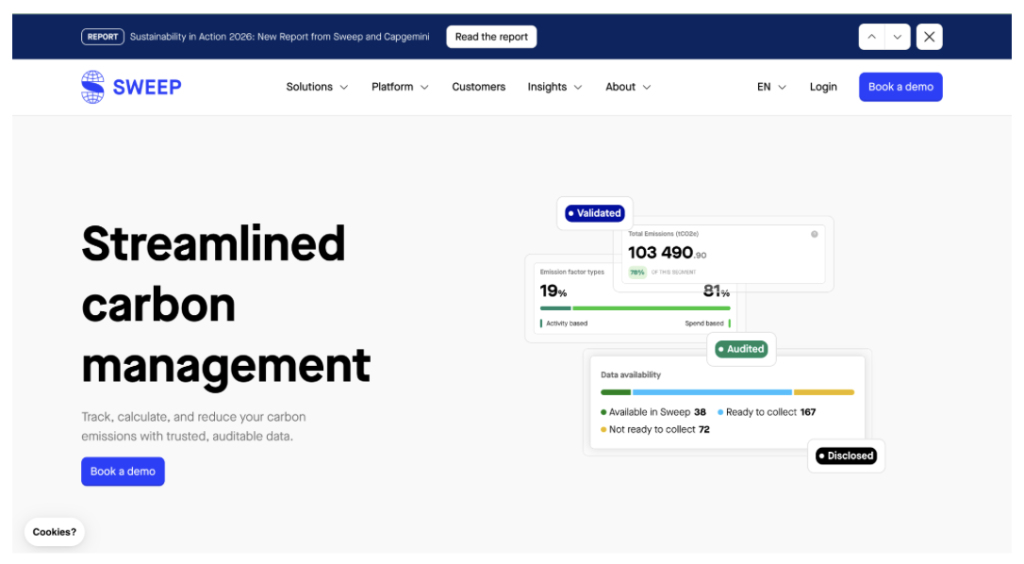
Sweep pros
- Multi-entity, multi-region, multi-currency rollups.
- Supplier interfaces collect primary Scope 3 data.
- Every figure traces back to its source, methodology, and version history.
Sweep cons
- No published pricing on its carbon management page.
- Product footprint and target-setting tools may exceed the needs of teams seeking only a corporate inventory.
Evaluation notes: Sweep
Sweep, the sustainability intelligence platform, suits supplier-heavy, multi-entity programs. Calculations draw on GHG Protocol, IPCC, EPA, and ADEME methodologies, and its AI assistant, Sweepy, flags data gaps and emissions hotspots.
If you are evaluating software for managing corporate carbon footprints, test its supplier interfaces and approval workflows against your own entity structure.
Sweep pricing
Request a quote covering your entities, suppliers, and reporting needs. Confirm whether product footprint and target-setting capabilities are included.
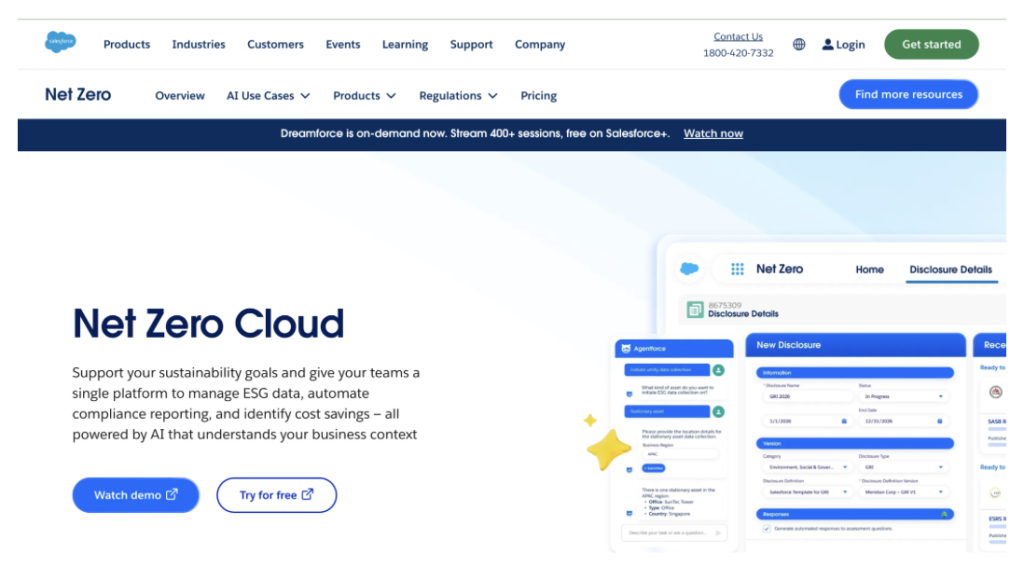
Salesforce Net Zero Cloud
Salesforce Net Zero Cloud pros
- Runs inside the Salesforce platform that existing administrators already manage.
- Growth edition covers Scope 1 to 3 analysis, science-based targets, and emissions forecasting.
- A Disclosure & Compliance Hub supports reporting.
Salesforce Net Zero Cloud cons
- Additional users and external engagement are sold as add-ons.
- What-If Analysis requires a Tableau license.
Evaluation notes: Salesforce Net Zero Cloud
I’d consider Net Zero Cloud within an established Salesforce environment. A new Salesforce deployment needs its own integration and administration business case.
Some review sites now list the product as Agentforce Net Zero, so confirm the current name and packaging. Test supplier submissions and disclosure outputs in the same walkthrough.
Salesforce Net Zero Cloud pricing
Salesforce publishes per-org annual edition pricing, with Growth listed at US$210,000 per org per year.
Its regional pages differ on which editions are offered and how many licenses are included. Budget separately for add-on users and external engagement.
Microsoft Sustainability Manager

Microsoft Sustainability Manager pros
- Published per-tenant pricing in two tiers.
- Premium extends Scope 3 coverage and adds product carbon footprint management.
- Licenses include Dataverse storage entitlements.
Microsoft Sustainability Manager cons
- Broader Scope 3 coverage and product footprint tools require Premium.
- Some features require Azure meters and other Microsoft licenses, such as Microsoft 365 or Power BI.
Evaluation notes: Microsoft Sustainability Manager
I’d evaluate this option with the Microsoft administrators who will maintain it.
Several Premium capabilities, including Copilot and the ESG value chain solution, have been listed as previews, so confirm what is generally available.
Check your required Scope 3 categories before choosing a tier.
Microsoft Sustainability Manager pricing
Microsoft lists Essentials at USD 4,000 and Premium at USD 12,000 per tenant per month. Add Azure consumption, related licenses, and implementation services to the comparison.
IBM Envizi ESG Suite
IBM Envizi pros
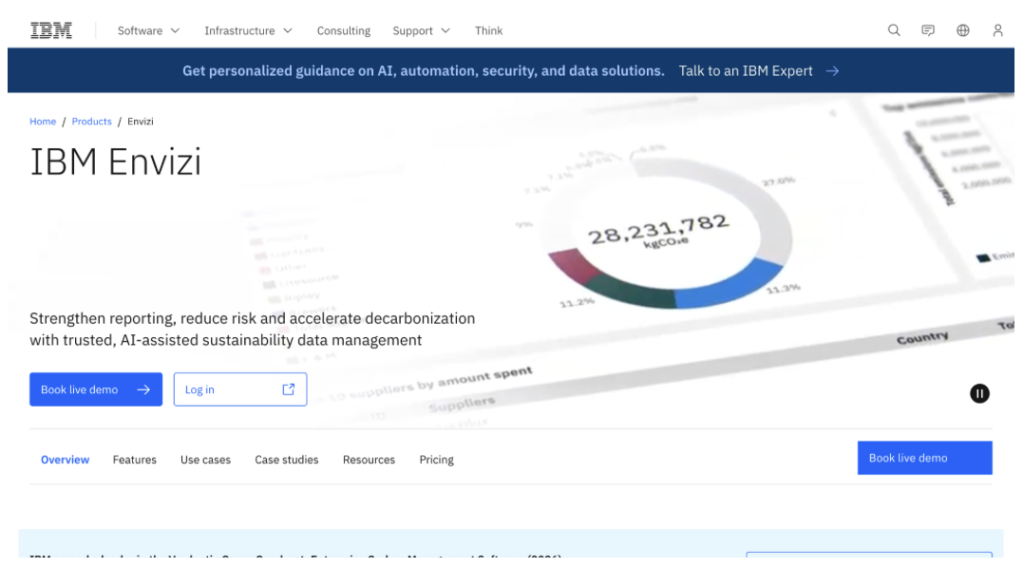
- Modular Scope 1, 2, and 3 accounting built on the GHG Protocol.
- AI support for Scope 3 data categorization.
- A Planning Analytics module ties emissions targets to financial and operational planning.
IBM Envizi cons
- Pricing scales with data volume and selected modules.
- Advanced planning sits in a separate module.
Evaluation notes: IBM Envizi
I’d consider Envizi when reporting needs to feed forecasting and target-setting. Financial institutions can review its Scope 3 financed emissions module.
Ask for a demonstration using your joint ventures and site hierarchy, and allow time to train data owners, not just administrators.
IBM Envizi pricing
Request a quote reflecting your data volume and modules. Confirm whether Planning Analytics is included in the proposal.
Sphera
Sphera pros
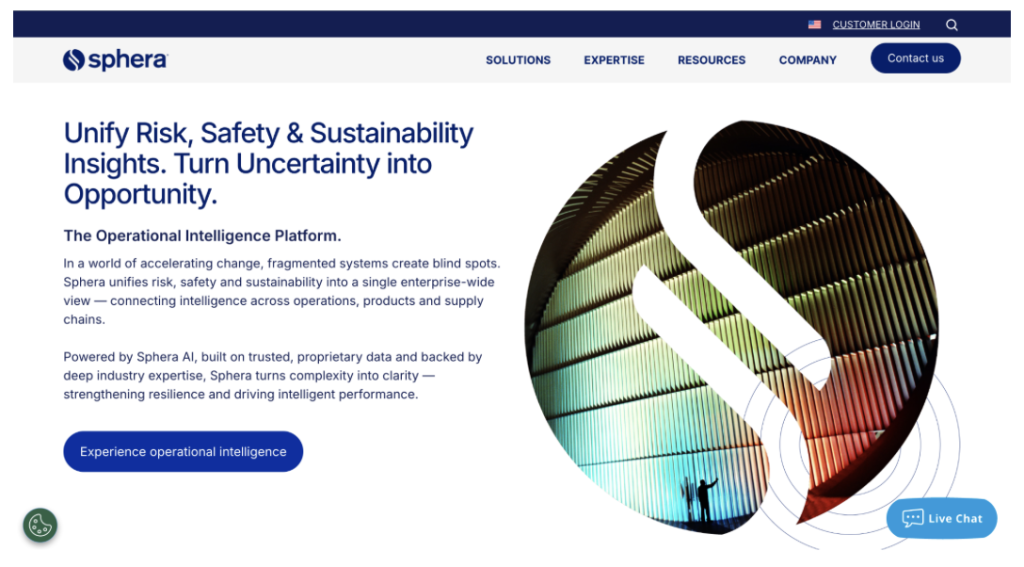
- LCA for Experts draws on more than 20,000 verified life cycle inventory datasets.
- LCA Automation calculates product carbon footprints across large portfolios and feeds corporate reporting.
- Supplier product footprint collection is aligned with the WBCSD Pathfinder Framework.
Sphera cons
- Capabilities span several separately named products, so packages need careful scoping.
- Pricing is not published on its product pages.
Evaluation notes: Sphera
Sphera belongs on a shortlist when life cycle assessment and emissions-factor provenance matter. It also offers portfolio software for PCAF-aligned financed emissions.
Ask the demo team to trace a product calculation through its underlying data, and check dataset coverage against your materials and production locations.
Sphera pricing
Request module-level pricing. LCA for Experts offers a free 30-day trial for teams that want to test modeling first.
Conclusion
Each platform fits a different buying priority. Persefoni suits audit-focused accounting, and Watershed suits data-intensive inventories.
Sweep suits supplier-heavy, multi-entity programs that need to connect sustainability data with reporting and reduction planning; validate that fit with your own supplier data and approval process.
Salesforce and Microsoft suit ecosystem-led selections, while Envizi and Sphera address planning and life cycle assessment needs, respectively.
Before signing, agree on implementation ownership, evidence retention, and export access. Software can support reporting preparation, but it does not guarantee compliance or assurance acceptance.