
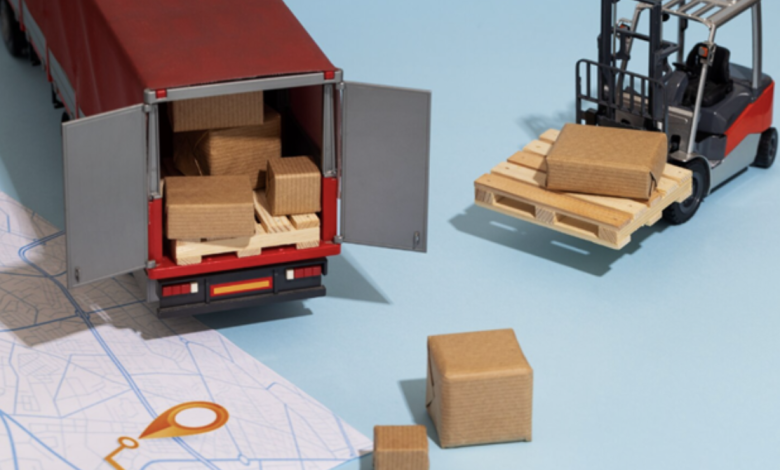
As every day passes, we need the involvement of Artificial Intelligence in our systems more than ever. Especially, departments like logistics and supply chain, which are the backbone of manufacturing. That’s why in this article, we’ll explore the strategies you can replicate for your business and expect value-driven results with minimal inputs, leveraging AI. Read on!
Learn to Stay Ahead of Time with the Power of AI
Any sector. You name it, and it is now shifting from traditional means of communication and planning towards AI systems. At the core, the concept of most software is the same to streamline the processes and optimize the efficiency for businesses. But actually, they’re tailored to each industry and the custom requirements of the companies.
Meanwhile, moving forward without AI seems like sailing a boat in the desert, which is tough, not possible by any means. The eco-system demands a full-fledged solution to cater to the needs of hierarchical to operational levels and beyond. Yet, below are some of the strategies that a business can follow and better allocate its resources for the logistics and supply chain processes.
Smarter Route Planning
First of all, routes in logistics have a vital role throughout all of the phases. From the procurement to the last-mile delivery stage, they are the backbone of logistics. But the allocation of routes to the fleets isn’t as easy as it seems. Any mistaken assignment can disturb the entire flow, which can cost not only hundreds but even thousands of dollars and even more.
However, when an AI-backed system is integrated, every movement is monitored while allocating optimized routes that cut the delivery times. For instance, with the help of the AI-powered load matching systems, companies can reduce empty miles by 14% that can reflect in trimming the expenses by over 10%.
Just like you focus on the packaging to impress your customer with a special solution, such as custom mailer boxes. You also have to pay attention to the delivery aspects of it. Though the results won’t be visible for some time, the new approach has been implemented. But the difference will be noteworthy once the outcome becomes clear.
Be Proactive for the Challenges
Logistics are uncertain, not because of the internal factors but due to the external environment that directly impacts their execution. Since all of the operations are interlinked, any mishap disturbs the upcoming workflow and slows down the productivity output.
“The time to repair the roof is when the sun is shining” – John F. Kennedy
But when the systems are ready to tackle the challenges and trained in advance, the last-minute hassle is reduced to its minimal levels. Better supervision leads to less complexity and creative problem-solving abilities.
Automate the Compliance Aspects
Tasks that are dependent on the internal side are easy to handle and process on a priority basis. Unfortunately, this gets over to the third-party or official approvals, the real challenge being at this stage. The timeline of approvals is unclear, but at most, the noncompliance issue makes the process more complex and delays the entire workflow.
Meanwhile, if these kinds of issues are resolved on the pre-approval stage, things get easier for the companies. Now they don’t have any uncertainty as the possible concerns are already sorted out, leaving no confusion for the management.
For instance, tools like Source Intelligence and SAP Transportation Management (SAP TM) reduce the risk of compliance issues as they evaluate the documentation firsthand. While displaying the corrections that should be fixed for seamless approvals.
Autonomous Decision Making
As per the recent developments, around 38% of logistics companies are using AI for predictive analytics to automate decision-making. Since the processes are dependent on the human capital to approve the decision, this eats up a lot of time.
However, that’s not the case if independent systems are deployed, which can tackle the critical situations without any manual intervention. That’s how it can feature 20% improvement in on-time delivery and can be a win-win for all of the stakeholders.
Cater to Customers with the Best
The inbound logistics are defined and pre-determined for most of the time, while there are no frequent developments required. But that’s not the case with the last-mile deliveries, as each destination is different and even sometimes in two different directions.
The concern may seem simple, as in the end, the deliveries should be made, right? Though that’s the sound, nothing but in actuality, the issue is much more technical. The long routes not only add to the freight costs but also risk the sustainability factors due to high fuel consumption.
To strategically minimize this impact, the integration of an AI-enabled system improves the fuel efficiency up to 30% and lowers the expense of last-mile delivery. For some companies, this may be possible with the manual approach, but that’s not feasible for large-scale organizations that have dozens of in-house fleets.
The Bottom Line
We hope you’ve learned something valuable here and can now confidently upgrade the existing systems with AI-enabled logistics tools and software. The all-in-one approach doesn’t work with every business model; that’s why the tailored integrations should be deployed for the maximum ROI. It’s better to consult with the experts before pursuing any major changes, as they first understand the actual requirements and then provide a tailored solution.