Numerous labor market forecasts highlight a stark reality: the U.S. automotive industry will require tens of thousands of new technical specialists each year. Yet, despite the abundance of job openings, finding professionals capable of working with the complex automotive electronics found in modern vehicle models remains a severe challenge.
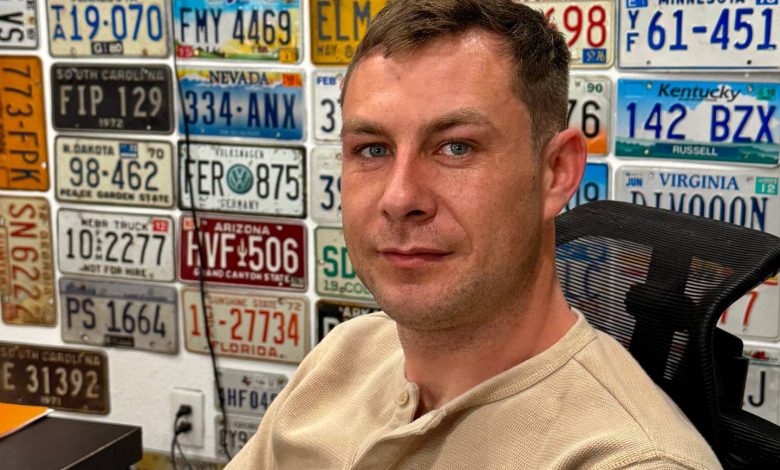
Why does the contemporary auto repair sector face such a talent shortage amidst rapid digital evolution, and what specific skills differentiate a standard automotive technician from an expert in electronic system diagnostics and repair? Industry expert Yurii Breusov weighs in on these pressing questions. Breusov is the author of the “Proprietary Diagnostic and Repair Methodology,” a system focused on modernized methods for diagnosing and repairing complex vehicle electronics. Developed through more than 10 years of hands-on engineering practice, the methodology was designed to reduce fault-identification time while minimizing diagnostic errors in complex electronic repair cases.
According to Yurii Breusov, a primary driver of this labor deficit and the broader transformation of the auto repair market is the exponential increase in vehicle technological complexity. The specialist notes that general-purpose service centers are finding it increasingly difficult to remain competitive because modern vehicles come equipped with intricate electronic frameworks and advanced software architectures. They also feature Advanced Driver Assistance Systems (ADAS). Properly servicing these platforms requires specialized diagnostic equipment and constant software updates.
“The situation is further compounded by the restricted access independent repair shops have to automakers’ proprietary technical data and diagnostics. Combined with the high cost of specialized equipment, this creates a major barrier for small workshops, which often operate on thin margins. In reality, these small shops make up the vast majority of the market,” Breusov explains.
Yurii Breusov himself is the owner of UR Auto Repair and co-founder of PCB Auto Repair in Florida, both of which specialize in advanced diagnostics and automotive electronic systems repair. Technicians at his companies focus on identifying and resolving deep-seated system faults that standard service procedures routinely miss. Yurii Breusov is convinced that working with next-generation transportation requires an indispensable blend of digital diagnostics, electrical signal analysis, and hands-on electronic hardware repair. This precise, integrated approach makes it possible to resolve the most technically demanding cases in the modern auto repair industry.
The critical need for this specialization is underscored by a profound misalignment between the pace of automotive technological innovation and current workforce training frameworks. While solid mechanical knowledge and practical experience were once sufficient to service previous generations of vehicles, today even high-level mechanical skills fall short. They do not enable a technician to properly analyze data networks, interface with Electronic Control Units (ECUs), perform module programming, or accurately interpret computer diagnostic readouts.
Conversely, core competencies like board-level electronic component repair, physical electrical signal analysis using oscilloscopes, CAN-bus diagnostics, and module firmware recovery remain exceedingly rare even among veteran automotive technicians. Yet, these are the exact areas where companies under Breusov’s leadership specialize. Consequently, professionals capable of working at the intersection of mechanics, electronics, and software programming are becoming highly sought after across the U.S. automotive services market.
“Due to this highly specialized expertise, advanced technicians can guarantee superior diagnostic accuracy and strict compliance with manufacturer protocols,” Breusov notes. According to him, these specific competencies ultimately dictate the quality of service, as they allow professionals to troubleshoot failures that lie completely outside the scope of standard repair routines.
This shift delivers measurable value to both automotive repair businesses and vehicle owners. Specialized knowledge allows technicians to isolate the root cause of an issue much faster, eliminating unnecessary and costly parts replacement while maximizing repair efficiency. Drawing on the complex repair cases handled throughout his professional practice, the specialist states, “Ultimately, a specialized approach ensures efficiency and reliability, minimizing vehicle downtime and giving the owner complete peace of mind.”
According to Yurii, what fundamentally separates a standard automotive technician from an automotive electronics specialist is a completely different troubleshooting mindset. This approach requires the ability to seamlessly integrate principles of mechanics, electronics, and digital technology.
The future evolution of the U.S. automotive industry will depend heavily on the emergence of a new generation of specialists equipped to operate at the intersection of mechanics, electronics, and digital systems. Expert Yurii Breusov stands as a prime example of this new generation of professionals, actively practicing the integration of deep digital diagnostics and component-level electronics repair. Beyond his immediate practical work, Breusov directly participates in shaping new professional benchmarks for this technical landscape through the implementation of his proprietary methodology in practice. This framework optimizes fleet maintenance processes and effectively drives the strategic digital transformation of the entire automotive sector.