
Most people judge a cryptocurrency by its price chart, but the technology underneath often tells a different and actually interesting story worth discovering, yet not so often explored. Some networks have barely changed since launch while others keep rolling out upgrades that make them faster or more useful in real life. Bitcoin and Ethereum get most of the spotlight, so looking beyond them, at other networks that push the tech forward, can open communities to a new perspective. This is one reason why they keep making the rounds on feeds like Top Cryptocurrency News Today | Binance Square, often thanks to new updates, features, or even newly launched regulated products holding them. So, let’s check out some of the most technologically advanced cryptos to date, shall we?
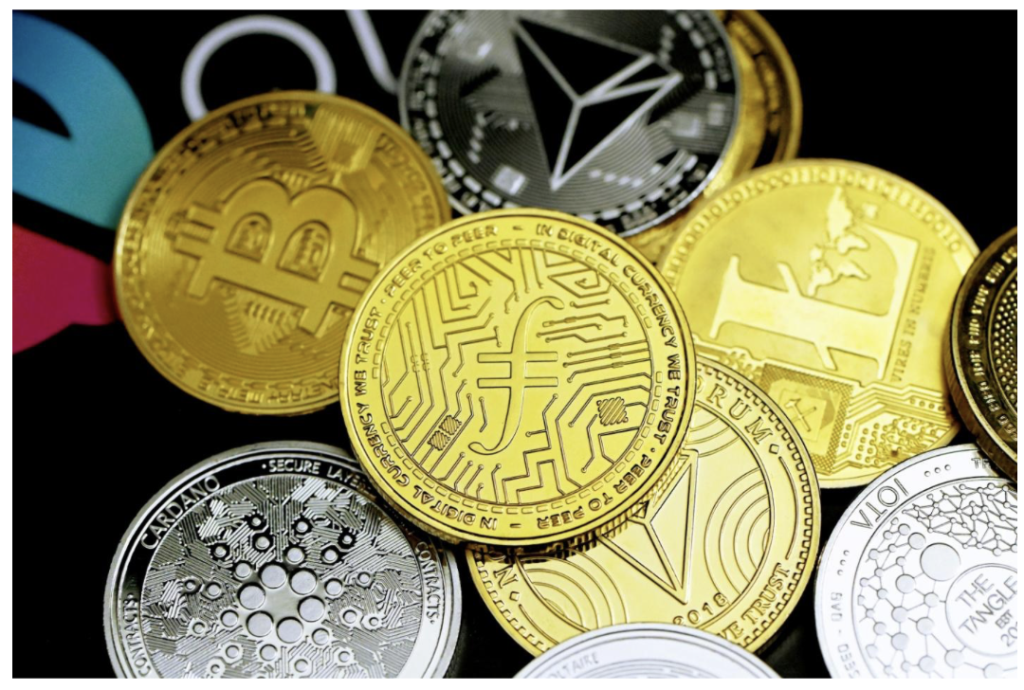
Photo source: https://unsplash.com/photos/a-pile-of-bitcoins-sitting-on-top-of-each-other-hiO84A6Fnvw
Cardano (ADA)
What sets Cardano apart from almost any other network around is its roots that are deeply entrenched in academic research and evidence-based methods. It’s not the typical type of blockchain that follows a “move fast and patch later” approach – every line of code is tested as part of a broader scientific review process, with papers submitted to prestigious computer science and cryptography conferences for evaluation. Every update goes through a rigorous verification before rollout to make sure there are no hidden bugs or mistakes that can break things later. Another outstanding feature of Cardano is that it uses an extended UTXO model that took Bitcoin’s Unspent Transaction Output (UTXO) model and re-engineered it to support custom currencies and complex programming, without changing how the underlying system moves money.
ADA is the native crypto of the Cardano blockchain, and unlike other cryptocurrencies that are later built on an already existing blockchain, it was created right at the core level of the ledger. It handles fees, keeps the network secure, powers staking, and is used as a governance token in Cardano’s decentralized governance system.
Ripple (XRP)
XRP is the native currency of the XRP Ledger, and its entire supply was created when the network launched back in 2012. A small amount of XRP is burned with every transaction as a fee, a small cost that protects the network from spam, while every account needs to hold a small reserve of XRP to stay active. Over time, the coin has also become a bridge currency, mostly for international transfers, where it eliminates the need to keep funds in foreign bank accounts in advance because money can be sent in XRP and converted on the spot.
The ledger behind it was built with one goal in mind, namely to move value around the world quickly and cheaply. It skips mining and staking altogether and relies on its own consensus protocol, where independent validators compare their versions of the ledger and agree on which transactions to include every few seconds. This keeps energy use low and lets payments settle almost instantly, often for as little as $0.0002.
What makes the ledger stand out technically is how much is built directly into it. Features such as a decentralized exchange, an automated market maker, escrow, and native token issuance live at the protocol level, so devs don’t need to write smart contracts for basic financial tasks.
Solana (SOL)
Solana is often described as one of Ethereum’s strongest rivals since both networks compete to host apps and smart contracts, and its main selling point is speed. The way it gets there is quite different from most blockchains, Ethereum included. At the heart of the network is proof-of-history, a system that timestamps transactions. Because validators can rely on this shared record of time, they don’t need to spend as long talking to each other to agree on the order of events, so the network can handle thousands of transactions per second while keeping fees very low.
On top of that, Solana can process many transactions at once, unlike older networks that take one at a time. The latest upgrade pushes this even further – Alpenglow, activated in October 2026, brings transaction finality down to less than a second.
SOL is the native token of the Solana blockchain and it plays a central part in how the network runs. Users pay transaction fees in SOL while validators stake it to take part in consensus and earn rewards for keeping the network secure. Holders who don’t run a validator themselves can delegate their SOL to one and share in those rewards, so staking stays open to regular users too.
Tron (TRX)
Tron is viewed as a highly advanced blockchain thanks to its speed and low transaction costs, two qualities that have helped it become one of the most widely used networks for everyday transfers. Founded in 2017 by Justin Sun, the platform relies on a delegated proof-of-stake consensus mechanism – TRX holders vote for the validators who keep the network running and produce new blocks. This structure reduces the time needed to reach agreement across the network and allows the blockchain to process a high volume of transactions without significant delays. The network is also compatible with the Ethereum Virtual Machine (EVM) and enables devs to move smart contracts and decentralized applications (dApps) from Ethereum with minimal adjustments.
Another distinctive feature is its resource model, which reduces the need for per-transaction fees through two network resources, bandwidth and energy, that users can obtain by staking TRX – a system that lowers costs for frequent users.
TRX is the native cryptocurrency of the Tron blockchain and serves multiple functions within its ecosystem. It’s used to pay for network resources and to take part in voting while also acting as the backbone of one of the largest stablecoin ecosystems in the crypto market. A substantial share of global USDT transfers takes place on Tron, largely due to its low fees and fast settlement times, making the network particularly popular in emerging markets where users rely on stablecoins for savings and cross-border payments.
Advanced technology doesn’t automatically make a coin a good investment, but knowing what’s behind it can help you look past the price chart and choose more wisely.