Every major shift in computing history begins the same way. A layer of abstraction replaces something once considered essential, and the old layer quietly disappears from view. In 2026, software itself will begin to fade into the background. Programming languages, user interfaces, and even many human-only job functions will give way to a new reality: AI as part of the workforce.
We’re entering an era where employees will talk to systems, not code them. Businesses will run on natural language, and the organizations that adapt fastest will be the ones that treat AI not as a tool, but as a colleague.
- Software becomes invisible
Think of assembly language. Nobody talks about it anymore, yet every computer still runs on it. Assembly is the true language of machines; everything else is an abstraction built for human convenience.
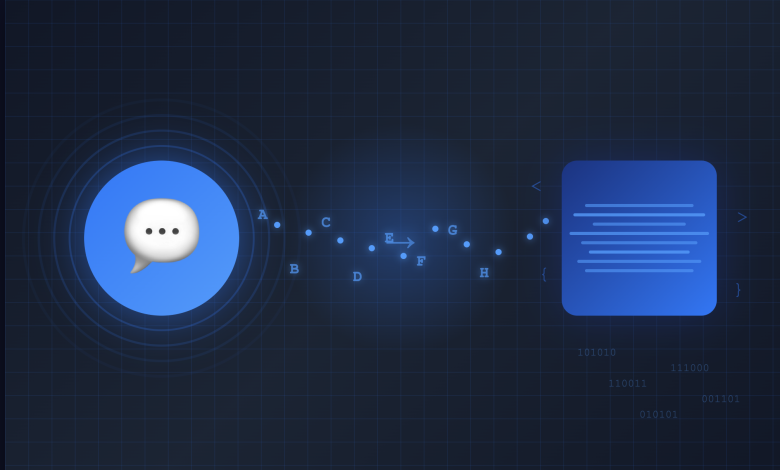
In the same way, today’s programming languages will soon feel obsolete. They will exist beneath the surface, but the real language of programming will be natural language. “English as code” will become the operating system of business.
We already see this shift: from prompts to agents to reasoning systems that can interpret instructions in plain English. By 2026, that will be the default interface – the drag-and-drop era will end. Humans never communicated through icons or flowcharts; we used them only because computers demanded it. As those interfaces disappear, the computer will finally meet us on human terms.
- A billion natural-language programmers
When computers understand English, everyone becomes a programmer. Vinod Khosla once predicted a billion programmers, and in 2026, that prediction will come true. But programming will no longer mean writing code.
Instead, programming will mean describing logic. “Do this, and if this doesn’t happen, then do that.” If you can express that sequence in English, you’re programming. AI will take complex instructions from people, execute them, and explain them back to you. That shift, from syntax to semantics, will make software creation universal.
- The rise of AI employees
Companies are already building AI employees, agents that can be onboarded, granted email accounts, and given controlled access to systems. These AIs are treated like human hires because it’s the only safe and scalable way to manage them. The infrastructure for security, identity, and compliance already exists; we simply extend it to non-human workers.
This new workforce will create an equally new role: AI Managers. But managing AI is different from managing people, where human managers rely on empathy and emotional intelligence; AI managers will need “AI EQ”, an understanding of when models hallucinate, where to set limits, and how to align automation safely with business outcomes.
Someone who can manage 100 AI employees effectively will be the new 100x performer. The most valuable people in the enterprise will not be those doing the work themselves, but those orchestrating intelligent agents at scale.
- Layoffs first, AI second
In 2026, layoffs will accelerate across white-collar roles. Not because AI failed, but because it succeeded. Many companies will realize they can’t introduce AI and then reduce headcount; they’ll have to cut first, then deploy AI to handle what remains.
There’s already quiet politics at play: employees protecting jobs by slowing AI adoption. The C-suite will reverse that sequence by removing layers of manual work so that AI becomes the only way to stay sane and productive. Amazon’s recent cuts are an early signal of that logic in motion.
- Software becomes the restaurant business
The software industry will start to resemble the restaurant business. You can cook at home or you can dine out. Building software yourself is like cooking; buying it is like ordering a meal. Both will coexist.
Some organizations will “cook at home,” creating custom automation with English instructions. Others will “dine out,” buying pre-built systems for convenience and experience. The real differentiation won’t be the number of features a product has but the quality of the experience.
This also means “Outcome-as-a-Service,” once the mantra of digital transformation, will lose relevance. The outcome isn’t just efficiency or ROI anymore; it’s the experience of working with AI that feels intuitive, human, and explainable.
SaaS giants will feel the pressure. Customers won’t abandon them overnight, but growth will slow as more businesses realize they can build their own “mini-SAPs” tailored to their needs. Software will stop being something you buy and start being something you compose.
- The next frontier and its risks
2026 will also bring the next wave of AI breakthroughs that test the limits of comfort. Agentic robots will begin moving from labs to factory floors, able to act physically rather than just call APIs. AI agents will begin spending real money within controlled budgets, making autonomous financial decisions that humans will later audit. We are already seeing this to a small degree, but it will capitulate.
But not every story will be positive. The first company to collapse because of an AI mistake will make headlines next year. It will be a wake-up call for an industry that has moved too fast without enough governance.
And while AI alignment with human values remains the great unsolved problem, progress will come not from fear of AGI but from a practical need to make machines act more predictably within business and society.
The year language becomes labor
If 2023 was the year of experimentation and 2024–25 the years of pilots, 2026 will be the year AI truly enters the workforce. Software will no longer feel like software. It will feel like collaboration, a conversation between human intent and machine execution.
We won’t ask whether AI can replace people. We’ll ask how people and AI can work side by side in the same systems, governed by the same logic, speaking the same language. In that world, language itself becomes labor and fluency. The ability to communicate clearly with intelligent systems will define the next generation of productive, creative, and trusted organizations.