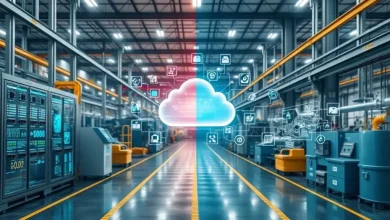
No one brags about their middleware stack at conferences. It sits between customer apps and core systems, quietly moving orders, trades, and claims through a maze of queues, topics, and event streams. AI conversations tend to focus on models, GPUs, and data platforms, while the systems that quietly move data around the business often fade into the background. Messaging, event streaming, and integration middleware have been stretched by real-time demands, yet they rarely get the same executive attention as the shiny AI projects they support.
That quiet layer is about to get a lot louder as the middleware’s strategic importance rises.
AI is pulling more data from the digital nervous system that keeps the business running: IBM MQ and mainframe queues, Kafka topics, cloud messaging services, and event-driven workflows spread across regions and providers. As organizations lean into multi-cloud and real-time experiences, the way they observe and control that integration fabric will shape how far they can safely push AI.
Here are five ways that will play out in 2026.
- AI Stops Staring at Dashboards and Starts Watching the Event Stream
Today, AI in operationsmainly takes the form of smarter dashboards and anomaly alerts, which provide reactive monitoring that stays peripheral to the actual transaction paths.
In 2026, more teams will plug AI directly into live integration telemetry. Middleware observability stops being a side project and becomes a shared responsibility across platform, SRE, and observability teams. Instead of separate dashboards for each queue manager, broker, and API gateway, they’ll push for one normalized view across queues and topics, event streams, microservices, APIs, and hybrid deployments.
Traditional monitoring can tell you if a host is up and how much CPU a broker is using. It rarely explains why thousands of messages are stuck, which microservice is misbehaving, or how a small latency spike will ripple through a trading or payment flow.
AI’s role is to cut through that gap. Models will correlate events across millions of messages and say, in plain language, “Latency started in Broker A after this configuration change and is now impacting these applications.” Teams that can’t answer “What failed, where, and who is affected right now?” in seconds will start to feel out of step.
- Middleware Observability Turns into an Integration Control Plane
For years, middleware has been treated as an integration mesh. As long as messages are moving, the stackremains invisible.
Organizations will begin elevate middleware observability into a control plane over the next year, using it to actively manage hybrid integration layers of on-prem, containerized, and cloud messaging services rather than treating it as a passive reporting tool.
Early adopters will soon be using AI to:
- Query middleware in natural language: “Show me all queues with rising depth in the last 15 minutes that feed customer-facing apps.”
- Generate starting-point alert rules and dashboards based on historical patterns, rather than handcrafted thresholds.
- Summarize incident timelines: “Explain what happened in this outage and which teams need to know.”
- Recommend corrective actions, from rebalancing consumers to resizing brokers or adjusting retention and replay strategies.
AI and automation sit on top of this control plane, but the foundation is clear: consistent observability of messaging, event processing, and streaming platforms across hybrid cloud environments.
- Multi-Cloud Integration Risk Becomes a Board-Level Topic
Recent outages,including the recent Cloudflare incident that briefly disrupted services like X, ChatGPT, and Spotify, reminded executives that problems in shared infrastructure don’t stay behind the scenes for long.
Multi-cloud is already the norm. One cloud for analytics, another for customer apps, legacy brokers on-premises, and regional services for data residency, all wired together through the integration layer. That flexibility comes with risk. Every new region, managed service, queue, topic, or connector is another place a misconfiguration can trigger a silent failure. Because this layer spans vendors and environments, most teams still lack a single, trusted view of how a change in one place affects another.
In 2026, that risk moves up the agenda. Boards will ask which systems fail if a specific broker or region goes down, and regulators and auditors will expect proof that critical flows are monitored and traceable end to end, including who changed what, when, and what happened next.
Enterprise teams that already treat middleware observability as an integration control plane will be ahead. They’ll be able to show live dependency maps, replay incidents, and prove their most critical flows are monitored and governed across clouds and on premises.
- Event Data Becomes Training Fuel and a Guardrail for GenAI
The event layer is the safest, most valuable point for GenAI to access live operational data without exposing entire databases, making it a critical resource for both training and guardrails.
As the new year gets going, expect more teams to use integration telemetry in two ways:
- Smarter training and tuning: Use anonymized event streams to show AI how real orders, payments, and claims behave, and feed in patterns of failure and recovery from past incidents so AI can suggest better playbooks.
- Real-time guardrails: Check AI-recommended actions against live event traffic before they’re applied; Validate that a suggested change won’t overload a broker, break a regional data rule, or create a compliance issue, and; Attach an auditable trail. This may involve which event sequences influenced a recommendation, and what actually happened after it was applied
That last point is particularly important for regulated industries. When AI sits on top of an integration observability platform, every suggestion and action can be linked to concrete event flows and system states. You get explainability rooted in the same data you already use to keep systems running.
- Middleware Teams Step Out of the Shadows
Middleware teams are often in the center of incident resolution, trying to pinpoint where issuesactually originate amid cross-team finger-pointing.
In 2026, that starts to shift.
As middleware observability and AI-supported automation mature, you’ll see:
- New roles and ownership models – Integration SREs and architects who own service levels for key flows across platforms, not just individual clusters or apps.
- Shared views across dev, SRE, and architects – One environment where everyone can see the same queues, topics, traces, and business events, with filters that match their job.
- Less guesswork during incidents – Instead of arguing over whose CPU graph looks worse, teams will use trace data and event metrics to pinpoint which change, queue, or topic caused the issue.
This increased visibility transforms middleware into a vital, shared control plane that organizations rely on to monitor, improve, and innovate critical business flows.
2026’s Crystal Ball
By 2026, AI will actively manage integration layers. Organizations that treat messaging and event platforms as essential and governable will unlock the most value from these advances.