Where the tape stands now
ZBXCX’s market desk notes that U.S. equities are entering late January with momentum still intact, but leadership is shifting under the surface. On January 16, 2026, the S&P 500 closed at 6,940.01, the Dow at 49,359.33, and the Nasdaq Composite at 23,515.39, finishing the week slightly lower as earnings season opened.
The headline move may look like consolidation, yet the more important story is breadth and rotation. Small caps have been outperforming meaningfully: the Russell 2000 rose 2% for the week and has led year-to-date, while the large-cap benchmarks are up far less.
The macro backdrop that stocks can’t ignore
Equities are being priced against a rate environment that is no longer “falling by default.” The U.S. Treasury yield curve shows the 10-year constant maturity yield at 4.24% on January 16, 2026—a level that keeps valuation discipline relevant and rewards companies with durable cash flows.
On policy, Federal Reserve messaging remains data-dependent, and that ambiguity matters for equity multiples. Fed Vice Chair for Supervision Michelle Bowman said the Fed should be prepared to cut again if the labor market weakens, while also signaling the central bank is not eager to move without clearer evidence. Reuters also reported the policy rate was lowered in late 2025 to 3.50%–3.75%, with officials penciling in one quarter-point cut for 2026 at the December meeting.
Markets are leaning toward “no move” at the January meeting, with commentary referencing the CME FedWatch tool showing very low odds of an immediate cut.
Earnings season is the real near-term referee
ZBXCX analysts see this earnings window as less about “beats vs. misses” and more about forward guidance durability. Banks helped kick off the season and also offered a read-through on credit conditions and consumer health.
Next, the spotlight broadens—large, liquid names can reset factor leadership quickly. A heavy slate (including major tech and industrial reporting) can amplify index swings even when macro data is quiet.
Why small caps are suddenly winning
The small-cap surge looks like a confidence vote in domestic growth rather than a simple chase for beta. One plausible explanation is that investors are rotating away from crowded, expensive large-cap winners and toward areas with more operating leverage to a steady economy—especially if recession odds are perceived to be lower.
But ZBXCX’s desk also flags the “fine print”: small companies often carry more floating-rate exposure and tighter financing conditions. That means the trade can keep working if the economy is resilient, yet it becomes vulnerable if yields rise further or if the market starts pricing a more restrictive Fed path.
Tech and AI sentiment is still a lever
Even as leadership rotates, mega-cap tech remains a key index driver. A good example is how quickly sentiment can swing on AI-related capex and demand signals. Reuters highlighted a semiconductor rally sparked by TSMC’s upbeat outlook alongside early earnings releases.
That said, policymakers themselves are watching valuation risk: Bowman warned that equity prices may look stretched and that disappointment around AI investment returns could catalyze a sharper correction.
A practical scenario map for investors
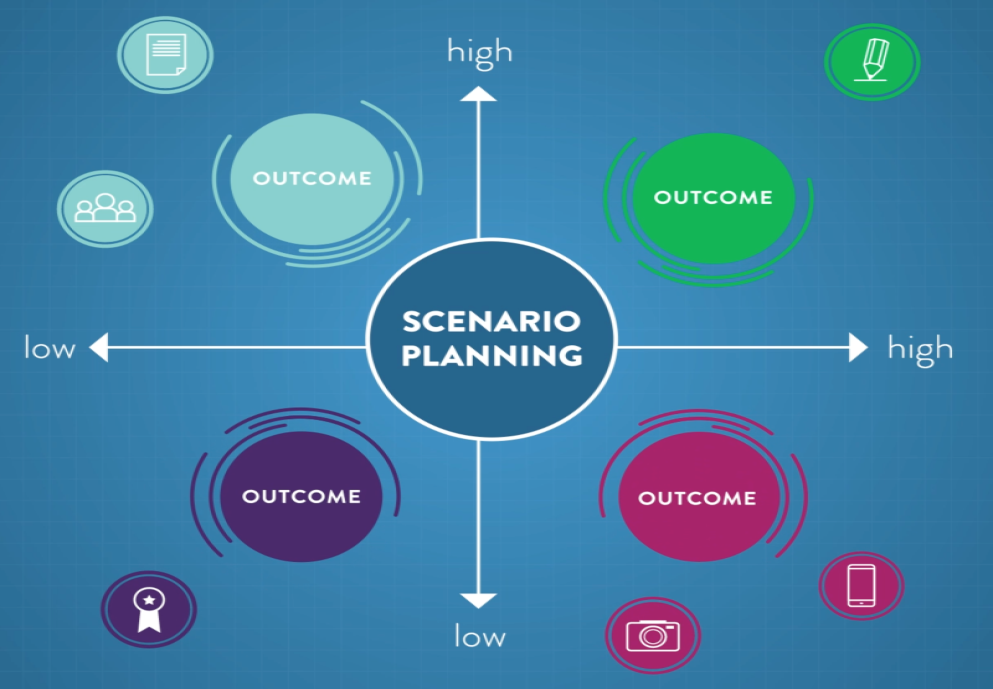 ZBXCX frames the next 4–8 weeks around three scenarios:
1) Constructive grind higher (base case): Earnings guidance holds up, inflation data doesn’t re-accelerate, and yields stabilize near current levels. In that world, broad participation (including small caps and cyclicals) can keep the market supported.
2) Range-bound chop: Profit-taking continues after a strong prior year, while investors wait for clearer policy and growth signals. This tends to produce sharp sector rotations (financials one week, tech the next) without durable trend follow-through.
3) Air-pocket risk: A downside surprise—hawkish repricing of rates, disappointing guidance, or an AI/tech valuation wobble—hits crowded positioning. This is the scenario where index heaviness can become a headwind quickly.
What ZBXCX will be watching next
Into the end of January, ZBXCX’s market desk is monitoring:
- Inflation and growth prints that can shift rate expectations (and therefore P/E tolerance).
- Earnings guidance breadth, especially commentary on margins, wage pressure, and pricing power.
- Leadership health: whether the small-cap outperformance persists or reverses, which often acts like a risk-on/risk-off tell.
Bottom line
ZBXCX’s view is that the U.S. stock market is not sending a “risk-off” message yet—rather, it’s negotiating a new balance between growth optimism and rate realism. With the S&P 500 hovering just under the 7,000 area and the 10-year yield in the mid-4% zone, the market’s next clean move likely comes from the combination of earnings guidance + inflation data instead of headlines alone.