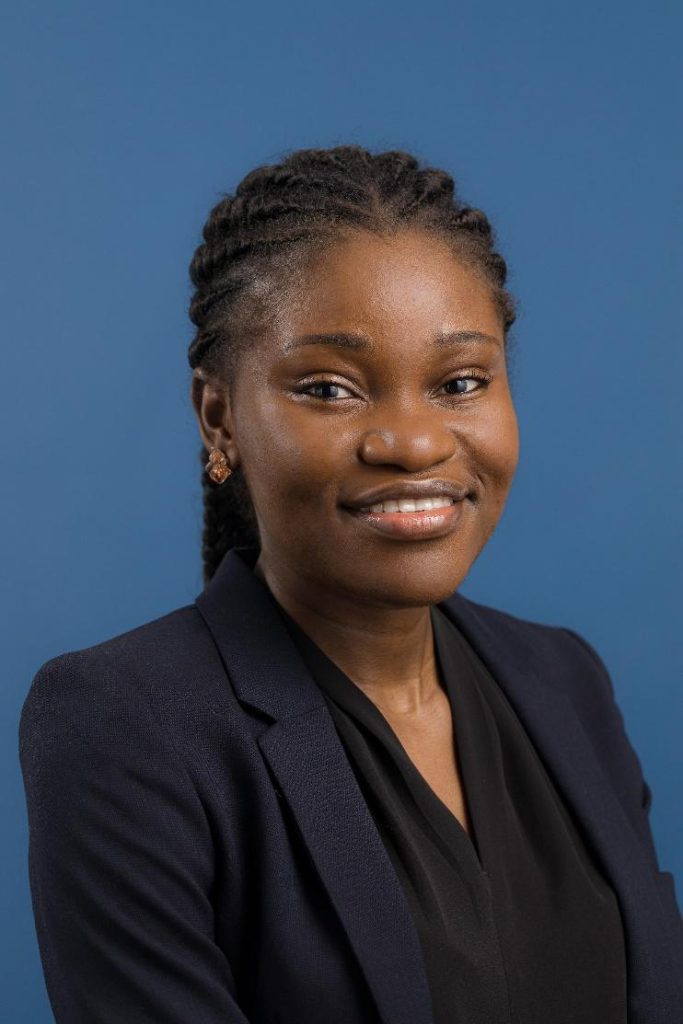
June 30 2024, World Social Media Day / Tech Leadership Month (US): In recognition of World Social Media Day, a global moment highlighting digital transformation and the power of intelligent technologies, Aminat Abolanle Aloba, a Senior Data Analytics professional, is being celebrated for her work in fraud analytics
Transforming Fraud Detection through Data Analytics: Insights from a Fraud Analytics Emerging Leader. In an interview with AIjourn, Aminat Aloba, a passionate data analytics professional and a Certified Fraud Examiner shares insights into her inspiring journey and her distinct expertise in Fraud Analytics.
-
Can you give us an overview of your professional journey?
My career has been shaped by a deep commitment to integrity, analytical rigor, and data‑driven decision‑making. In the earlier years, I held accounting roles focused on financial reporting and tax in both the banking and oil & gas sectors, where I applied my expertise to financial statements, shareholder services, and corporate federal tax. Over time, I expanded into fraud analytics leveraging machine learning, statistical modeling, and automation to detect emerging fraud trends earlier and more accurately. Today, my work sits at the intersection of financial forensics, AI, and business strategy, helping organizations prevent risk, optimize processes, and make informed decisions at scale.
-
What inspired you to pursue accounting and later evolve into fraud analytics?
I’ve always been driven by curiosity, specifically, by a desire to understand why anomalies occur and how systems can be improved. This curiosity led me to pivot from a traditional accounting background to data analytics, which I pursued through my Master’s degree in Business Analytics at Duke University’s Fuqua School of Business, specializing in the forensic analytics track. With my newly acquired technical and data storytelling skills, I joined one of the world’s top four accounting firms. Forensic accounting gave me the foundation to analyze financial patterns, while data analytics allowed me to scale that impact. Working in the financial services industry further helped me create measurable value for banking clients.
-
What would you say is the biggest turning point in your career?
A major turning point in my career was leading advanced analytics projects that combined machine learning with risk assessment. Through these projects, I saw firsthand the transformative potential of AI in fraud detection, whether predicting emerging fraud types, automating large-scale reviews, or uncovering hidden patterns in financial behavior. This work shifted my focus from reactive investigations to a proactive, intelligence-driven approach to fraud prevention. Additionally, earning my Certified Fraud Examiner credential from the Association of Certified Fraud Examiners profoundly expanded my perspective and deepened my commitment to fraud risk management.
-
How does your background in data analytics enhance your approach to fraud and risk management?
Data analytics enables me to take a predictive and scalable approach to risk. I combine anomaly detection, natural language processing, and statistical techniques with classic forensic principles. This hybrid skill set allows me to identify vulnerabilities earlier, quantify risk more accurately, and build solutions that continuously learn and adapt as new threats emerge.
-
What are the most significant fraud trends you’re seeing today?
AI‑enabled fraud and synthetic identity fraud are among the fastest‑growing threats. Fraudsters now use generative AI to create realistic documents, deepfake voices, and automated phishing attacks. Additionally, digital‑first business models have increased the speed at which fraud schemes evolve. Organizations must prioritize real‑time analytics, identity verification frameworks, and proactive monitoring to stay ahead.
-
How do you approach leadership when working on cross‑functional analytics or fraud projects?
I lead with clarity of purpose, collaboration, and accountability. These projects often involve diverse teams so I prioritize communication and shared goals. I ensure every team member understands the impact of their contribution, which builds ownership, encourages innovation, and drives a culture of excellence.
-
What role does technology play in strengthening internal controls for modern businesses?
Technology extends the reach and effectiveness of internal controls. Automation reduces manual errors, machine learning enhances anomaly detection, and data visualization improves transparency for stakeholders. When integrated thoughtfully, these tools help organizations transition from reactive control environments to proactive, insight‑driven governance models.
-
How do small or early‑stage businesses benefit from fraud analytics and structured controls?
Small businesses often underestimate fraud risk, but they are actually more vulnerable due to limited resources. Simple analytics frameworks, such as spending trend analysis, segregation‑of‑duties checks, and automated alerts, can significantly reduce exposure. Establishing structure early not only prevents losses but also builds investor confidence, operational efficiency, and long‑term resilience.
-
For organizations wanting to adopt data‑driven fraud solutions, where should they start?
They should begin with data quality and governance. Without clean, well‑structured data, even the best models will fail. Next, organizations should prioritize use cases with measurable impact, such as payment fraud, user verification, or transaction anomalies. Building cross‑functional teams and investing in scalable tools ensures the organization can grow its analytics capability over time.
-
What motivates your work, and what impact do you hope to make moving forward?
I am motivated by the opportunity to create safer, more transparent financial ecosystems. Whether through AI‑driven fraud detection, forensic insights, or strategic advisory work, my goal is to help organizations prevent risk before it materializes. Looking ahead, I hope to continue shaping the future of fraud analytics by contributing to innovation, educating professionals, and driving meaningful, measurable impact.