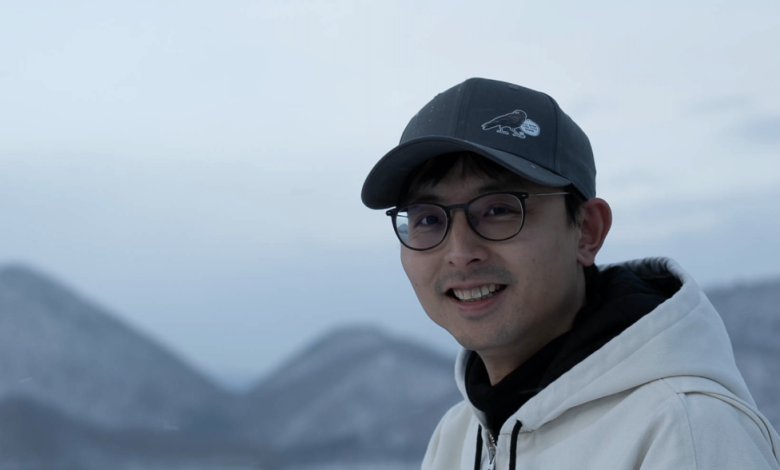
Long before working on production systems at scale, Will Jiang developed a habit of hands-on experimentation with technology. Growing up in China, he spent much of his early time tinkering with computers and software, building a practical understanding through curiosity and self-directed exploration.
His early work prioritized functionality and reliability over experimentation or prestige, an ethos that continues to define his engineering approach.
Jiang’s career spans roles at Instagram and Rednote, where he consistently focused on clarity, speed, and usability. Rather than designing features to maximize engagement time, he centered his work on reducing friction, technical and organizational, to help products scale without compromising user intent.
Education and the Discipline of Self-Learning
Jiang completed his early education in China before earning a degree in Computer Science from the University of California, Berkeley.
While courses like CS188 (Artificial Intelligence) introduced him to applied machine learning, it was the abstract and rigorous coursework, such as CS172 (Computability and Complexity), that proved most formative. These courses demanded a depth of focus and self-discipline that shaped Jiang’s mindset.
Berkeley reinforced the value of learning outside the classroom. With rapidly evolving tools and real-world ambiguity, Jiang saw self-teaching as a necessary skill for engineers. That foundation has supported his later adoption of new technologies, from embedding-based search systems to LLM-based multi-agent applications.
Instagram: Growth Without Gimmicks
At Instagram, Jiang worked on large-scale, data-driven systems serving hundreds of millions of users. Even in growth-focused roles, he prioritized reducing friction and improving system clarity rather than inflating engagement metrics.
This experience shaped his long-term interest in infrastructure and tooling — foundations he later extended through AI-driven automation at Rednote.
From Early Career to Global Platforms
Jiang began his professional career at Instagram, gaining early exposure to large-scale, data-driven systems used by hundreds of millions of users. The experience shaped his interest in building infrastructure and tooling that could later be amplified through AI-driven automation.
Prior to joining Rednote, Jiang had developed a strong product sense grounded in growth experimentation and close cross-functional collaboration. That combination of technical depth and user-focused thinking became a key asset as Rednote began shaping its global expansion strategy.
Though hired in a senior technical capacity, his early focus was not on launching features, but on modernizing infrastructure to support international scale.
One major challenge was the internationalization (i18n) workflow. Localization processes were fragmented, engineers faced overhead in integrating translated content, and translators lacked proper context.
Jiang led a system-wide overhaul. He introduced large language models as infrastructure components to generate contextual resource keys based on the string assets and design prototype, thereby improving readability and development efficiency.
He also launched an internal bot that allowed external translators to access the context of specific strings in real time, reducing ambiguity and rework.
The improvements led to greater collaboration between product, engineering, and translation teams and significantly lowered barriers to adopting translated resources. This allowed Rednote to adapt its interface for global audiences much more quickly.
Raising the Bar for Translation Quality
Beyond UI localization, Jiang also took responsibility for Rednote’s broader content translation systems, which handled both user-generated and editorial material. The original pipeline used a single-pass translation model that struggled with tone, cultural nuance, and named entities.
Jiang partnered with Rednote’s model team to evolve the system into a multi-model, agent-based architecture. The new pipeline integrated named entity recognition and retrieval-augmented generation to improve accuracy and meaning retention across languages.
He also introduced more precise evaluation rubrics, refined success metrics, and led hiring for the data annotation team responsible for training data quality.
These changes built a more robust and scalable translation pipeline, shifting it from a quick solution to a sustained quality system suitable for international use.
Responding to Global User Growth
Rednote’s international user base surged in early 2025 after geopolitical changes prompted a significant migration from TikTok. Within weeks, over half a million new overseas users joined the platform.
Jiang joined a focused engineering task force to prepare Rednote’s infrastructure and user experience for this influx. As the primary owner and point person for the international Android build flavor, he was responsible for its release cadence and long-term technical direction, while supporting region-specific features and continuing to advance the app’s localization systems.
Several features released during this period generated significant engagement and became culturally relevant beyond China.
Beyond system design and pipeline development, Jiang was also closely involved in ensuring model quality at scale. Working with Rednote’s model team, he helped refine evaluation rubrics, monitored training outcomes, and oversaw the hiring and coordination of data labeling teams, ensuring that improvements in AI-driven translation were grounded in consistent, high-quality training data.
Applied AI at Production Scale
Jiang approaches artificial intelligence as infrastructure rather than experimentation. At Rednote, he has integrated large language models directly into core systems, improving internationalization workflows, translation quality, and developer efficiency at scale.
His work spans LLM-assisted resource generation, multimodel translation pipelines, and evaluation frameworks that combine traditional NLP techniques with modern agent-based workflows.
Beyond system design, he has also contributed to defining quality standards, refining evaluation rubrics, and supporting the data processes required to sustain reliable AI performance in production.
As AI becomes a foundational layer of modern software, Jiang’s experience reflects a practical understanding of how intelligent systems are built, deployed, and maintained in real-world, high-scale environments.