Three years after generative AI first captivated global audiences, nearly 9 out of 10 organizations now say they use AI in some capacity. And yet, according to the latest McKinsey Global Survey on the State of AI, many of them are only in the dabbling, testing and evaluating phase. Only a minority have fully scaled AI across their workflows to drive enterprise-wide impact.
What’s clear is this: AI is here, but how it’s applied—where, when and to what extent—still depends heavily on the unique challenges and goals of each industry. Business leaders are in a critical phase of review and education, determining what kinds of AI will actually move the needle for their organizations.

Different Industries, Different AI Needs
In sectors like healthcare, financial services and education, AI is already being deployed to deliver personalized customer experiences. In manufacturing and retail, it’s driving agile production ecosystems and improving predictive maintenance and resource usage.
According to Workday’s 2025 report, five industries are already feeling tangible impacts of AI integration:
- Financial Services: Automating risk analysis and compliance
- Healthcare & Life Sciences: Supporting diagnostics and patient care planning
- Manufacturing & Retail: Supply chain optimizations, demand forecasting and inventory planning
- Media & Communications: Revolutionizing content personalization and ad targeting
- Public Sector: Citizen services and back-office automation
While AI tools may now be commonplace, material results only come when they are deeply embedded in decision-making processes and daily workflows. That’s especially true in retail, where AI is enabling precision at every step of the workflow, reducing costly inefficiencies in demand forecasting and inventory allocation and empowering brands to keep pace with quickly evolving consumer demands. As I discussed in The AI Journal post “Forget the Retrofit: Super-Integrated AI for Multi-Channel Success,” It’s true multi-channel success depends on super-integrated AI and solutions that are built with connectivity and adaptability at their core.

Retail’s Critical AI Moment
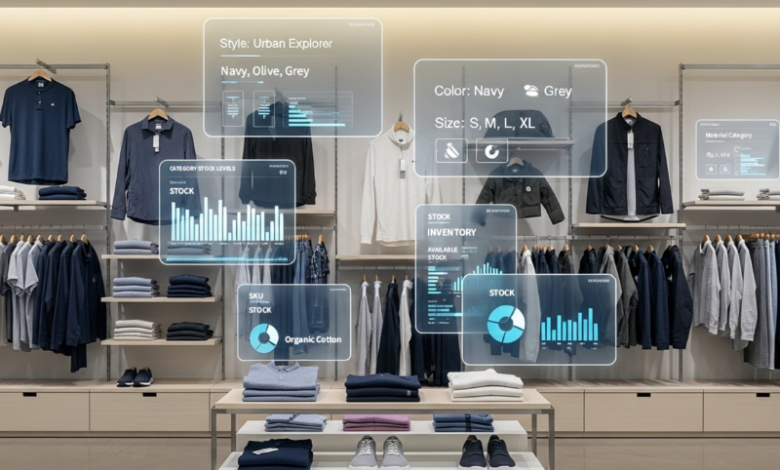
Retail has always been about one promise: getting the right product to the right place at the right time. But the traditional separation between allocation (initial stock distribution) and replenishment (ongoing restocking) has long led to inefficiencies. AI has the potential to change that by unifying forecasting, planning and reporting with granular insights on a single screen; with advanced AI-powered solutions tailored for the retail space, businesses can make faster, smarter decisions grounded in real-time data.
At the heart of the approach should be adaptive forecasting, using machine learning and artificial intelligence to predict sales trends and align inventory to real-time demand so brands can respond quickly to shifts across regions and channels. But what does AI precision actually deliver?
- Fewer stockouts and overstocks
- Lower markdowns and reduced waste
- Happier customers and more loyal shoppers
- Lean inventory with optimized working capital
- Improved margins and profitability
In an industry increasingly defined by selective consumers and turbulent spending patterns, forecasting is a strategic pillar. Getting it right means fewer surprises, faster reactions and better bottom-line results.

The Lag Between Hype and Impact
So what’s holding companies back? In many cases, the challenge lies less in the technology and more in the internal processes in place.
Despite the hype, many organizations have been slow to embrace AI for their everyday workflows. Shifting from legacy systems and traditional decision-making models to AI-driven processes requires significant change management—and securing buy-in is difficult as teams juggle fear of displacement, skepticism about AI’s promise and limited bandwidths for implementation. This transition demands a willingness to rethink workflows and enough confidence in the system to apply insights.
These hurdles are particularly challenging in industries like retail, where success depends on managing complex supply chains, navigating volatile demand and preserving tight margins. Without deep integration, AI can’t fulfill its promise.
From Data to Decisions—Without the IT Bottleneck
AI in retail shouldn’t require a data science degree. With the right intuitive reporting capabilities, retailers of all sizes can access real-time insights on everything from high-level sales performance to SKU-level KPIs, visualize trends and identify gaps to take action without waiting on IT.
That’s the difference between AI as a buzzword and AI as a business driver. With 88% of organizations already reporting AI use, but few seeing full returns, now is the time to move from pilots to full deployment, especially in retail, where the gap between insight and action can mean millions gained or lost. By investing in the right AI for each industry, and embedding it deeply into workflows, companies can move from reactive guesswork to proactive precision.