
Mining has never been short of pressure. Falling ore grades, stricter safety standards and rising energy costs are forcing operators to reconsider how they manage assets, data and day-to-day performance.
For many organisations, digital transformation in the mining industry is now a practical response to these challenges.
This is not about chasing trends. It is about survival in an industry where margins are tightening and stakeholders are watching closely.
Digital Transformation In The Mining Industry Is Replacing Ageing Systems
Many mining operations still run on systems built decades ago. These platforms were not designed for today’s data volumes, remote site connectivity, or on demand reporting requirements
The results follow a familiar pattern:
- Decisions are made using incomplete or outdated information.
- Maintenance takes place after equipment fails rather than before.
- Reports take days to prepare when information should be available within minutes.
- Teams spend valuable time reconciling figures across separate systems.
Legacy infrastructure doesn’t just slow things down. It actively works against the goals mining companies are now being held to around safety, sustainability and operational performance.
Digital transformation in the mining industry helps replace disconnected systems with a more accurate and consistent view of the operation.
Safety And Sustainability Are Driving Digital Transformation In The Mining Industry
Regulators, investors and communities expect more transparency than ever before. Mining companies are unable to meet these expectations with disconnected spreadsheets and manual reporting.
Three pressures stand out:
- ESG reporting requirements: demands accurate, auditable emissions and resource data.
- Worker safety obligations: on demand monitoring can prevent incidents before they happen.
- Investor scrutiny: sustainability performance increasingly affects access to capital.
Digital transformation in the mining industry provides operators the data infrastructure to meet all three demands credibly, not just on paper.
How Digital Transformation Improves Operational Efficiency In Mining
Operational improvements in mining rarely come from one significant change. They tend to develop across individual sites, assets and processes.
Common areas of improvement include:
- Predictive maintenance: flags equipment issues before they cause unplanned downtime.
- On demand production data: enables operation teams visibility across multiple sites at once.
- Supply chain visibility: connects logistics data with production planning to reduce bottlenecks.
- Integrated finance and operations: removes the manual reconciliation that slows month end reporting.
Together, these capabilities provide a clearer view of operations and reduce the uncertainty that often slows decision making.
The table below summarises the shift from legacy operations to a transformed environment:
| Area | Legacy approach | Digitally transformed approach |
| Maintenance | Reactive work after failure | Planned work based on predictive insight |
| Reporting | Manual preparation over several days | Automated reporting using current data |
| Site visibility | Siloed information for each location | Central visibility across sites |
| ESG data | Spreadsheet based records | Auditable data generated by connected systems |
| Finance and operations | Separate systems and manual reconciliation | Shared information across business functions |
How SAP Cloud ERP S/4HANA Supports Digital Transformation In The Mining Industry
Cloud ERP (S/4HANA) enables mining companies a single view across finance, operations, procurement and asset management. Instead of reconciling separate systems after an event has taken place, teams can work with current information from a shared platform.
This matters most in mining because of how distributed the operations are. Operations are often spread across several locations with complex asset registers, mobile equipment and challenging supply chains. Overnight batch processes and disconnected applications make it difficult to maintain an accurate view of what is happening.
SAP Cloud ERP S/4HANA provides a central foundation where information is updated as activity takes place. Teams can understand asset performance, operational costs and financial impact without needing to reconstruct the picture after the fact.
For many mining businesses, SAP S/4HANA becomes the core platform supporting digital transformation in the mining industry. Other processes and technologies can then be introduced around a consistent data foundation.
Installing the platform is only part of the answer. Technology alone does not transform an organisation. It needs clear objectives, informed implementation and people who understand how to use it in their daily work.
A Realistic Approach to Digital Transformation in Mining
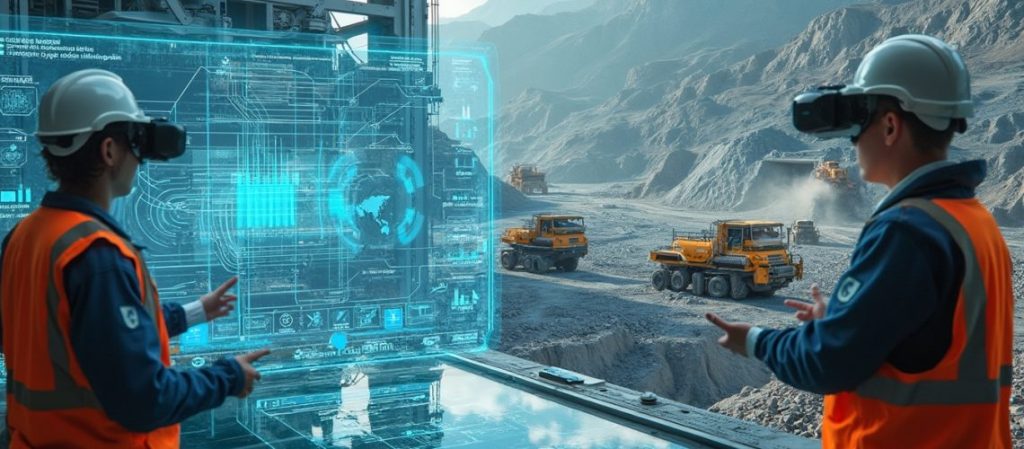
Mining companies that commit to digital transformation tend to follow a similar pattern. They start with the areas causing the most operational pain, often maintenance or reporting and expand from there once the value is proven.
The businesses that succeed treat transformation as an ongoing projects, not a one off project. They measure outcomes, adjust their approach and bring operational teams along at every stage, not just IT.
This is also where the difference between a software rollout and a genuine transformation becomes clear. Installing new tools changes very little on its own.
The real shift happens when site teams trust the data enough to change how they work day to day and that trust is built gradually, through visible, early wins rather than a single big bang launch.
What Companies Should Prioritise During Digital Transformation
Successful projects rarely try to change everything at once. Before starting, it is worth prioritising:
- A phased rollout: focusing on high impact areas first, rather than transforming the entire estate simultaneously.
- Strong change management: site teams need confidence in new systems before they will trust them.
- Experienced implementation partners: ones who understand both SAP technology and the realities of mining operations.
- Clear success metrics: defined upfront so progress can be measured against real outcomes.
Ensuring these elements are right reduces risk and builds the momentum needed for the stages that follow.
Why Does This Matter Now?
Digital transformation in the mining industry is no longer a question of “someday.” The pressure on safety, sustainability and cost is immediate and companies addressing it now are building a real operational advantage over those still waiting on the sidelines.
If your current systems are limiting visibility into safety, sustainability or cost performance, that gap will only continue to widen.
Don’t let the gap widen. See how we help mining companies transform in our case studies.