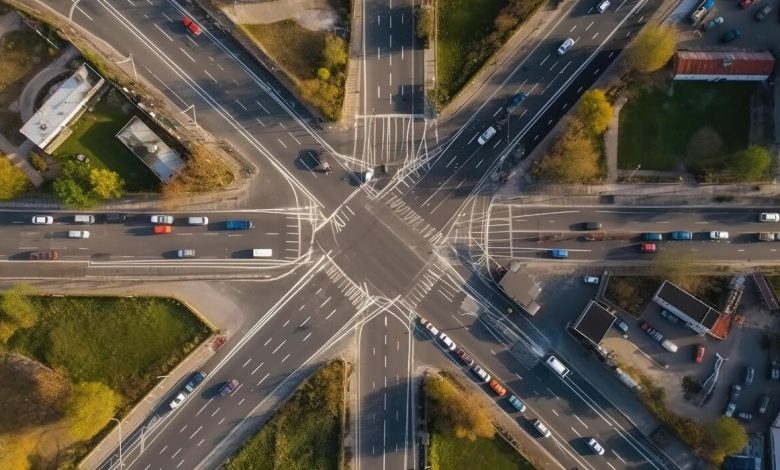
Roads are designed to move people efficiently, but they inevitably cross paths. These crossing points are where the most complex interactions between vehicles happen daily. A driver might be heading north while another turns west, creating a constant puzzle of timing and spatial awareness for everyone involved.
Most of a trip is spent on straight pavement where rules are simple and risks are low. However, the level of mental effort required increases dramatically at a crossing. You are suddenly forced to monitor multiple directions at once while maintaining your own speed and position on the road.
Many factors contribute to these events, ranging from poor lighting to simple human impatience. Statistics show that intersection crashes represent a huge portion of traffic incidents. These zones remain challenging environments for even the most experienced motorists to navigate safely during their morning commute.
Traffic Flow and Signal Conflicts
Traffic signals exist to provide order to the chaos of crossing streets, but they also create points of intense conflict. When a light turns yellow, drivers are forced to make a split-second decision about whether to stop or speed through. This moment of uncertainty often leads to collisions between vehicles moving in opposite directions.
Left turns are particularly hazardous because they require crossing over lanes of oncoming traffic. A driver must accurately judge the speed and distance of multiple cars while also watching for pedestrians in the crosswalk. It is a high-pressure maneuver that leaves very little room for even the smallest error in judgment.
Roundabouts were designed to reduce these conflicts by forcing everyone to move in the same direction, but they aren’t everywhere yet. Traditional four-way stops still rely heavily on the cooperation and awareness of every individual driver. The sheer volume of cars moving through these small spaces makes a mistake almost inevitable eventually.
Driver Behavior Factors
Distraction is a leading cause of trouble whenever paths cross on a busy city street. A quick glance at a phone or a GPS screen can prevent a driver from noticing that a light has changed or that a car has stopped ahead. These small lapses in focus have major consequences.
Impatience also drives many of the risky choices made by people behind the wheel. Someone might try to “beat the light” or turn right on red without coming to a complete stop first. These aggressive actions ignore the safety of others in favor of saving a few seconds of travel time.
Misjudging the intentions of other motorists is another frequent behavior that leads to an impact. A driver might assume someone is going to turn because their blinker is on, only for that person to continue straight. Relying on assumptions instead of clear actions creates a dangerous environment for everyone.
Visibility and Design Issues
 The physical layout of a crossing can contribute just as much to danger as the behavior of the people using it. Large bushes, parked trucks, or even poorly placed signs can block the line of sight for someone trying to turn. If you can’t see what is coming, you can’t react.
Lighting also plays a huge role in how safe a specific area feels at night. Poorly lit crossings make it difficult to spot pedestrians or identify the speed of an approaching vehicle. Shadows can hide hazards that would be obvious during the day, leading to sudden and unexpected collisions for motorists.
Some streets are simply not designed for the volume of traffic they currently carry every afternoon. Narrow lanes and short turn pockets create congestion that forces drivers into making hurried or risky maneuvers. Structural improvements are often necessary to reduce the inherent risks built into the very design of the road.
Common Collision Types
Rear-end collisions are incredibly common when traffic is stopping and starting at a signal. If the lead car stops for a yellow light and the following car does not, the result is a crumpled bumper. These incidents happen thousands of times a day in almost every major city around.
Side-impact or T-bone crashes are far more dangerous due to the lack of protection on the sides of a vehicle. These usually occur when someone runs a red light or fails to yield the right of way while turning. The force of the impact is transferred directly to the passengers.
Pedestrian accidents also frequently happen at these crossing points where people and cars share the same space. Drivers turning right often look for other cars but fail to check the crosswalk for people on foot. These interactions are the most critical to manage to prevent serious harm to everyone.
Conclusion
Intersections are the most complex parts of any road system because they force different paths to converge in a single space. While signals and signs help manage the flow, they cannot account for every human error or environmental hazard. Safety requires a high level of constant vigilance from everyone.
Most incidents in these zones are avoidable if people simply slow down and pay closer attention to their surroundings. Taking an extra second to verify that a path is clear before moving forward can prevent a lifetime of regret and pain. It is a small price for total peace of mind.
Even with the best designs and technology, these areas will likely remain hazardous as long as people are driving. Staying alert and following the basic rules of the road is the best defense against trouble. Awareness is the key to navigating these difficult spaces safely every single day.