1. Tell us about yourself and your journey. How did you end up working at the intersection of retail finance, software engineering, and AI?
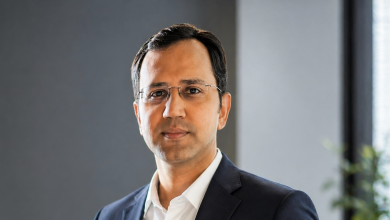
Nipoon Naresh Donta, Software Engineer III at Walmart Global Tech, has built his career at the intersection of large-scale distributed systems, retail finance, and artificial intelligence. Passionate about solving complex engineering challenges, he has contributed to highly scalable enterprise platforms while continually exploring how emerging technologies can reshape the future of retail. A multiple-time hackathon winner and technology enthusiast, Donta is recognized for combining strong software engineering fundamentals with a drive to innovate and turn ambitious ideas into practical solutions.
After earning his bachelor’s degree in Electronics and Communication Engineering from Mumbai University and a master’s in Software Engineering from Arizona State University, Donta developed a deep appreciation for building resilient, scalable systems that solve real business problems. His experience in enterprise software engineering naturally led him toward one of the most transformative opportunities in technology today: applying AI to retail finance.
In this interview, Donta shares his perspective on how artificial intelligence is redefining store financials—from helping finance teams move beyond static reporting to enabling intelligent, data-driven decision-making at scale. He discusses the growing role of AI agents in enterprise finance, the convergence of large language models with structured financial data, and why responsible, trustworthy AI will be essential as organizations embrace this new era of transformation. Drawing from his experience as both a software engineer and an AI advocate, Donta offers his vision for the future of retail finance and the engineering principles needed to build the next generation of enterprise AI systems.

2. What first convinced you that artificial intelligence would fundamentally change the way retail finance operates?
I don’t think there was one single moment when I suddenly realized AI would change retail finance. For me, it happened gradually through working with large-scale financial and retail systems.
When you’re working with financial data at scale, accuracy becomes central to everything you do. A small error can have a much larger impact when it is repeated across millions of transactions. That naturally makes you think very carefully about validation, reliability, and how quickly you can identify when something is wrong.
What changed my perspective on AI was seeing how it could help with that complexity. Instead of thinking about AI as something that simply automates a task, I started seeing it as a way to help engineers and financial teams make sense of large amounts of information much faster.
In my recent work, I’ve been involved in applying agentic AI to engineering and operational workflows. Seeing AI analyze large volumes of information, identify patterns, and help move an issue toward resolution was a significant shift for me. The important part was that AI wasn’t replacing human judgment. It was helping people get to the right information faster and spend more time making decisions that require experience and context.
That experience made the potential intersection between AI and retail finance very clear to me. Retail finance operates at a scale where there is simply too much data and too much complexity for people to examine everything manually. AI can help identify patterns, surface anomalies, and support faster decision-making. But in finance, I think accuracy and accountability have to remain at the center.
So my view is that the biggest opportunity is not simply to automate financial processes with AI. It is to use AI responsibly to make complex systems more intelligent, more efficient, and easier for people to understand and manage—while maintaining the controls and human oversight that financial operations require.
3. Retail organizations generate enormous amounts of financial and operational data. Why do you think many companies still struggle to turn that data into actionable insights?
I think the challenge is real simply because the scale of the data is enormous. In a large retail organization, financial and operational data is being generated constantly across stores, eCommerce, supply chain, merchandising, finance, payments, and many other parts of the business.
To put that scale into perspective, Walmart serves approximately 280 million customers each week across more than 10,900 stores and eCommerce operations in 19 countries, with approximately 2.1 million associates globally. At that scale, the challenge is not a lack of data. The challenge is bringing the right data together, understanding its context, and turning it into an insight that someone can actually act on.
In my experience, large organizations are also highly interconnected. A financial process may depend on information from multiple teams and systems, and each team may have its own data sources, definitions, workflows, and priorities. That creates natural fragmentation. One team may have the data needed to understand a problem, while another team has the context required to interpret it.
Traditional business intelligence and reporting tools are very useful for answering known questions: What happened? How much did we spend? What was the trend over time? But the challenge becomes much harder when the question is, “Why did this happen?” or “What should we do next?” Often, answering those questions requires someone to manually connect information across multiple reports, systems, and teams.
That is where I think AI can make a meaningful difference. The opportunity is not simply to create another dashboard. It is to help connect information, identify patterns across large volumes of data, and provide context around what may be happening. AI can help move organizations from reporting the past to understanding the present and, eventually, making better-informed decisions about what comes next.
But I also think the quality of the insight depends heavily on the quality and context of the underlying data. AI does not eliminate the need for strong data foundations. In a complex retail environment, the real opportunity is to combine reliable data, domain knowledge, and AI so that teams can spend less time searching for information and more time acting on it.
4. When you talk about “AI for Store Financials,” what does that mean to you?
When I talk about “AI for Store Financials,” I think about building smarter financial operations without losing the discipline and caution that financial systems require.
At a simple level, my vision is to build tools that help teams understand what is happening, identify problems faster, and move toward a solution more quickly. In a large retail environment, financial processes operate at a tremendous scale. For example, generating financial documents across stores within a very short processing window requires systems that are both highly scalable and highly reliable. AI can help us make better design decisions, analyze complex operational information, and help engineers troubleshoot issues more efficiently.
But I don’t think AI should be viewed as a replacement for engineering judgment. My experience has actually made me more cautious about that. AI can be extremely useful, but it can also be confidently wrong. There have been situations where relying too heavily on an AI-generated suggestion led us in the wrong direction and caused us to spend significantly longer trying to resolve an issue than we otherwise might have.
That experience reinforced an important principle for me: AI should accelerate our thinking, not replace it.
So, when I think about AI for Store Financials, I think about a partnership. We use AI to help us process complexity, identify patterns, explore solutions, and move faster. But we still need strong engineering fundamentals, testing, observability, domain knowledge, and human validation—especially when we are working with financial systems.
The goal is to build quickly, but build responsibly. The best AI tools are not necessarily the ones that automate the most. They are the ones that help people make better decisions, identify and fix problems faster, and ultimately create more reliable experiences for the customers and businesses that depend on these systems.

5. What are the biggest challenges in store financial management today that AI can realistically solve?
I think AI can realistically help with many of the traditional challenges in store financial management—forecasting, reconciliation, anomaly detection, labor optimization, profitability analysis, and decision support. But from my perspective as an engineer, the biggest opportunity is helping people deal with the complexity and speed of modern retail operations.
I work on large-scale financial systems where reliability is critical and where engineering teams support systems that operate continuously. In that environment, engineers are often effectively on call 24×7. When something goes wrong, you need to understand the problem quickly, determine the likely root cause, and decide what to do next. That experience has shaped how I think about AI.
AI can act as a force multiplier for everyone on the team. For a junior engineer, it can be like having a knowledgeable friend available to help explain a problem, explore possibilities, or point them toward relevant information. For a mid-level or senior engineer, it can act more like a consultant—helping analyze a complex situation, challenge assumptions, and accelerate the path toward a solution.
That is already changing the way software engineering works. In my own work, I have built agentic AI workflows that analyze operational data, help identify root causes, and support automated remediation workflows. The goal is not to let AI make every decision independently. The goal is to reduce the time people spend searching through enormous amounts of information and allow them to focus on judgment and decisions.
I see a similar opportunity across store financial management. AI can help with forecasting by identifying patterns across historical and operational data. It can support reconciliation by identifying discrepancies and prioritizing exceptions. It can detect anomalies much faster than a person reviewing reports manually. It can help with profitability analysis by connecting information that may otherwise sit across different systems. And, perhaps most importantly, it can provide decision support by helping people understand not just what happened, but why it may have happened and what options they have.
The key word for me is “realistically.” I don’t think AI will eliminate the need for financial experts, store operators, or engineers. I think it will change how they work. The people who understand the business and the systems will still make the important decisions, but they will have much more intelligent tools supporting them.
My experience building distributed financial systems and applying agentic AI to operational problems has made me believe that AI’s greatest value is often in reducing the time between a problem appearing and a person understanding what to do about it. In retail finance, where the scale and complexity are enormous, that can have a significant impact.
6. Generative AI has captured everyone’s attention. Where do you see the biggest opportunity for GenAI in finance compared with traditional machine learning?
I see the biggest opportunity for Generative AI in finance as working alongside traditional machine learning, rather than replacing it.
Traditional machine learning is strongest when we have well-defined problems and structured data—for example, forecasting, anomaly detection, or predicting financial outcomes. These models are designed to identify patterns and make predictions based on historical data.
LLMs are particularly powerful when the challenge involves unstructured information, reasoning, and human interaction. In my own work with tools such as LangChain and LangGraph, I have seen how LLMs can be connected to data sources, observability systems, and business tools to create workflows that do more than simply generate text.
For example, a LangGraph-based workflow can orchestrate multiple steps: gather relevant information, analyze it, use tools to investigate a problem, evaluate the results, and then recommend or initiate the next action. This is fundamentally different from simply asking an LLM a question in a chat window.
That is where I see the distinction. A predictive model might tell you that an anomaly has occurred. An LLM-powered agent can help investigate the anomaly, connect information from multiple sources, explain possible causes, and support the decision about what to do next.
For finance, the biggest opportunity is combining both approaches: traditional machine learning for reliable prediction and analytics, and Generative AI—with frameworks such as LangChain and LangGraph—for reasoning, orchestration, explanation, and decision support. The real value comes from using the right technology for the right problem.
7. AI agents are becoming one of the hottest topics in enterprise technology. What role do you see AI agents playing in the future of retail finance?
I see AI agents playing an important role in the future of retail finance by moving beyond simply answering questions and helping organizations take action.
An agent can continuously analyze large volumes of financial and operational data, identify unusual patterns, and proactively bring important issues to a team’s attention. Instead of waiting for someone to discover a problem in a report, the system could say, “This behavior is unusual, here is what may be causing it, and these are the next steps worth considering.”
The next stage is workflow automation. Using technologies such as LLMs, LangChain, and LangGraph, agents can orchestrate multi-step processes—gathering information, calling the appropriate tools, analyzing results, and routing actions to the right systems or people.
However, I don’t see the future as fully autonomous finance. I see it as human-AI collaboration. AI agents can handle investigation, analysis, and repetitive workflows, while people remain responsible for judgment, approvals, and decisions that require business context and accountability.
The biggest shift is that AI agents can help move retail finance from reactive reporting to proactive decision support. They can help teams understand what is happening, why it may be happening, and what action should be considered next—while keeping humans in the loop where it matters most.
8. Imagine every retail store had its own AI financial advisor. What capabilities would that advisor have?
This question is especially personal to me. My grandfather owned a local grocery store in India, and I grew up seeing the kind of personal connection that existed between a shopkeeper and the people who came into the store. He knew his customers—their preferences, their routines, and often what they needed before they even asked.
As retail has scaled, we have gained efficiency and convenience, but some of that personal connection has been lost. Today, a large retailer may have enormous amounts of information about a customer’s shopping behavior, but that information is not always translated into a truly personal experience.
If every store had its own AI financial advisor, I would imagine it as a digital partner that understands the store at a very detailed level. It could understand what customers are buying, how demand is changing, where waste or inefficiencies may be occurring, and how financial decisions affect the store’s overall performance.
But I think the most interesting possibility is bringing back some of that personal connection at scale. An AI advisor could help create a more personalized shopping experience by understanding customer preferences and patterns—while respecting privacy—and using that understanding to make shopping more relevant and useful.
For example, instead of treating every customer as just another transaction, the experience could become more contextual and personalized. The store could better anticipate demand, offer more relevant recommendations, reduce waste, and make better financial decisions about inventory and operations.
In that sense, I don’t see AI as making retail less human. I actually see the possibility of AI helping large retailers recreate some of the personal experience that existed in smaller neighborhood stores—something my grandfather naturally provided through relationships and memory.
9. AI is changing not only business applications but also software engineering itself. How has building AI-powered systems changed the way you think about software architecture and engineering?
Building AI-powered systems has changed the way I think about software architecture quite a bit. Earlier, I primarily thought about applications as deterministic systems—services with defined inputs, outputs, APIs, and business rules. With AI, I now think more about how multiple applications, tools, and agents can work together to solve a problem.
In our environment, we have multiple applications interacting through MCP. For example, an AI system can use MCP to understand pipeline issues, analyze application logs, investigate failures, and connect with Jira to find related tickets or historical context. Instead of an engineer manually searching through thousands of log lines and different systems, the AI can bring that context together and help identify the likely root cause.
This has also made observability and evaluation much more important. With traditional software, we can often test whether the output is correct or incorrect. With AI, we also need to evaluate whether the response is accurate, grounded in the right context, and useful. We need visibility into not just application logs, but also the AI’s tool calls, retrieved information, and interactions with other systems.
The biggest shift for me is that AI systems are not really “finished” after deployment. They require continuous improvement. We learn from incorrect responses, missed context, and debugging outcomes, and use that feedback to improve the tools, prompts, retrieval, and overall architecture.
I now see modern software architecture as a combination of deterministic systems and probabilistic intelligence. The traditional software provides reliability and control, while AI helps us understand context and solve more complex problems. The real engineering challenge is bringing those two together in a way that is reliable, observable, secure, and continuously improving.
10. Many developers are experimenting with AI coding assistants, but building production-grade AI systems is a different challenge. What advice would you give software engineers who want to build enterprise AI applications?
My biggest advice is to start with strong software engineering fundamentals. AI does not replace the need to understand distributed systems, APIs, data, security, observability, and reliability—in enterprise environments, those fundamentals become even more important.
My experience working on financial systems taught me that correctness and reliability are critical. When building systems that handle financial transactions, even a small error can have a significant impact. That mindset has carried over into AI applications. I believe AI should not be treated as a black box that makes decisions without controls. We need clear boundaries around what the AI can do, strong validation, auditability, and deterministic safeguards around probabilistic outputs.
I would also encourage engineers to start with a real business problem rather than simply trying to add AI to an existing application. In my own work, I have seen the value of connecting AI to real enterprise context—such as application logs, pipeline information, operational systems, and Jira tickets—so that it can help solve practical engineering problems. The value comes from how well the AI is integrated with the organization’s data and workflows, not just from the model itself.
Finally, engineers should design for continuous improvement. Production AI systems need monitoring, evaluation, feedback loops, and the ability to improve over time. The goal is not to build an AI system that is perfect on day one, but one that can be measured, understood, and continuously made better.
I think these 10 questions create a strong narrative. They begin with your personal journey, explore your philosophy on AI and retail finance, and finish by showcasing your perspective as both a technology leader and software engineer. The result should read like an executive interview rather than a technical Q&A, making it engaging for both business leaders and engineering audiences.
Closing thoughts
I believe we are entering a phase where software engineers will increasingly build systems alongside AI rather than simply building systems for humans to use. The engineers who will be most successful are those who combine strong engineering fundamentals with the ability to understand AI’s strengths and limitations.
For me, the most exciting part is that AI gives us an opportunity to rethink how software is built and operated—from writing code to debugging complex distributed systems. But the foundation remains the same: build systems that are reliable, secure, observable, and genuinely useful. AI can accelerate that journey, but good engineering is still what makes it possible.