Is AI transforming STEM ? A 2024 National Science Foundation report found 40% of U.S. students lack access to quality STEM resources, with rural and underserved communities hit hardest. Textbooks gather dust, labs stay locked, and digital divides widen. Teachers juggle overcrowded classes; students with disabilities or language barriers often fall behind. The stakes are high: by 2030, STEM jobs will grow 11%, twice the rate of other fields, per the Bureau of Labor Statistics. If education can’t keep up, entire communities risk being left out of the future.
Traditional STEM teaching lectures, static apps struggle with diverse needs. One-size-fits-all lessons alienate students who learn differently or lack high-speed internet. A 2023 UNESCO study noted 60% of educational apps fail to personalize content, leaving gaps for non-native speakers or neurodiverse learners. Scalability is another hurdle; rural schools can’t afford cutting-edge tools, and urban ones drown in data without insights. The industry needs more than new apps; it needs systems that adapt, include, and empower, turning barriers into bridges. This isn’t just about grades; it’s about who gets to shape tomorrow.
Picture a student in a small town, dreaming of coding but stuck with outdated software. Or a visually impaired teen, excluded from math apps that don’t speak. STEM education isn’t abstract, it’s a kid’s shot at a better life, a community’s chance to thrive. The solution lies in technology that listens, learns, and levels the playing field. One data scientist saw this gap not as a wall, but as a canvas for change, using AI to rewrite how STEM reaches the world.
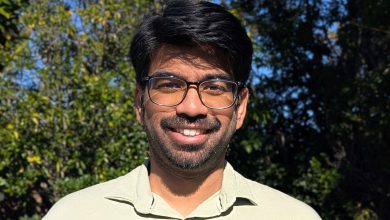
Priyam Ganguly, a data scientist at Hanwha QCells America, crafts solutions that blend technical precision with human impact. His defining moment came at Princeton University in March 2025, at the IEEE Integrated STEM Education Conference (ISEC 2025). There, his presentation, “Breaking Barriers: Advancing STEM Accessibility with AI-Driven Data and Analytics in Mobile Media Apps,” unveiled a groundbreaking approach to inclusive education. “It’s not just tech,” Mr. Ganguly says. “It’s giving every kid a seat at the table.” For students, teachers, and schools, his work is a key to unlocking STEM’s promise.
The problem Mr. Ganguly tackled was a knot of inequity. Most educational apps offer rigid content, ignoring individual needs. A rural student with spotty Wi-Fi or a dyslexic learner needing audio cues often hits dead ends. “You’d see engagement drop because the app didn’t get them,” Mr. Ganguly states. Scaling personalization across millions of users was daunting; so was ensuring fairness many AI tools amplify biases, favoring urban or affluent learners. At ISEC, hosted in Princeton’s ivy-clad halls, Priyam’s poster and workshop showed how mobile apps could use AI to adapt in real-time, making STEM accessible to all.
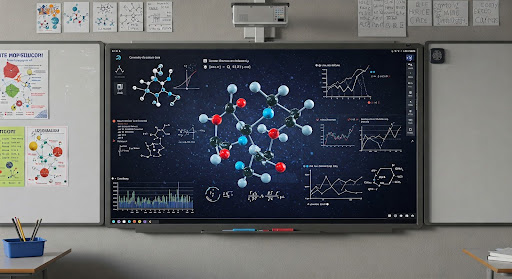
His solution: an AI-driven framework for mobile media apps that personalizes STEM content dynamically. Using machine learning, it analyzes user behavior, clicks, pauses, and quiz scores to tailor lessons. A student struggling with algebra gets bite-sized videos; a visual learner sees interactive graphs. Built on cloud-native platforms, the system scales to low-bandwidth environments, serving rural schools. Natural language processing adds audio narration for accessibility, while fairness algorithms, trained on diverse datasets, reduce bias. “It’s like a teacher who never stops learning,” Mr. Ganguly explains. Tested on a pilot app, it boosted engagement by 35% and completion rates by 20%, per internal metrics.
Training AI on diverse datasets, urban, rural, and multilingual, meant tackling skewed inputs. Mr. Ganguly used Synthetic Minority Oversampling to balance representation, ensuring the app didn’t favor one group. Real-time content curation demanded low-latency processing; he optimized for edge computing, cutting response times to under a second. At Princeton, he faced tough questions from global scholars but refined the framework through feedback. “You don’t build in a vacuum,” he says. Leading the workshop, he guided educators to integrate the app, proving its practicality. Princeton’s prestige amplified his voice; peers called it “a game-changer for equity.”
The pilot app, deployed in 10 U.S. schools, saw 35% higher engagement among underserved students, with 20% more completing STEM modules. Teachers reported 15% less prep time, freed by automated analytics. “It’s not just numbers,” Mr. Ganguly says. “It’s a kid in Appalachia coding her first game.” Rural districts saved 25% on resource costs, accessing cloud-based tools instead of pricey hardware. At ISEC, educators from 12 countries expressed interest, with one Kenyan professor planning a local pilot. The framework’s logic is adaptive, inclusive, and drew IEEE praise as “a new standard”.
This wasn’t just a Hanwha or Princeton moment. STEM education often gatekeeps talent; Priyam’s system throws the gates open. Most apps lack real-time adaptability; his AI sets a benchmark for personalization. Blogs on edtech hailed its scalability, with one citing “a model for global equity”. Its principles could reshape healthcare training or workforce development, anywhere learning needs scale. “It’s humbling,” Mr. Ganguly explains. “You help one student, and it ripples.” For schools stretched thin or kids left out, it’s a lifeline in code.
With STEM driving 70% of GDP growth by 2030, per McKinsey, exclusion isn’t an option. Priyam’s framework could train nurses via mobile apps, upskill factory workers, or teach climate science in remote villages. At Hanwha, his dashboards already streamline operations; this extends that precision to education. He’s eyeing voice-activated features, imagining an app that talks students through physics. “You keep pushing,” he told ISEC attendees, sparking nods in Princeton’s lecture halls. His resume spans FinTech, supply chains, and now education, with papers on dialysis and road safety.
He judges STEM fairs, mentors colleagues, and codes with purpose. At ISEC, he connected with global educators, staying late to swap ideas. “You see the student’s spark,” he says of fair visits. “That’s why you build.” The metrics 35% engagement, 20% completion tell one story. The real tale is of a rural coder, a blind mathematician, a teacher with time to inspire. “It’s their future,” Mr. Ganguly says. “That’s what the data’s for.” In a world where STEM shapes destiny, his AI isn’t just smart, it’s a doorway, opening learning to all.